Profile·Global
The Cambodian Artist Turning Hair Into a Question of Power, Memory and Who Gets to Be Seen
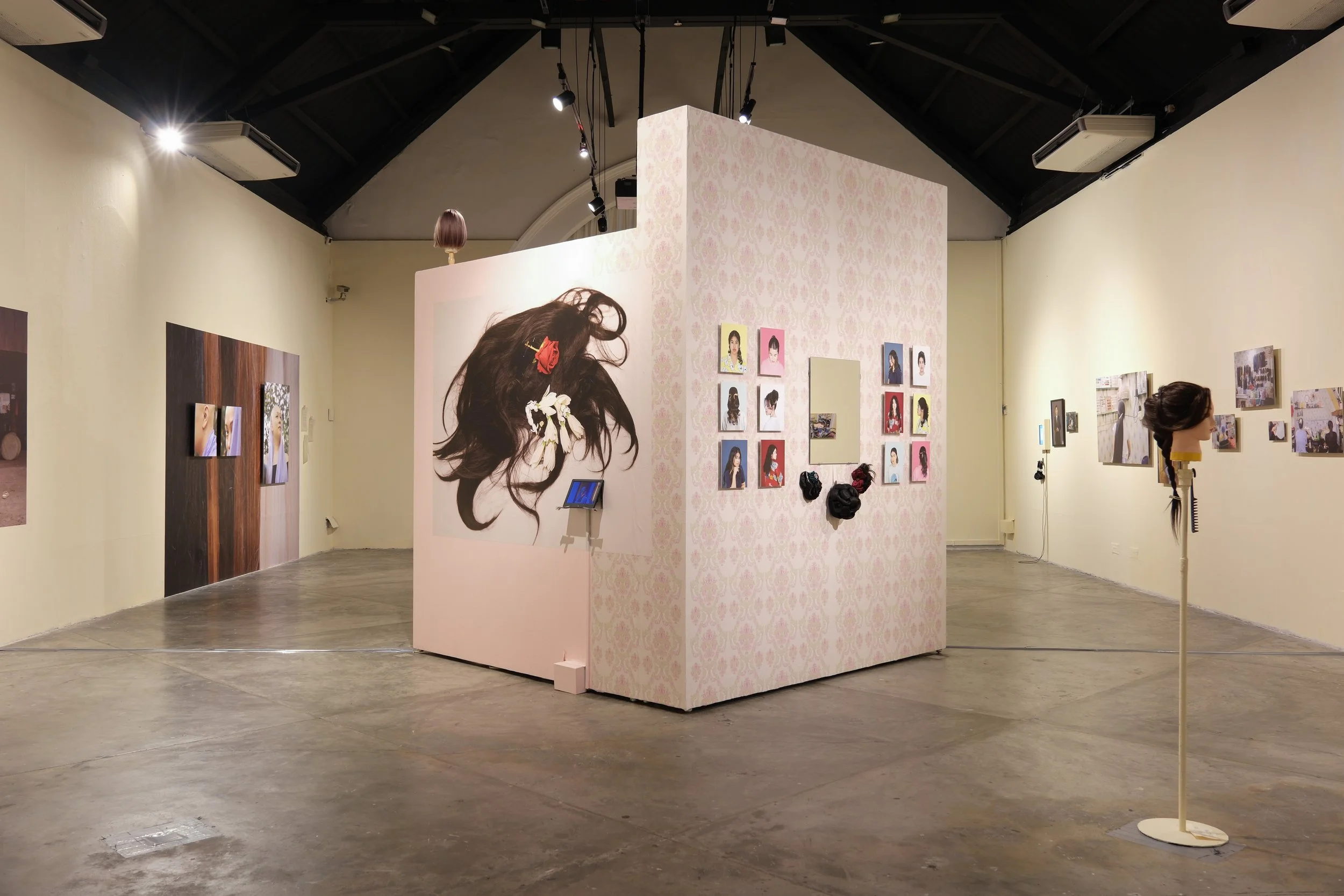
Cambodian documentary artist Ponita Keo works between Phnom Penh and Paris on photography and installation projects that treat hair as a site of identity, labour and agency. Her project 'The hair between us' won the 8th Objectifs Documentary Award and was shown as a solo exhibition in Singapore, while her earlier series 'Beauty and the Pigs' was nominated for the Leica Oskar Barnack Award.
Ponita Keo is a Cambodian documentary artist, photojournalist and art director working between Phnom Penh and Paris. Her personal practice blends documentary method with everyday observation, circling themes of power and personal agency. She also freelances in photojournalism and art direction for independent films.
Her recent project, 'The hair between us' (2026), begins with her grandmother and mother and widens into a study of hair across Cambodian society. The work won the 8th Objectifs Documentary Award in its open category in 2025 and was presented as a solo exhibition at the Objectifs Centre for Photography and Film in Singapore, curated by Syaheedah Iskandar. The starting point was intimate: her mother's dressing table, a decades-old beauty routine, and stacks of old salon magazines gathered from Cambodian hair salons, objects she treats as relics of contemporary society that carry ideas of beauty across generations.
An earlier series, 'Beauty and the Pigs' (2023), follows the Kan sisters of Battambang, one of Cambodia's principal rice-growing provinces. As floods and droughts disrupt the rain-fed rhythm of sowing and harvest, the three women supplement farming with pig-rearing and a small beauty salon run from home. Developed through Noor Images' 2023 Visualising Climate Crisis programme, the series was nominated for the 2024 Leica Oskar Barnack Award.
In the next phase of 'The hair between us', Keo is following the material as it leaves the body and enters economic life. Once separated from its host, hair becomes an object of labour, production and circulation, a shift that complicates the meanings she has traced so far: hair as self-expression, control, freedom, and a surface through which women negotiate agency and reclaim identity. Her studio, she notes, is wherever she happens to find refuge, including the bed she sleeps in, and her working method trusts encounters first and reconstructs them from memory afterwards.