Profile·London
MutualArt Profiles Collector Aarti Lohia, the Foundation Backing Amar Kanwar's Serpentine Solo
In an interview published October 16, London collector Aarti Lohia discusses the SP Lohia Foundation's support of Amar Kanwar's Serpentine North exhibition and her philosophy of long-term cultural patronage across art, chess and film.
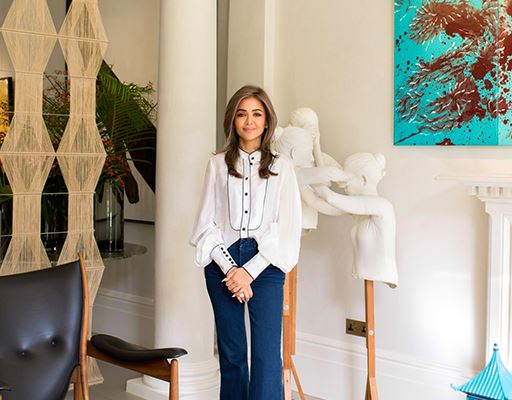
Collector and philanthropist Aarti Lohia, who chairs the London-based SP Lohia Foundation, has discussed her long-term approach to cultural support in a new interview with MutualArt, framing patronage as an exercise in patience and strategic thinking drawn from chess, filmmaking and art.
A recurring theme of the conversation, conducted by Daria Borisova, is the foundation's backing of Amar Kanwar's major solo exhibition at Serpentine North, on view from September 23, 2026 through January 31, 2027. The show, made possible by the SP Lohia Foundation and The Rosenkranz Foundation, presents a trilogy of the New Delhi-based artist's films: the feature-length 'Such a Morning' (2017), the multi-screen installation 'The Peacock's Graveyard' (2023) and the premiere of a new multi-screen installation, 'The Charcoal Man' (2026). Kanwar's lyrical films move between documentary, travelogue and visual essay to examine the Indian subcontinent's history of decolonization, partition, displacement and violence.
Lohia, named to the ARTnews Top 200 list, described chess as the foundation's earliest focus, shaped by her son's development as a young player, while film is a more recent interest rooted in what she calls a desire to keep stories honest. What connects the three areas, she said, is that each demands close attention: an artist can change how people see the world, chess confronts a child with the consequences of decisions, and film brings viewers close to lives they might otherwise know only through headlines.
Beyond Serpentine, Lohia's philanthropic footprint has grown in recent years. She sits on the board of the Kochi Biennale, which she has described as lifting Indian contemporary art to a position that was unthinkable two decades ago, and the SP Lohia Foundation served as a leading philanthropic supporter of the National Gallery's modern and contemporary programming for the museum's bicentenary — a partnership that includes Nalini Malani's video projections on the gallery's Trafalgar Square facade.
The interview offers a rare detailed account of how one prominent patron decides what to support, and what 'the long game' means for private money in public culture at a moment when museums are increasingly dependent on individual philanthropy.