Exhibition preview·New York
Cannupa Hanska Luger turns the bison slaughter into a 'visual history of destruction' at Garth Greenan
In American Traditional, his new solo show at Garth Greenan Gallery in SoHo, Cannupa Hanska Luger moves away from his participatory ceramics toward a declarative body of wood, ink and archival works confronting the 19th-century extermination of the bison.
Cannupa Hanska Luger's exhibition American Traditional at Garth Greenan Gallery in SoHo marks a decisive turn for the artist. Known for participatory, ceramics-heavy projects, the enrolled citizen of the Three Affiliated Tribes of the Fort Berthold Reservation here works in wood, ink and archive, producing what may be his strongest body of work to date.
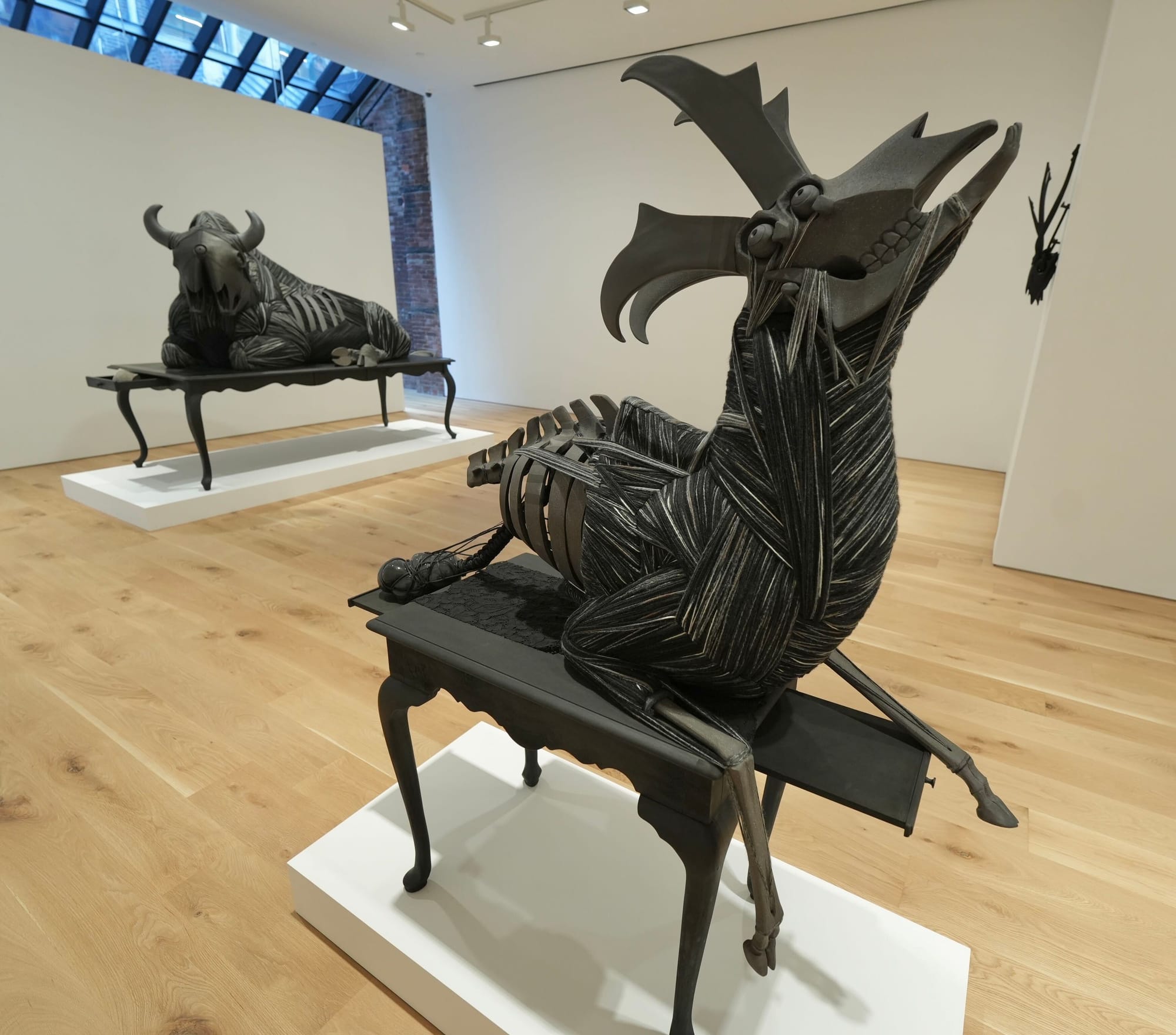
The exhibition is built around the deliberate 19th-century destruction of the North American bison. Luger's Requiem (2026) places a black, abstracted bison on a blackened rendering of a 19th-century American wood dining table — the domestic object becoming a vessel for the violence that once filled dining rooms with buffalo meat. In Shoots Today, Kills Tomorrow (2026), he reaches further into the visual record of that campaign.
The history underpinning the show is documented and devastating. Before European settlement, bison vastly outnumbered people on the continent and were, for the Plains nations, kin rather than mere animals — shelter, clothing, food and fuel. The United States Army's campaign against them was carried out by proxy: buffalo hunters, subsidised and encouraged, reduced herds of tens of millions to near-extinction within a generation. Scholar Tasha Hubbard has characterised that campaign as a genocide by proxy, a second great wave of trauma for Indigenous peoples after epidemic disease. Army leaders understood the mechanism perfectly; when the Texas legislature moved in 1875 to protect the bison, General Philip Sheridan told a buffalo hunter that the hide men had done more to settle what he called the Indian question than the entire regular army in thirty years.
What gives Luger's show its charge is the seductiveness of its forms set against the brutality embedded in them. Beauty here is not relief from the history; it is its delivery mechanism.