Art world report·New York
Sunset Park's open studios show how 300 artists still make it work in one of NYC's last affordable enclaves
Hyperallergic toured the 2026 Sunset Park Open Studios, a three-day festival that opened more than 300 artist spaces across Brooklyn's industrial southwest. Working from converted factories, warehouses and three-story walk-ups, artists such as geometric painter Lizzy Plapinger and photographer Carol Dronsfield are anchoring a neighborhood that has absorbed creative workers priced out of Bushwick and beyond — and made it one of the city's final refuges for affordable studio space.
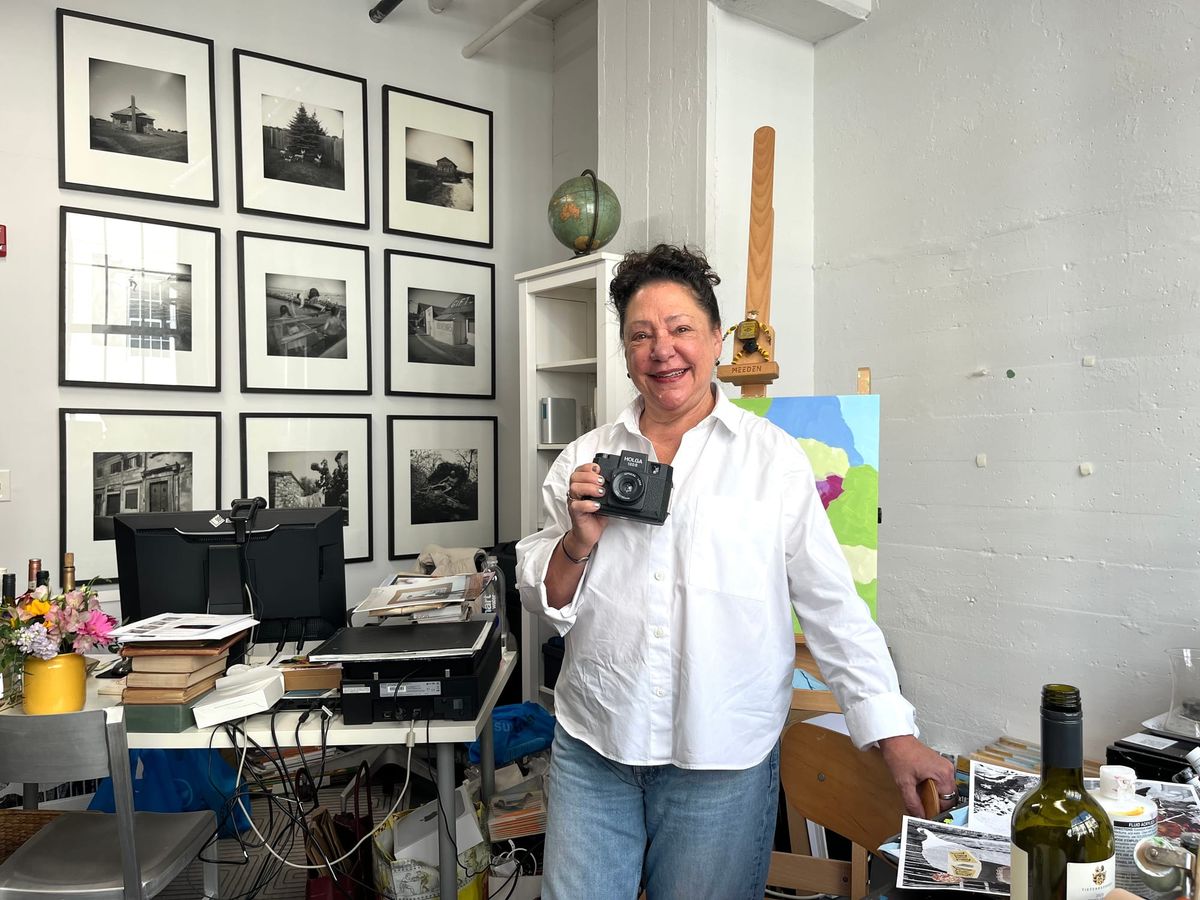
On a sunny Sunday in mid-October, visitors spilled into a sunlit corner studio at Industry City to see the bright geometric paintings of Lizzy Plapinger, who had moved in just two months earlier from Bushwick. She was one of hundreds of artists opening their doors for the 2026 Sunset Park Open Studios, a three-day festival that turned more than 300 spaces across the southwest Brooklyn neighborhood into a roving showcase of work made in converted factories, warehouses and three-story walk-ups.
Sunset Park has become one of New York's last refuges for affordable studio space. Over the past decade, as rents pushed artists out of one neighborhood after another, the industrial district — long a manufacturing hub and an enclave for Mexican and Chinese immigrant communities — absorbed the displaced creative workers. Enough painters, photographers, designers and craftspeople now work there to sustain a festival of genuine scale, with corridors of studios opening onto views of the working waterfront.
This year's edition underlined the mix that defines the neighborhood. Photographer and multimedia artist Carol Dronsfield showed her work at Industry City, while Andrew Chan's exhibition Transient City at Court Tree Collective and a cross-country road-trip painting by Chang Park offered glimpses of the range on view — from documentary photography to road-derived figuration. The programming treated the studios themselves as the attraction, inviting the public into the rooms where the work is actually made.
Whether affordability survives is the open question hanging over the festival. Plapinger, still settling in and "getting to know the area", described a scene that feels welcoming and ripe for collaboration, with artists and designers clustered close enough to spark joint projects. For now, Sunset Park is holding the line that other Brooklyn neighborhoods lost: a place where an artist can still rent a room of her own for under $600.