Profile·Los Angeles
BOMB interviews ceramicist Roxanne Jackson on clay, geology and permanence as 'OVUM' opens in Los Angeles
In a new BOMB interview by curator Carolina Wheat, ceramic artist Roxanne Jackson discusses moving from botany to ceramics and the responsibility of working with an irreversible medium, as her exhibition OVUM shows at The Pit in Los Angeles through 22 October.
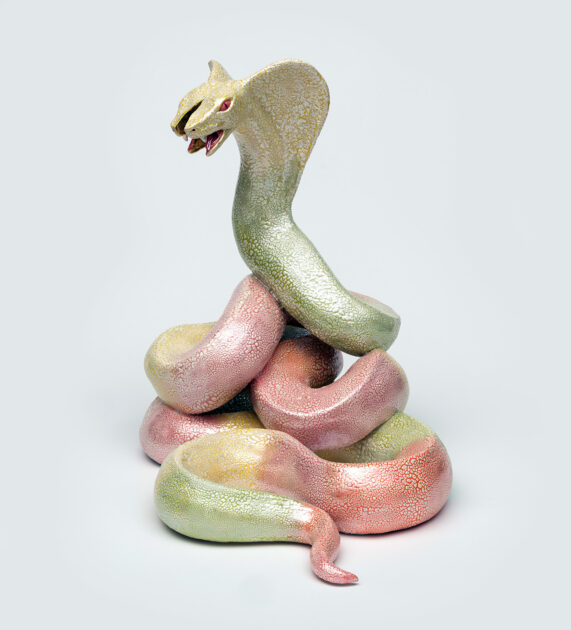
Ceramic artist Roxanne Jackson traces her commitment to clay back to a single undergraduate course. Studying botany at the time, she found that making an object that occupied real space and had to be considered from every angle was, in her words, overwhelming. The medium's logic, in which a soft form is fired at roughly two thousand degrees into something as permanent as a mineral, keeps her tethered to geological time.
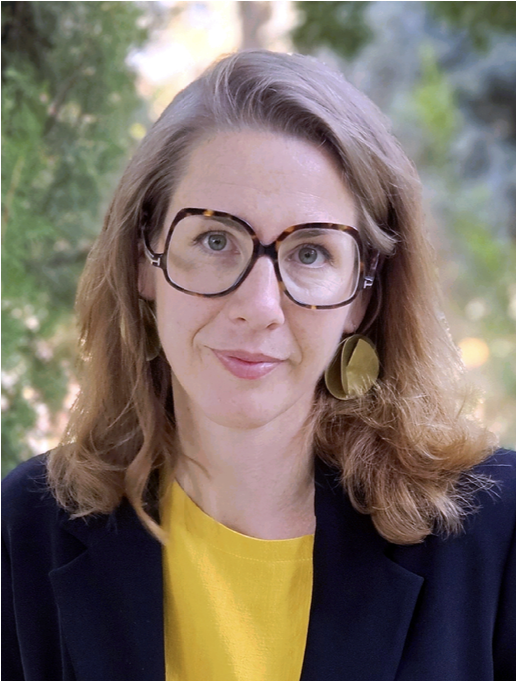
In the interview, published by BOMB on 19 October 2026 and conducted by Carolina Wheat, an independent curator based in Beacon, New York, Jackson describes the responsibility that permanence brings. Glaze, applied liquid and fired a second time, melts onto the piece and cannot be undone; that irreversibility is part of what drew her away from two-dimensional work and toward what she calls a close relationship between ceramic processes and the Earth's own making of minerals.
Jackson also recounts years of solitary trail running across California, Alaska and Nepal, where encounters with grizzly bears, crocodiles, rattlesnakes and, most memorably, a female mountain lion fed the wild, creaturely charge of her imagery.
Her exhibition OVUM is on view at The Pit in Los Angeles until 22 October. The show gathers the animal-hybrid forms for which Jackson has become known. For Jackson, the technical constraints of clay double as a philosophy: a material that begins soft, is worked by hand, and is then hardened by fire into something as enduring as a mineral. That sense of deep time, of processes measured in geological rather than human spans, runs through the animal-hybrid figures she has become known for, forms that braid biology, mythology and the raw matter of the Earth into objects that feel unearthed rather than made. The interview traces how that vocabulary took shape, from an undergraduate botany student startled by her first ceramics class to an artist whose working life now revolves around the kiln's irreversibility.