Exhibition preview·New York
Robin F. Williams remixes Botticelli and Hilma af Klint into AI-era mythologies at P.P.O.W
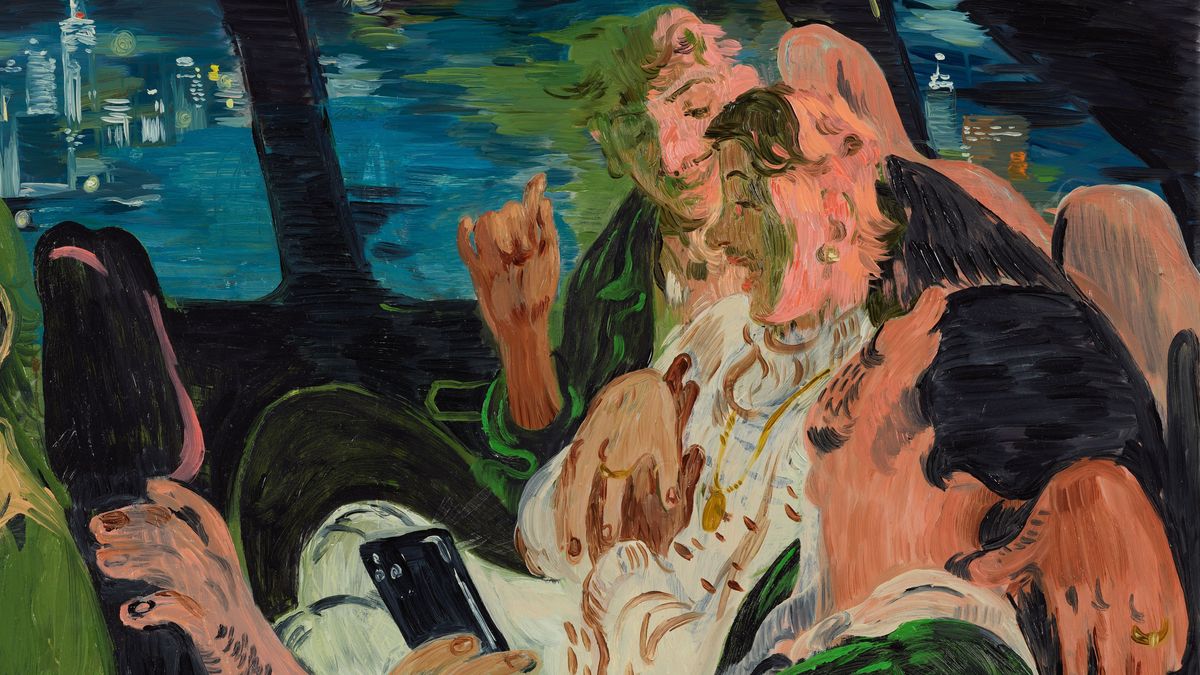
Painter Robin F. Williams's show 'Act Natural' at P.P.O.W (October 8–24, 2026) presents six new large-scale paintings — 'Infinite Scroll,' 'I Am Not a Robot,' 'Holy Thirst Trap,' 'Tempering Better Angels,' 'Language Model,' and 'Spooky Action at a Distance' — recasting Botticelli's Madonnas and Hilma af Klint's spiritualism for the age of virtual assistants.
The Brooklyn-based painter Robin F. Williams, born in Columbus, Ohio in 1984, has filled P.P.O.W with six new large-scale paintings for her solo exhibition Act Natural, on view from October 8 to 24, 2026. The works — Infinite Scroll, I Am Not a Robot, Holy Thirst Trap, Tempering Better Angels, Language Model, and Spooky Action at a Distance, all dated 2026 — take the glossy visual language of Renaissance altarpieces and early abstraction and redirect it at contemporary technology. Botticelli's Madonna of the Pomegranate (circa 1487) is the most direct art-historical anchor: Williams restages its serene, circular composition with female figures recast as mythic chimeras, while their male counterparts appear as ethereal 'tech bros' — the millennial archetype the artist has been anatomizing for years, from disaster bunkers in New Zealand to the founding mythologies of Silicon Valley. Hilma af Klint's spiritualist diagrams and Paul Klee's Senecio (1922) supply further compositional DNA. The satire is pointed but layered. In Holy Thirst Trap, tech bros contemplate a glass of water that an AI system needs to survive — a single image that compresses anxieties about data-center resource consumption, machine dependence, and the quasi-religious aura around artificial intelligence. Since 2018 Williams has been examining virtual assistants such as Alexa and Siri in her painting; the new works extend that inquiry into the era of large language models. What distinguishes the show is its refusal of easy dystopianism. The surfaces are lush and seductive, the references erudite, the jokes genuinely funny. Williams paints the collision of sacred imagery and surveillance capitalism as something already normalized — which, the exhibition suggests, is precisely the problem.