Exhibition preview·Tokyo
Tokyo's Watari Museum marks 20 years since Nam June Paik's death with a three-floor retrospective
The Watari Museum of Contemporary Art in Tokyo is staging 'Nam June Paik: The 20th anniversary of his passing' (July 19–November 23, 2026), a three-floor retrospective drawn from its own collection, including TV Egg (1982), Candle TV (1968), and two 1993 works made for his solo show at the museum.
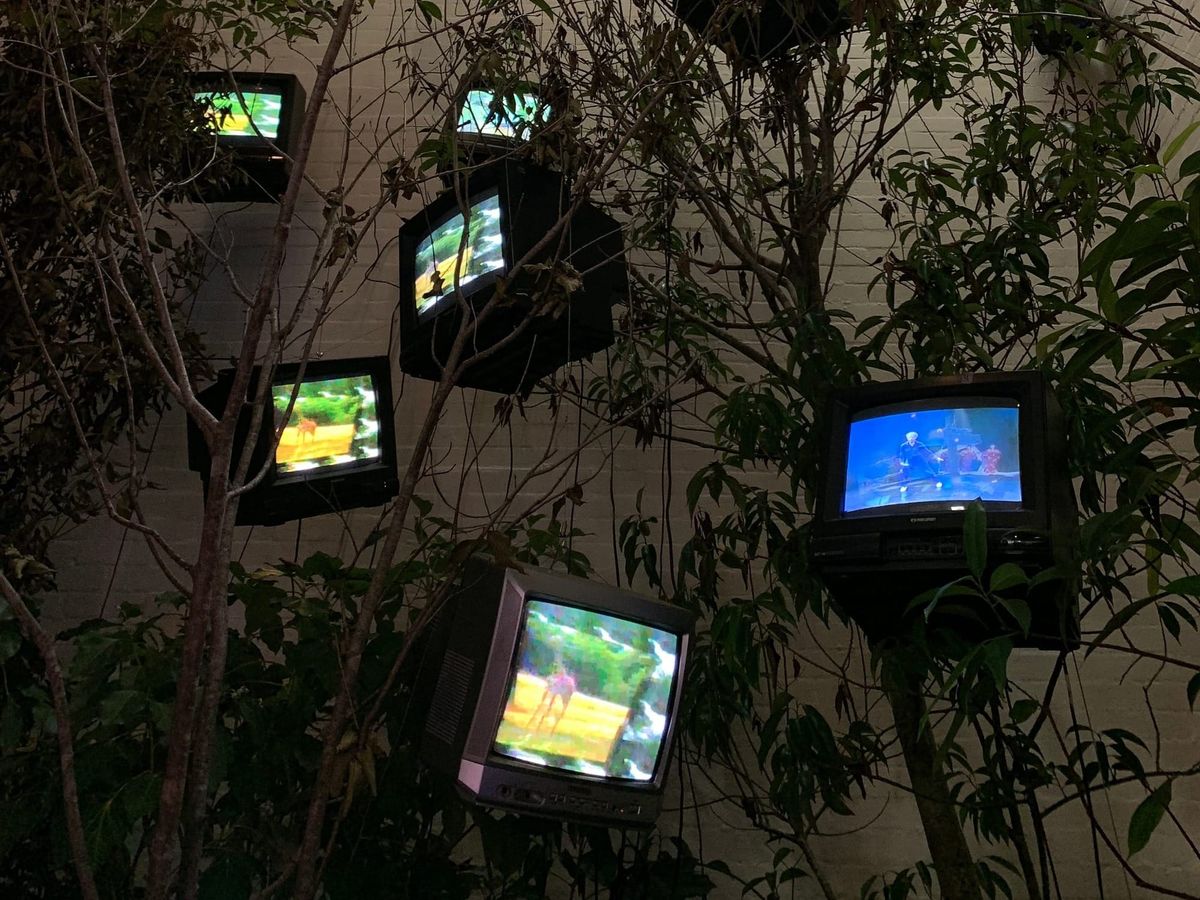
Twenty years after the death of Nam June Paik, the Watari Museum of Contemporary Art in Tokyo — known as Watari-um — has mounted a retrospective drawn entirely from its own holdings. Titled 'Nam June Paik: The 20th anniversary of his passing,' the exhibition runs from July 19 to November 23, 2026, and occupies three floors of the museum with work spanning the career of the artist widely described as the father of video art. The show's anchors include TV Egg from 1982 and Candle TV from 1968, early statements of Paik's conviction that the television set could be treated as a sculptural and philosophical object rather than a mere receiver. Two works from 1993, Time in Triangular and Forest of Cage / Revelation of the Forest, carry particular weight: both were made for Paik's solo exhibition at Watari-um that year, making the current show a homecoming for objects the museum has held for over three decades. Forest of Cage remains one of the most theatrical works in the retrospective. More than twenty bulky cathode-ray televisions are massed into a dense grove, a descendant of Paik's landmark TV Garden (1974–77) conceived as a tribute to his friend and collaborator John Cage. The installation stages technology as a forest to wander through rather than a screen to face — a spatial idea that anticipated much of what would later be called immersive art. The exhibition also recalls Paik's lesser-known role as a theorist of media. In a 1974 essay he predicted that video culture would differentiate into distinct forms — naming the Picture-Phone and the tele-facsimile among them — with an accuracy that reads today less like speculation than like a product roadmap. For a generation encountering Paik mainly through his reputation, the Watari-um show offers the work itself, in depth, in the institution that knew him best.