Museum report·Luxembourg
Luxembourg's Mudam Surveys 39 Japanese Women Artists From 1945 in 'Kaihō' Exhibition
Mudam Luxembourg is showing 'Kaihō: Japanese Women Artists after 1945,' a survey of 39 artists and more than 120 works spanning painting, sculpture, ceramics, photography, film, performance, and installation, on view through February 14, 2027.
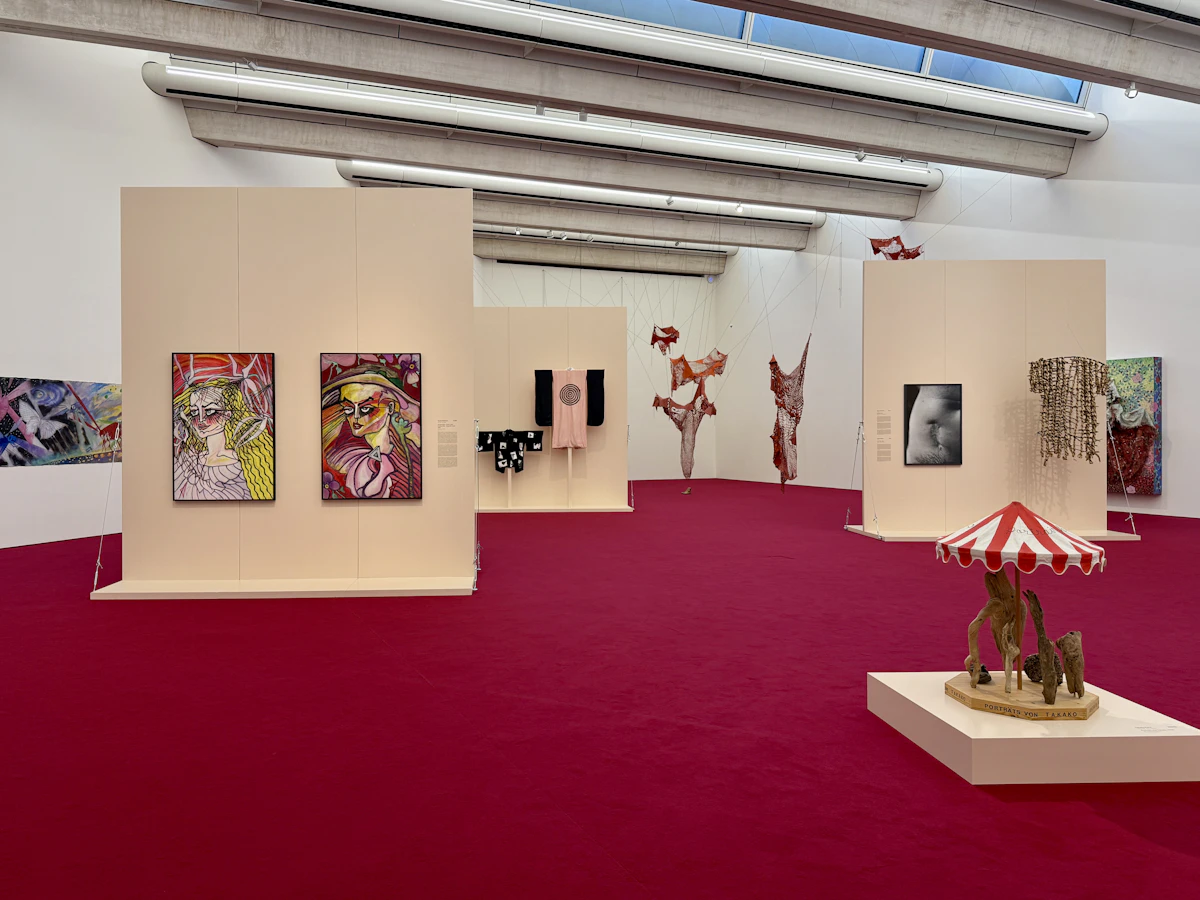
Luxembourg's museum of modern art is staging a large-scale reassessment of postwar Japanese art through the work of women. 'Kaihō: Japanese Women Artists after 1945,' on view at Mudam Luxembourg through February 14, 2027, traces the activity of 39 artists from the end of the Second World War to the close of the 20th century through more than 120 works. The roster reaches from internationally famous figures such as Yayoi Kusama, Yoko Ono, and Atsuko Tanaka to practitioners who have received far less recognition, and spans several generations. The media are deliberately broad: painting, sculpture, ceramics, photography, film, performance, and installation all appear, underscoring how varied women's artistic practice in postwar Japan has been. Spread across two floors in five chapters, the show opens with two dye-on-cloth 'Woman' figures from 1955 by Saori Akutagawa — one radiating ecstatic joy, the other screaming with rage — an emblem of how the postwar era opened new possibilities for women while leaving many constraints intact. The first chapter, 'Witnessing History,' confronts war, colonialism, and national memory. Its centerpiece is a panel from 'The Hiroshima Panels' (1950) by Toshi Maruki and Iri Maruki, on special loan from the Maruki Gallery in Saitama: near-life-size figures writhing in atomic flames, rendered in black-and-white ink with searing red fire. The same chapter places works by Taeko Tomiyama, shaped by her engagement with miners' struggles and Korean democratization movements, alongside Mao Ishikawa's photography. The curator is Florence Ostende, now director of artistic programming and content at the Guggenheim Museum Bilbao, who spent roughly three years researching the show while based at Mudam. Her starting point was the observation that, even as Kusama and Ono have drawn major European retrospectives in recent years, many other significant Japanese women artists remain little known outside Japan. Beyond rediscovery, the show repositions these artists within their society and time, and within cross-border artistic exchange. Ostende has said that their very presence demonstrates that the history of modern and contemporary Japanese art is a global one, a correction to narratives that have treated it as a narrower, male-centered story.