Museum report·Amsterdam
Adam Pendleton Turns the Stedelijk's White Staircase into a 'Black Cube' for His First Dutch Museum Show
'Some Wild Kind of Language', Adam Pendleton's first museum exhibition in the Netherlands, opened 10 October 2026 at the Stedelijk Museum Amsterdam and runs until 17 January 2027, with the museum's historic staircase transformed into a 'black cube'.
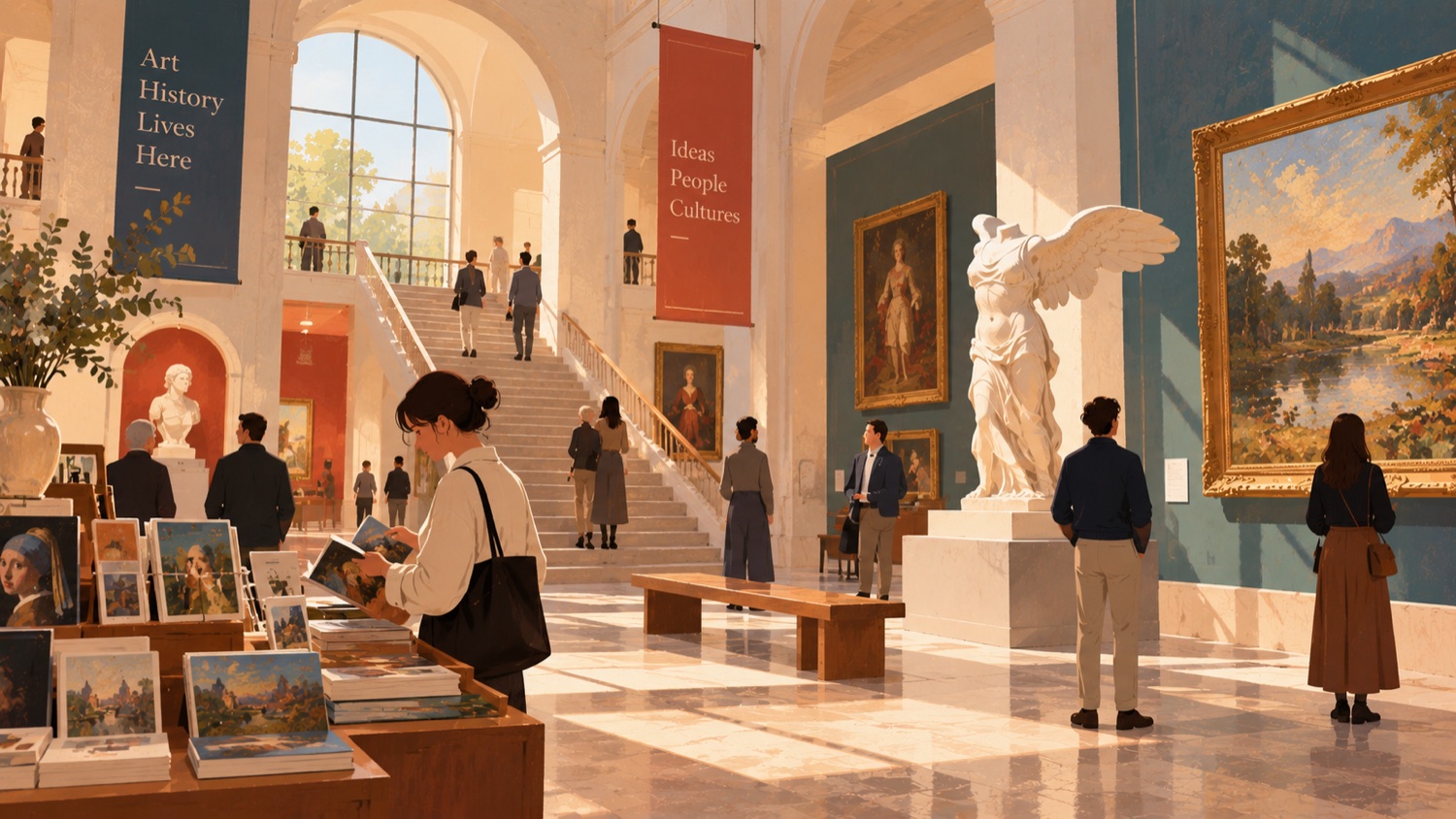
Adam Pendleton has opened 'Some Wild Kind of Language' at the Stedelijk Museum Amsterdam, his first museum exhibition in the Netherlands. On view from 10 October 2026 until 17 January 2027, the presentation brings ten paintings and eight large-scale drawings into the historic spaces of the museum, many of them new and never previously shown. The exhibition's most striking gesture is architectural. Pendleton has reimagined the Stedelijk's iconic staircase — one of the earliest 'white cubes' in the world, painted white by curator Willem Sandberg in 1938 — as a 'black cube', reorienting the relationship between his work and the museum's architecture. Within the staircase's niches hang eight monumental Basis drawings, the largest Pendleton has completed to date, made with gold ink on matte black paper. Installed in the museum's central spaces, the show positions the building's architecture and collection as active components of the exhibition rather than a neutral backdrop. Pendleton's work sits in the unstable territory between language and image. His long-term project 'Black Dada', borrowed from Amiri Baraka's 1964 poem, treats words as material that appears, repeats, becomes partially illegible and returns as visual matter. In the museum's IMC Gallery, the paintings and drawings enter into dialogue with the legacies of modernism and abstraction that run through the Stedelijk's collection. The exhibition marks a milestone in Pendleton's practice, arriving alongside other major museum presentations including 'Love, Queen' at the Hirshhorn and 'Can I Be?' at the Langen Foundation. For Amsterdam, it offers the most concentrated encounter yet with an artist whose inquiry into how forms of attention emerge through relation and formal invention has made him one of the defining painters of his generation.