Profile·Global
Painting With Cake Tips and Bottle Plastic: Michael Assiff Talks to BOMB
In a BOMB interview with Marcus Civin, the painter describes building surfaces from bottle plastic piped through cake-decorating tips, weathering house paint with road salt — and learning from truck driver Courtland.
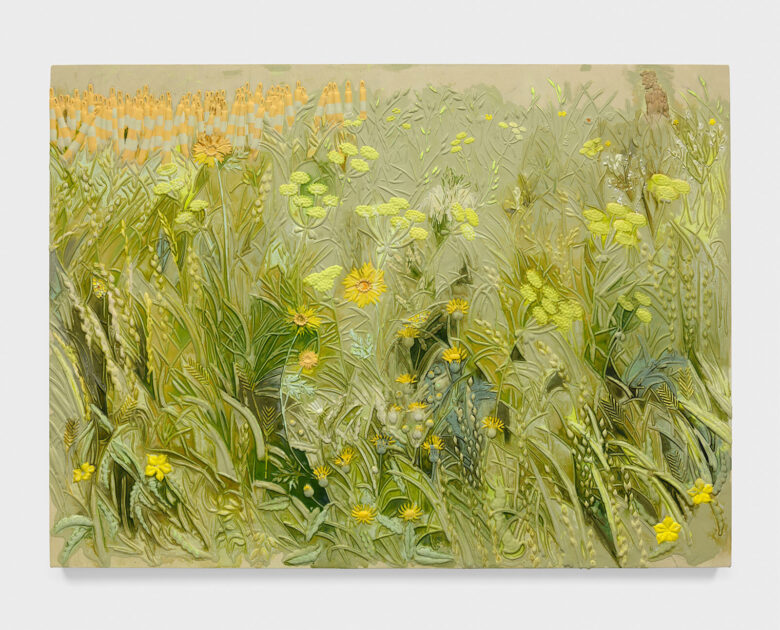
Michael Assiff makes paintings the hard way. In an interview with Marcus Civin for BOMB, published October 14, the painter describes surfaces built from plastic salvaged from bottles, applied with cake-decorating tips — a pastry technique repurposed for mark-making, precision turned strange. His materials read like a hardware-store poem: methacrylic, Aura, Gennex Color Technology, road salt. House paints get watered down; finished surfaces pick up stains from weathering and pollutants, the outside world literally marking the work. The 2026 piece "Untitled (Dow Chemical)" wears its industrial inheritance in its title. Assiff shows with Post Times gallery in New York City, and the interview ranges beyond materials into the working life around the studio — including Courtland, a truck driver whose perspective on the work made it into the conversation, a reminder that Assiff's practice keeps one foot in the world of physical labor. What emerges is a practice that treats painting as a physical, weathered thing — built up, broken down, stained by the world it passes through. The cake tips are the giveaway: precision tools for decoration, turned to the serious business of making a surface that has lived a little. The results sit closer to relief sculpture than to anything a brush would do. It is painting as weather report: every stain a record of exposure. The conversation suggests Assiff’s real subject may be labor itself — the physical work of making, hauling, and surviving. What remains is stubbornly handmade in an age of the digital image, and all the more valuable for it. Nothing here is clean, and that is the point. Courtland's presence in the interview is telling — Assiff's work circulates in a world of trucks, warehouses and loading docks, and the conversation treats that as material rather than background. It is painting that smells of the street, in the best way.