Profile·Chicago
Ann Toebbe's Tilted Rooms: Interiors, Collage and Skewed Perspective in Chicago
The Chicago painter builds interiors and cross-cut buildings in gouache, oil, paper collage and colored pencil, using reverse and parallel perspective — with a Hyde Park Art Center show and a group exhibition at Andrew Rafacz through October 31.
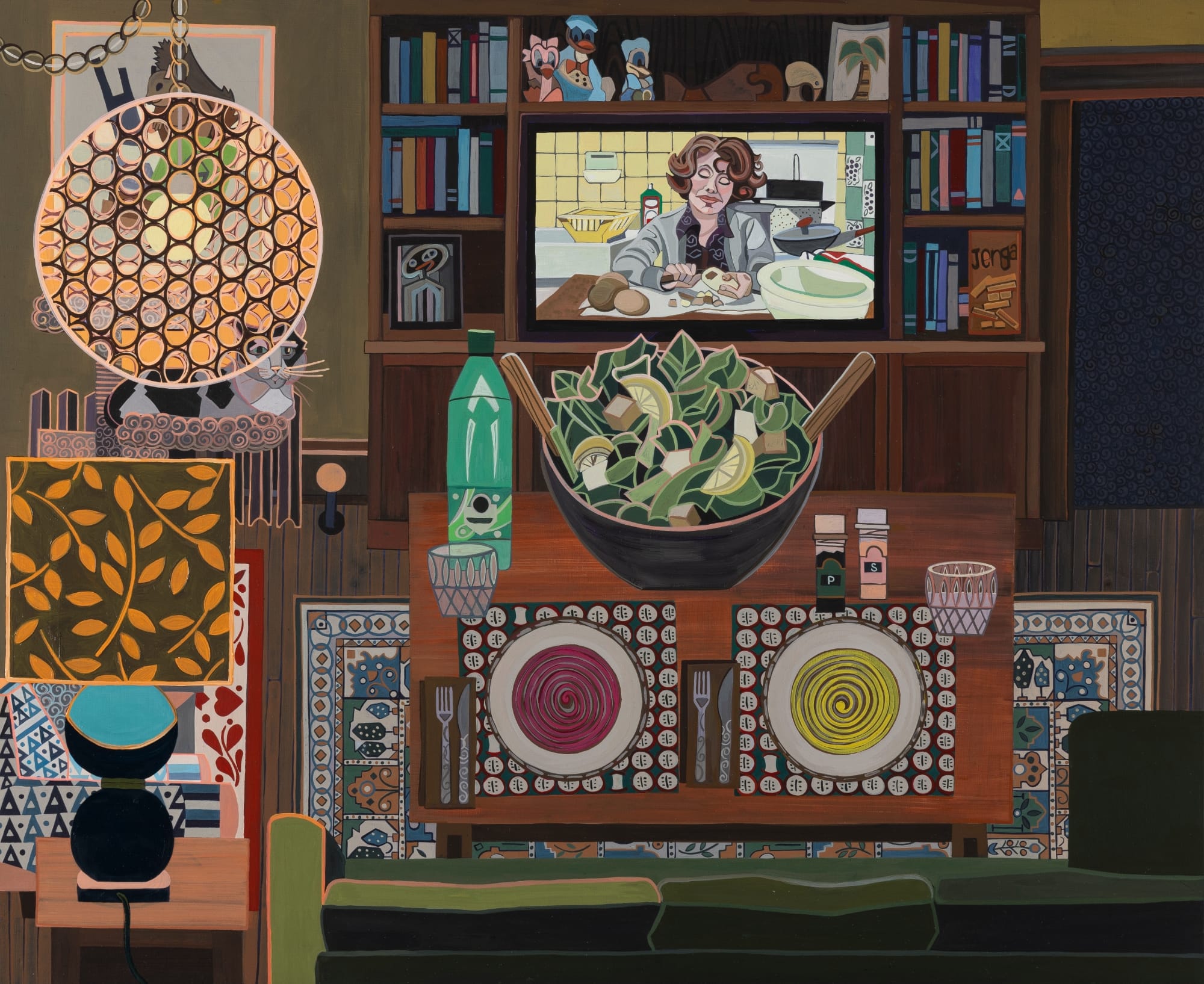
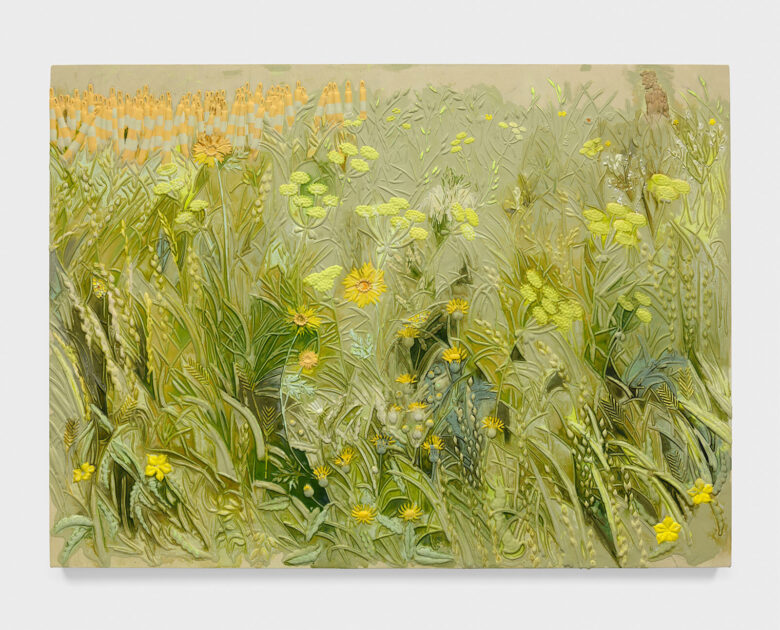
Ann Toebbe paints rooms that refuse to sit still. The Chicago artist works interiors and cross-cut buildings in gouache, oil, paper collage and colored pencil, and her perspectives skew — reverse and parallel systems colliding within a single image so that floors tilt and walls lean toward the viewer. The works accumulate domestic detail with an almost archival density. "Jeanne Dielman" (2024) nods to Chantal Akerman's landmark film; "The Farm (Spring)" (2023) and "Overgrowth" (2026) push outdoors; "Northside Southside" (2023), "Toys et Cetera" (2026), "Family Room (Sister)" (2017) and "Hardwood Floors" (2020) map the rooms of a life in layered, patterned surfaces, each one part memory palace and part floor plan. Toebbe recently showed at the Hyde Park Art Center, where her work was reviewed by Elisa Shoenberger, and she is currently in a group exhibition at Andrew Rafacz that runs through October 31 — a steady run of visibility for a painter building a distinctive corner of the Chicago scene. What holds the work together is the collision between order and tilt — the collage logic of a home assembled from fragments, drawn with a surveyor's care and a dreamer's geometry. It is interior painting as portraiture: rooms remembered the way memory actually stores them, at an angle. Collage enters not as decoration but as structure: paper fragments carry pattern, texture and memory into the painted field. The method gives her interiors the feel of cutaway dollhouses — intimate, theatrical, slightly impossible. It is the kind of work that makes a room feel both documented and dreamed — and that is a rare trick. The tilted geometry does emotional work too — a home seen from every angle at once, the way a child remembers a staircase or a hallway. Nothing here is neutral; every room is an argument about how space holds a life.