Art world report·New York
Jazmine Hayes Turns a $128M Brownsville Center Into a Four-Part Ode to Protection
Local artist and community educator Jazmine Hayes has created 'I Am Protected' (2026), a four-part public art commission for the entrances of Brooklyn's new $128 million Brownsville Multi-Service Center, unveiled last month through the Department of Cultural Affairs' Percent for Art programme. The East New York-raised artist's symbolically empowering designs channel the cultural history of Brownsville's residents and carve out space for youth ambition.
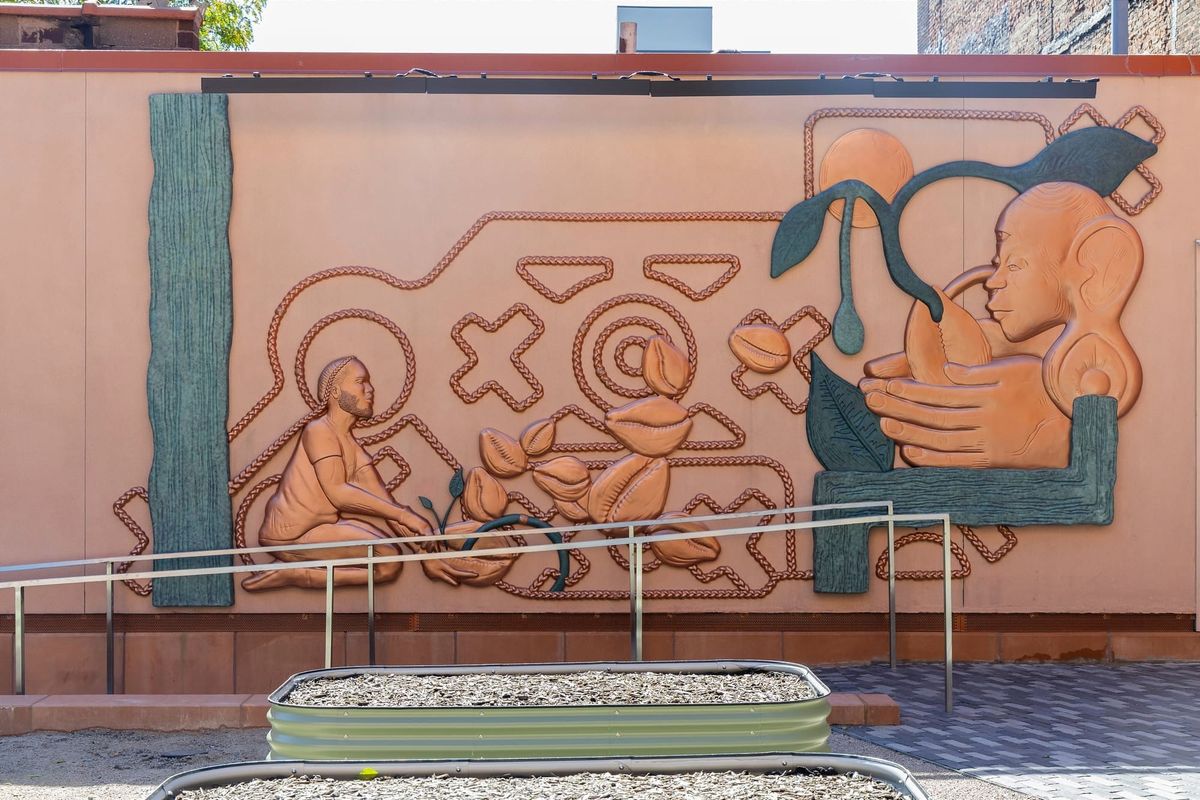
Last month, three New York City agencies unveiled a new $128 million multi-service center in Brooklyn's Brownsville neighbourhood — and its entryways carry an extensive public art commission by local artist and community educator Jazmine Hayes. Created through the Department of Cultural Affairs' Percent for Art programme, her four-part commission, I Am Protected (2026), places one symbolically empowering design at each entrance to the building.
The designs draw on the cultural history of Brownsville's residents and are conceived, in Hayes's words, to make space for youth ambition and curiosity. 'I genuinely want any child that walks through the door to be and feel protected,' she told Hyperallergic. 'I want them to have affirmations of care, support, and community.' One of the four designs, 'In My Mother's Garden', sets the tone: affirmation as civic infrastructure, woven into a building meant to serve the neighbourhood.
Hayes was born and raised in East New York, adjacent to Brownsville, and knew the neighbourhood well when the Department of Cultural Affairs approached her. The commission follows another public artwork she completed nearby the previous year for the New York City Housing Authority's Brownsville Houses — a sign of an artist whose practice has grown in direct conversation with the communities around her.
The Brownsville commission lands as public art continues to be tested as a tool of neighbourhood investment: a major piece of city infrastructure opening its doors with art not as decoration but as a statement of intent about who the building is for. For Hayes, the work is an extension of her dual practice as artist and educator — protection rendered as something you walk past every day.