Policy brief·Rome
UNIDROIT Maps Next Steps for Stolen-Art Rules at Centenary Workshop in Rome
UNIDROIT convened experts at its Rome headquarters on 29 September 2026 to discuss a draft White Paper reviewing the institute's contribution to international cultural-property protection and recommending future work. The paper is to be finalised ahead of the joint Governing Council and General Assembly meeting in December 2026.
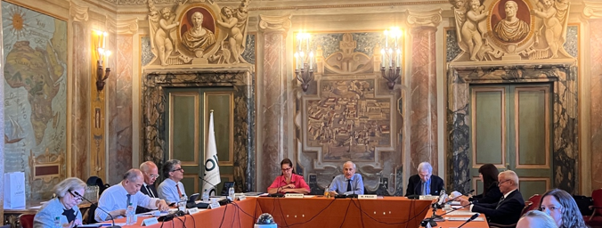
An international legal blueprint for the next phase of cultural-property protection is taking shape at UNIDROIT. Meeting at the institute's Villa Aldobrandini headquarters in Rome on 29 September, experts from academia, museums and intergovernmental bodies discussed a draft White Paper that reviews what the organisation has achieved in safeguarding cultural objects and recommends where its work should go next. The document is due to be finalised before UNIDROIT's Governing Council and General Assembly meet jointly in December 2026. The session was one of seven workstreams marking the institute's centenary year. Chaired by Professor Manlio Frigo, the opening discussion examined how uniform private law can serve cultural property, touching on the field's conceptual foundations, its scope and its core functions. A first panel, led by UNIDROIT principal legal officer and treaty depositary Marina Schneider, assessed the track record of two landmark instruments: the 1995 UNIDROIT Convention on Stolen or Illegally Exported Cultural Objects and the 2011 UNESCO-UNIDROIT model provisions on state ownership of undiscovered cultural objects. Speakers included Marc-Andre Renold, co-director of the University of Geneva's Art Law Centre, and Giuditta Giardini of the Universita Cattolica del Sacro Cuore. Later sessions turned to unfinished business. Renold chaired a discussion of UNIDROIT's project on private art collections and orphan objects - works with no clear provenance - with contributions from Seoul National University's Keun-Gwan Lee and Marcilio Toscano Franca Filho of Brazil's Federal University of Paraiba. A final panel under Ambassador Angelo Dan took stock of the White Paper's recommendations for future work, joined by former UNIDROIT secretary-general Angelo Estrella Faria and UNESCO chair in cultural heritage law Ana Filipa Vrdoljak. The workshop forms part of a consultation process feeding into the final White Paper, which will inform how the institute directs its cultural-property agenda beyond its centenary year.