Exhibition preview·Toronto
Toronto Biennial spreads rupture across 13 venues, from a bell-filled procession to a Harriet Tubman tribute
The fourth Toronto Biennial of Art, Things Fall Apart, curated by Allison Glenn, brings more than 30 artists to venues across Toronto and beyond through 20 December, using the Great Lakes and the idea of rupture to frame works about history, borders and movement.
The fourth Toronto Biennial of Art takes rupture as its organising idea. Titled Things Fall Apart and curated by Allison Glenn, it gathers more than 30 artists and collectives across more than 13 Toronto sites, plus presentations in Anchorage and Times Square. It runs through 20 December, taking the Great Lakes as a starting point for questions about borders, histories and movement.
At the Art Gallery of Ontario, Dawoud Bey's Material Histories, Living Landscapes sets photographs from three landscape series around a two-channel video, alongside sculptures and ritual objects with roots in Nigeria, Ghana and the Kingdom of Kongo, creating a call and response across the Middle Passage. At the University of Toronto Art Centre, Antonio Obá strings rows of brass bells across a gallery so visitors brush against them on a processional path, leading to a painting that reimagines a 1957 photograph of Dorothy Counts integrating a Charlotte school, replacing a jeering crowd with a supportive march.
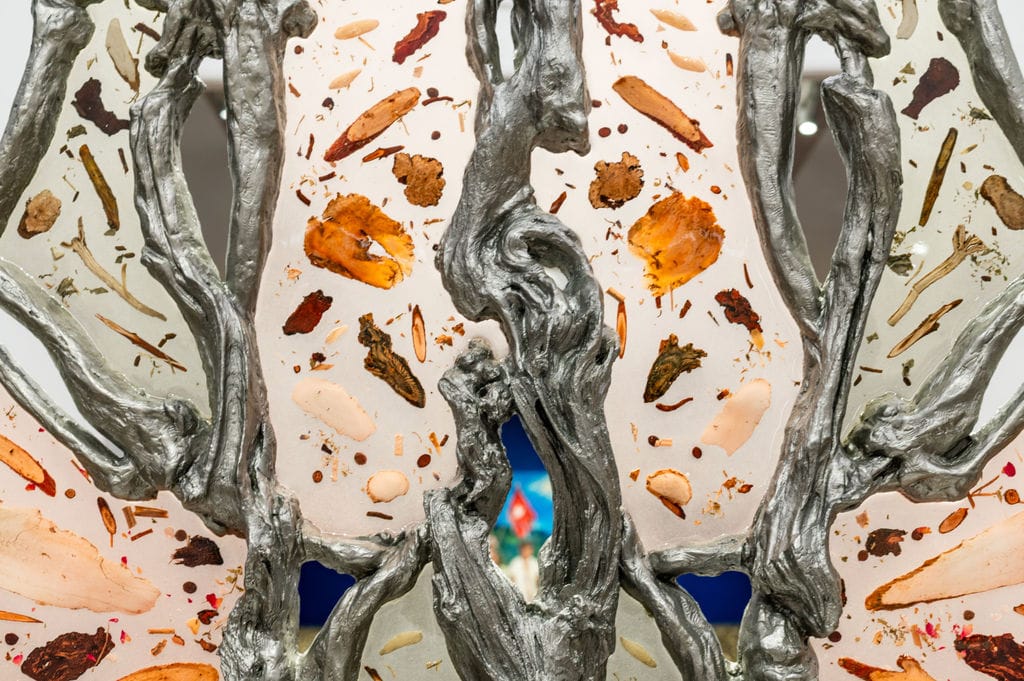
Other works turn to knowledge carried in bodies and materials. Wen Liu's human-scale sculpture suspends herbal medicines prescribed after her father's death inside steel and resin, glowing like stained glass. Taqralik Partridge revisits her grandmother's boat journey across the Hudson Strait in a mirrored room, with an elder relative's voice carried over the sound of water. At the Royal Ontario Museum, Raphaël Barontini fills the Crystal Court with draped textile panels honouring Harriet Tubman and the Underground Railroad, while in Scarborough a permanent structure by Nirbhai Singh Sidhu, built with earth from Punjab, offers a space for Sikh stillness and listening.
The review that prompted this report praises the exhibition's range but questions its cohesion, noting that the distance between venues and the breadth of subjects, from Inuit migration to sheep trading around the Strait of Hormuz, make it hard to hold as a single argument. It also probes the central concept, asking whether rupture assumes a prior unity that never truly existed for those on the underside of modern history. That unresolved question, the review suggests, may be the show's most productive tension.