Museum report·Newark
$135,000 Buyback: Newark Museum Returns Enslaved Potter David Drake's Jug to His Family
The Newark Museum of Art has agreed to return an 1852 jug by David Drake, the enslaved South Carolina potter, to his descendants and buy it back for about $135,000 — the latest in a wave of restitution agreements with the artist's family.
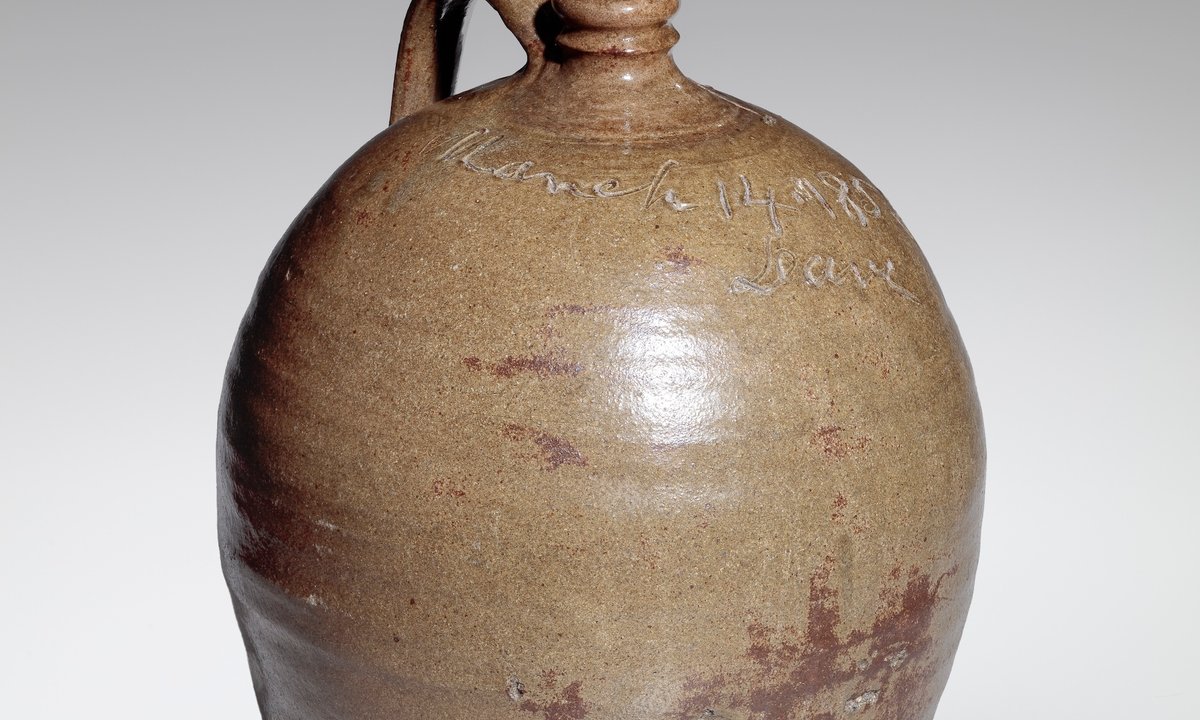
The Newark Museum of Art in New Jersey has reached an agreement with the family of David Drake, the enslaved potter from South Carolina, to restore ownership of a large brown ceramic jug in its collection, dated 1852, and then purchase it back for the museum's permanent collection. The museum began a dialogue with Drake's family this past summer, and the deal was concluded within a few months — remarkably fast by museum standards. After commissioning several appraisals, the two sides settled on a value of around $135,000 for the vessel.
Drake, who lived from around 1801 to 1874, is one of the most celebrated potters in American history, known for inscribing his stoneware vessels with verse at a time when South Carolina's anti-literacy laws forbade teaching enslaved people to write. The Newark Museum acquired the jug in 2022 to help teach the history of enslavement and enslaved labour as part of its reimagined American art galleries. Director Lisa Funderburke said the museum's senior director of registration and collections management, Amber Germano, first raised the idea of contacting the family over the summer. Family adviser George Fatheree described the outcome as a win for both sides, and Yaba Baker, one of Drake's fourth great-grandsons, said the family agreed the pots should remain on public view rather than being taken out of circulation.
The agreement follows a landmark deal just over a year ago, when the Museum of Fine Arts, Boston returned two major Drake stoneware vessels to the family and bought one back. Similar return agreements have since been reached with the Telfair Museums in Savannah, the Georgia Museum of Art in Athens and the Virginia Museum of Fine Arts, among others. Drake's market has risen sharply: the auction record for one of his works is the $1.65 million paid for his 25-Gallon Poem Jar of 1858 at Crocker Farm Auctions in Maryland in 2021.