Museum report·Water Mill
A Century-Old Chase Painting Gets Its Missing Details Back — With a Little Help From AI
Artificial intelligence helped conservators restore William Merritt Chase's A Comfortable Corner (around 1888) for the Parrish Art Museum, combining a pre-1960s black-and-white photograph with a colour image to reveal parts of the composition lost to earlier restorations.
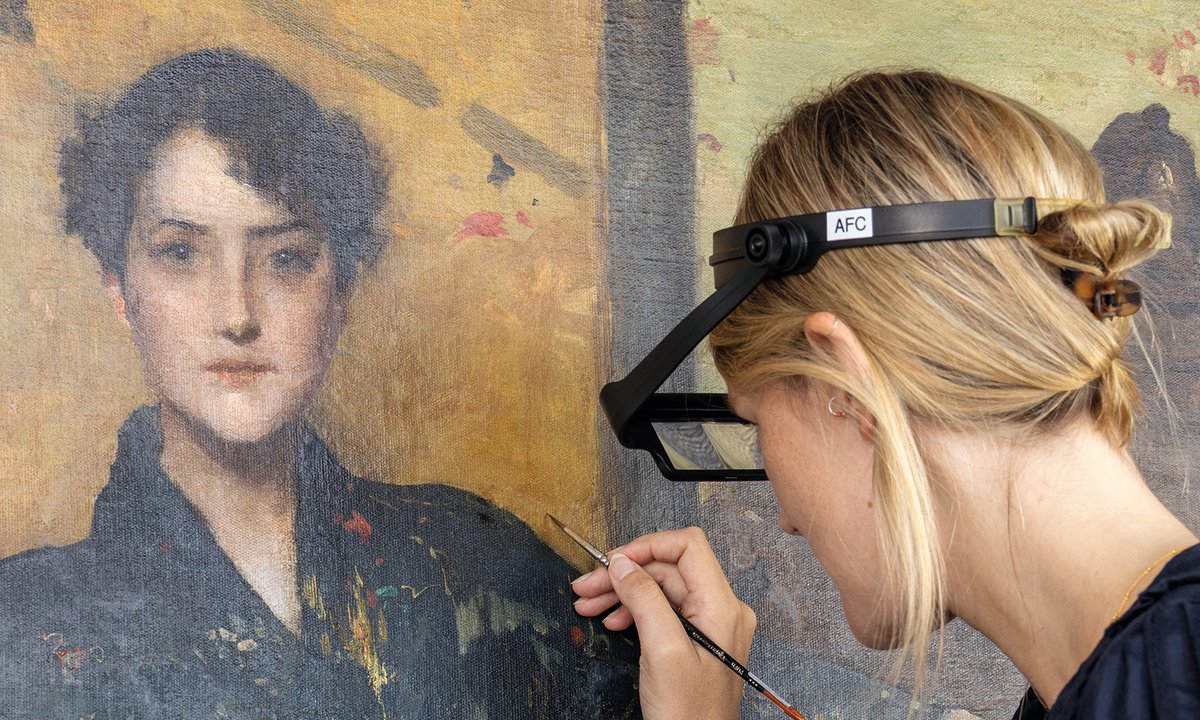
When William Merritt Chase's painting A Comfortable Corner, made around 1888, entered the conservation studio, it was carrying more than a century of history on its surface, including the interventions of conservators who had treated it decades earlier. Artificial intelligence contributed to a restoration effort that has now peeled back some of those interventions and recovered details that had disappeared.
Working with conservator Suzanne Siano and her team at Modern Art Conservation, the Parrish Art Museum set out to determine what restoration was needed to prepare the painting for exhibition. A black-and-white photograph, understood to have been taken before a restoration in the 1960s, showed that more of the composition had once been visible than what had survived in the painting, and revealed details that had since vanished.
Using AI, the historical photograph was combined with a colour image of the painting to create a composite showing the areas where the two diverged, guiding the conservators' decisions about what to restore. The project, supported by a Bank of America grant, was the first time Siano's studio had used AI as an aid in the conservation of a painting, and it illustrates both the possibilities and the limitations of the technology.
The newly restored painting belongs to the collection of the Parrish Art Museum in Water Mill, New York, and will go on display in the exhibition William Merritt Chase and Walter Granville-Smith: American Impressionists of the East End, which runs from 14 November 2026 to 21 March 2027. The Parrish has an especially deep connection to Chase, a prominent figure of Gilded Age New York who spent time on Long Island's East End, where the museum stands.