Exhibition preview·Stockholm
Moderna Museet Stages First Major Nordic Survey of Mirror-Mosaic Pioneer Monir Shahroudy Farmanfarmaian
Tehran/New York at Stockholm's Moderna Museet, running 3 October 2026 to 28 February 2027, is the first major Nordic presentation of the Iranian artist, gathering more than 100 works from 1970 to 2015.
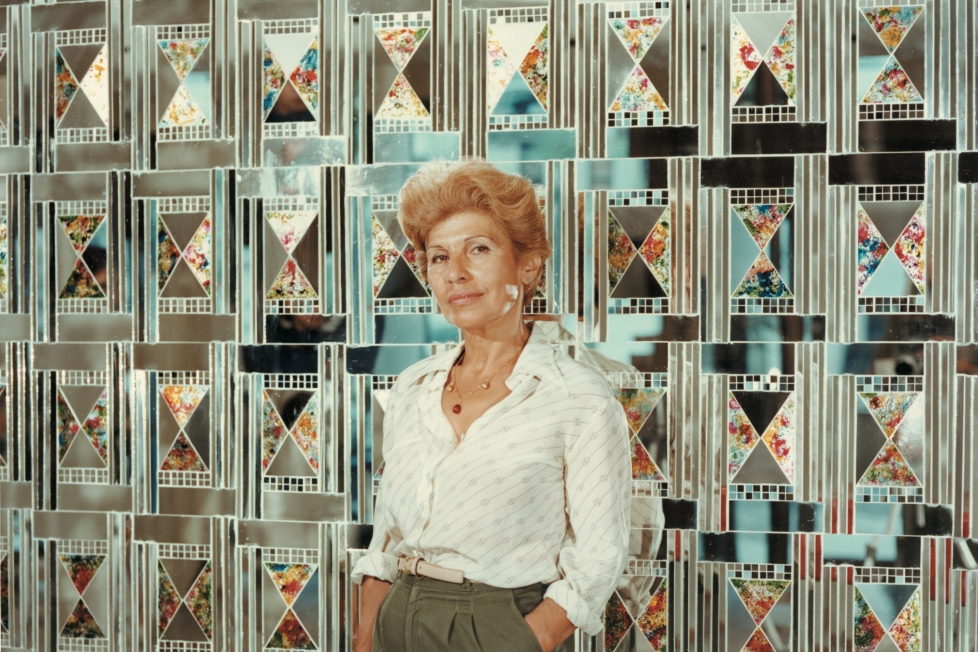
Moderna Museet in Stockholm is presenting the first major survey in the Nordics of Monir Shahroudy Farmanfarmaian, the Iranian artist whose shimmering mirror mosaics fuse traditional Islamic craft with geometric abstraction. Tehran/New York, on view from 3 October 2026 until 28 February 2027, gathers more than a hundred works made between 1970 and 2015.
Farmanfarmaian, who lived from 1922 to 2019, came to her signature mirror mosaics while working on a US-funded government project in Iran in the 1960s, when she rediscovered the country's cultural heritage. She began drawing on traditional mirror mosaic, Persian gardens and illuminated Qur'anic manuscripts, combining them with motifs from reverse glass painting, a technique prominent under the Qajar dynasty, and with poetry, which she treated as a vehicle for philosophical and social commentary.
The Stockholm exhibition hangs these works non-chronologically under poetic subtitles such as Spring, Longing and Fragments. Alongside the glittering reliefs are labyrinthine two-dimensional mazes the artist made in the 2000s after returning to Tehran and resuming work with the craftsmen who had helped produce her mirror mosaics in the 1970s; dollhouse-like heartache boxes made after her husband's death in the early 1990s; and aleatory drawings from the late 1970s and early 1980s created by dipping flies in ink and letting their movements mark the paper. Bahman Kiarostami's film Monir, from 2017, screens in a side room.
The survey marks a full circle for an artist who spent 25 years in exile after the 1979 Islamic Revolution, during which her Tehran home and studio were confiscated. Her career culminated in a 2015 Guggenheim exhibition in New York, the first retrospective the museum had devoted to an Iranian artist.