Museum report·Vienna
2028 Election Pledge Revives Mexico's Century-Old Claim on Vienna's Feather Headdress
Economist Gunther Fehlinger-Jahn, an unconfirmed candidate in Austria's 2028 presidential election, has pledged to return the 16th-century Moctezuma feather headdress from Vienna's Weltmuseum to Mexico.
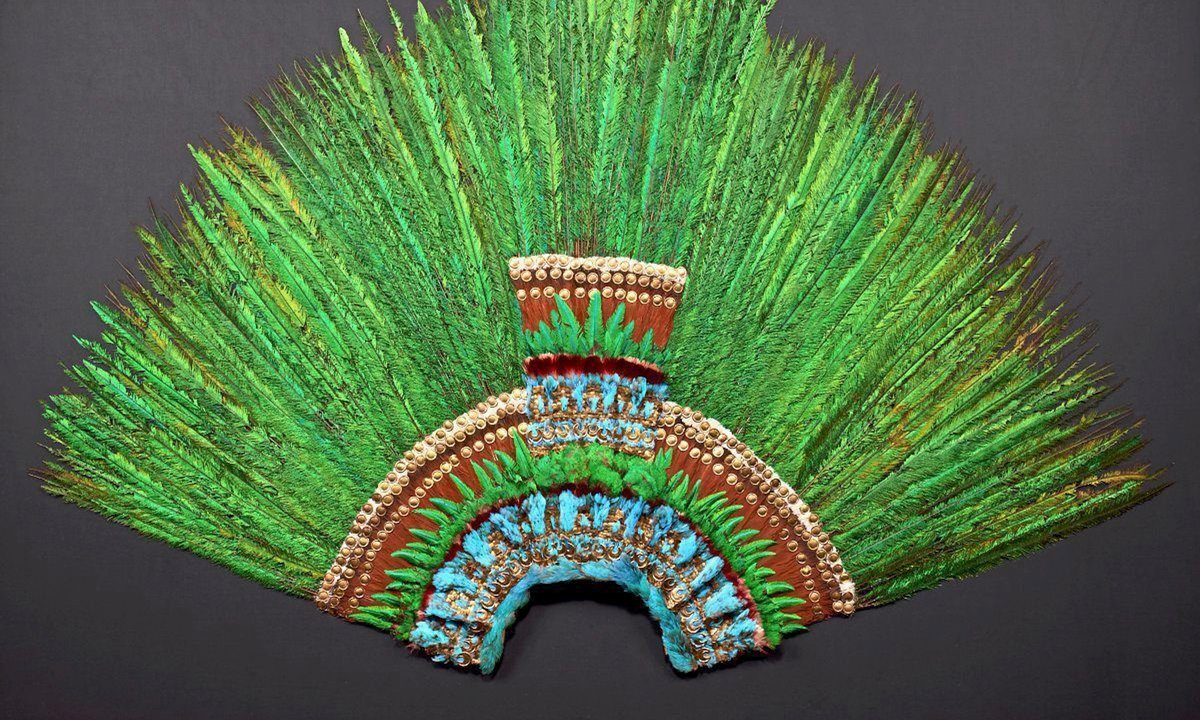
An Austrian presidential hopeful has put one of the world's most contested cultural objects back in the spotlight, pledging to return the 16th-century feather headdress known as Moctezuma's crown to Mexico if elected in 2028. Gunther Fehlinger-Jahn, an economist whose independent candidacy remains unconfirmed, said Austria and Mexico should negotiate a bilateral solution based on friendship rather than confrontation, and that the original headdress ultimately belongs to Mexico. The object, housed at the Weltmuseum in Vienna, is the only known surviving example of its kind and a masterpiece of Indigenous featherwork. The quetzalapanecayotl, or Quetzal headdress, measures 1.3 meters high and 1.75 meters wide, and originally featured four zones of emerald-green, red, brown, and blue feathers alongside gold ornaments. Mexico has sought its return for decades without success, making it a potent symbol of the country's broader repatriation campaign. How the headdress reached Europe remains uncertain. One theory holds that Moctezuma, the last Aztec ruler, presented it to the Spanish conquistador Hernán Cortés, and that it traveled among objects Cortés sent to Charles V. Most scholars now agree, however, that Moctezuma never wore it, and that its association with him developed much later. Its first documented European appearance comes in 1596, in the inventory of Ambras Castle in Innsbruck, where it was catalogued as a Moorish hat. Rediscovered in disrepair in the 19th century, it was identified as Indigenous Mexican work, restored, shown at Vienna's Natural History Museum from 1888, and eventually moved to the Weltmuseum. The pledge faces a formidable practical obstacle: a 2017 expert study concluded the headdress is too fragile to survive transport without advanced vibration-prevention technology. Austrian museum officials have long cited conservation concerns in refusing restitution claims. Whether a campaign promise can overcome that barrier remains to be seen, but the proposal marks what may be the first time the headdress has featured in an Austrian politician's broader repatriation platform.