Museum report·Los Angeles
Banksy, Rivera and Baca Share a Gallery at the Lucas Museum
The Lucas Museum of Narrative Art's top-floor murals gallery pairs a huge reproduction of Diego Rivera's destroyed 1933 Rockefeller Center mural with 12 works by Banksy and sketches for Judy Baca's Great Wall of Los Angeles.
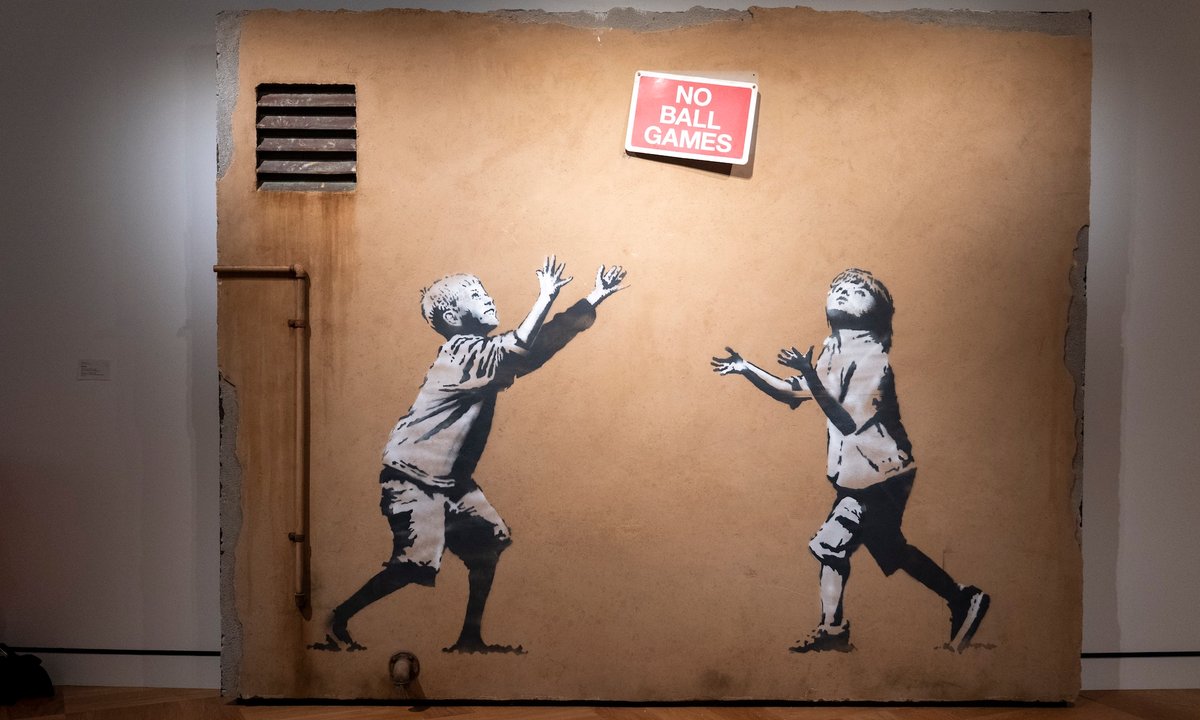
On the top floor of the Lucas Museum of Narrative Art in Los Angeles, which opened to the public on September 22, sits a gallery some visitors may never find: a space devoted to murals, an unusual category for a fine art museum but a fitting one for a city dotted with wall paintings. The gallery is also, unexpectedly, the most overtly political corner of an institution that largely avoids political art elsewhere. Dominating the entrance is a huge reproduction of Diego Rivera's 1933 mural for Rockefeller Center in New York, a pro-worker and somewhat anti-capitalist composition so provocative that Nelson Rockefeller had the original demolished. Rivera later recreated a smaller version in Mexico City, and the Lucas Museum's reproduction is based on that iteration. Nearby hang sketches and archival material for Judy Baca's The Great Wall of Los Angeles, the half-mile-long mural chronicling California's history. In the adjoining gallery are 12 works by the British street artist Banksy, an extraordinary institutional presence for an artist who has generally shunned museum exhibitions. Some of the pieces were reproduced in Banksy's studio, while two are loans. Details of the arrangement were so closely guarded that most museum staff did not know what would fill the rooms until the media preview, and chief executive Tracey Bates has declined to explain how the works reached the institution. The murals gallery caps a museum founded by filmmaker George Lucas and Mellody Hobson and designed by Ma Yansong of MAD Architects, with some 100,000 square feet of gallery space across roughly 30 galleries drawn from Lucas's collection of more than 40,000 works. By placing Rivera's demolished masterpiece, Baca's community epic, and Banksy's stenciled interventions in conversation, the fifth floor makes a quiet argument that narrative art has always been a public, and often political, act.