Exhibition preview·London
Discarded jugs become faces of grief: Hazoumé's blue masks bear witness to war, loss and ecological ruin
Beninese artist Romuald Hazoumé's new London show turns plastic jerry cans and found objects into masks honouring women caught in war and disaster, using blue as a counterweight to the colour of blood.
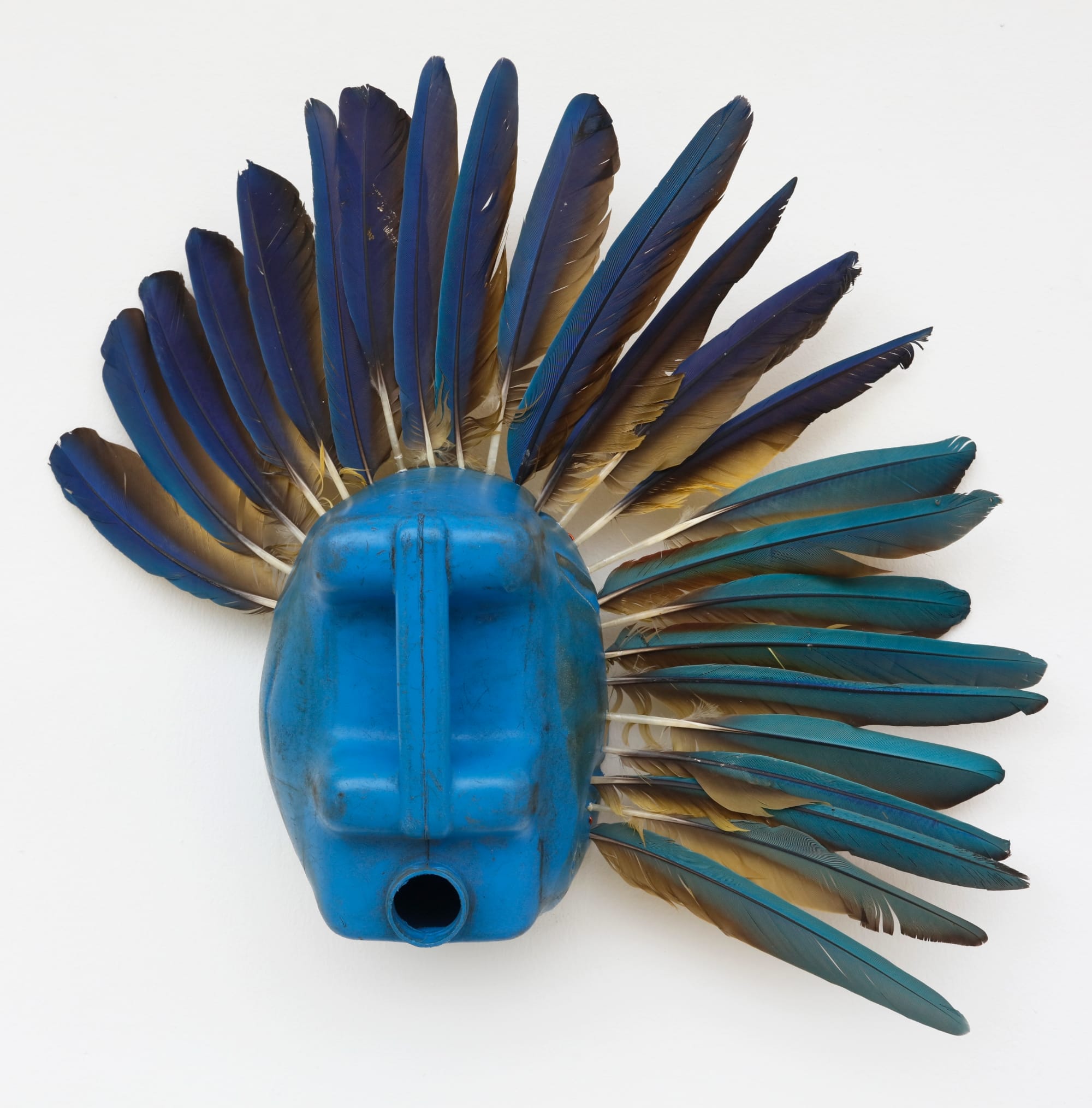
At October Gallery in London, Beninese artist Romuald Hazoumé has filled the walls with faces made from the most ordinary of objects. His exhibition, titled My Blue Period, runs through November 21 and gathers a new group of works from his long-running series of fake masks, in which plastic jerry cans become heads, their spouts and handles standing in for mouths and noses, dressed with feathers, netting and worn paintbrushes.
The show takes its name from a deliberate contrast. Where Picasso's early blue period grew out of personal mourning, Hazoumé looks outward, to ecological destruction, armed conflict and genocide. Blue, in Yoruba culture a colour linked to calm and healing, becomes his answer to the red lines drawn in wartime and the colour of blood itself. He describes the shade as a middle ground, a visual plea for sympathy between people at a moment when suffering dominates the news.
Earlier works in the series tackled large subjects such as migration and social collapse, often through male figures. The newest masks turn instead to individual women and specific tragedies: a mother in Gaza killed by a sniper while fetching bread for her children, and a Russian widow who took her own life after losing both sons. The artist says he collected ordinary names from news reports around the world while making the pieces, and that the work affects him deeply, since he makes the masks for himself first, as a way of giving shape to what he feels.
Crucially, the container never disappears. Viewers are meant to keep seeing the plastic jug even as a face emerges from it, a tension the artist considers the point of the work. The illusion holds only because the material stays visible, reminding the audience that the face they perceive is one they are projecting onto discarded things. In that gap between rubbish and portrait, Hazoumé finds a language for mourning that is both intimate and global.