Exhibition preview·South Korea
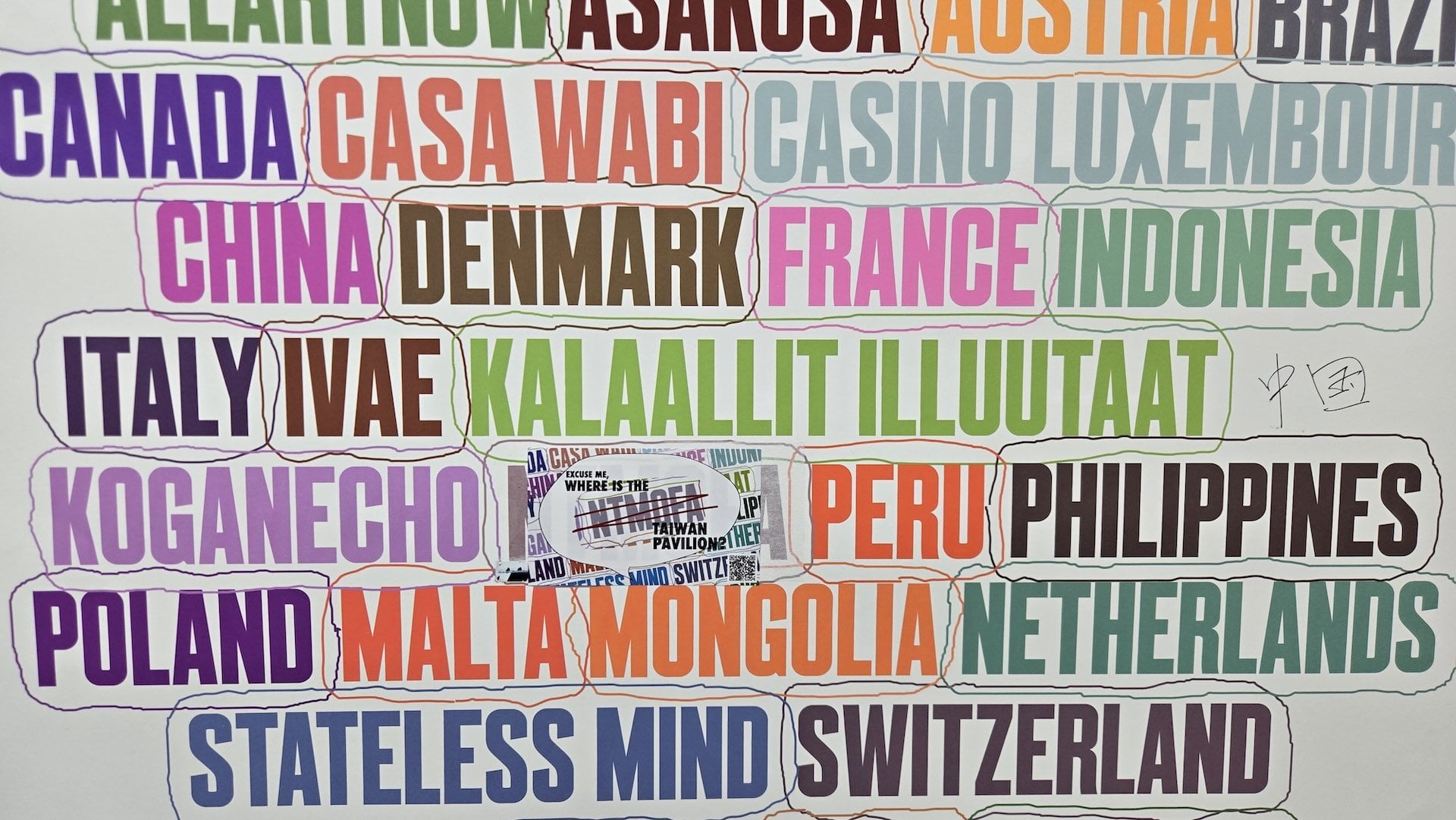
Naming row at the Taiwan pavilion steals the show at a political Gwangju Biennale
In an ARTouch dispatch from Korea's biennale season, critic Nobuo Takamori reviews Gwangju Biennale 2026 — Ho Tzu Nyen's 'You Must Change Your Life' — alongside the Daejeon Photo Festival and MMCA Seoul's Do Ho Suh survey. The sharpest moments are political: the Taiwan pavilion's naming controversy and its excavation of Taiwan's Cold War nuclear programme.
Korea's biennale season turns the whole peninsula into a high-speed art itinerary, and critic Nobuo Takamori's dispatch for ARTouch (published 17 October) rides the KTX from Gwangju to Daejeon to Seoul to take its temperature. The switch that powers the season is the Gwangju Biennale, this year directed by Singaporean artist Ho Tzu Nyen under the title 'You Must Change Your Life' — a line borrowed from Rilke that has landed awkwardly in translation, turning into inadvertent wordplay in Chinese coverage and an oddly brusque slogan in Korean.
The main exhibition compresses itself into the biennale's home venue, split into five halls that map a chain of relations from the microscopic to the cosmic: molecules and selfhood, bodies and relationships, landscape and learning, the universe and change, air and speech. Takamori reports mixed results: Goldin+Senneby's 'Resin Pond' (2026), a floor flooded with poured pine resin, anchors the opening hall, while 322 works by bereaved mothers' workshop participants at the 'May Mothers House' tie the show to the Gwangju Uprising's living memory. Elsewhere the programming feels thin — canonical names like Tehching Hsieh and Matthew Barney appear without fresh curatorial framing, and Jacqueline Kiyomi Gork's deafening sound installation 'Not Exactly BPM (Variation Rose)' bleeds through the entire building.
The review saves its strongest praise for the pavilions that confront politics directly. Taiwan's pavilion, 'Instance Dungeons: Gray Zone', curated by Chen Hsiang-wen, opened at the Asia Culture Center amid an international naming controversy — yet went head-on at surveillance, the Cold War and present-day geopolitics. Its sleeper hit is 'The House' by Hsu Che-yu and Chen Wan-yin, an archaeological reconstruction of Taiwan's secret Cold War nuclear-weapons programme that reportedly holds local audiences rapt.
The itinerary closes in Daejeon, where the International Photo Festival has taken 'Labour' as its theme, and in Seoul, where MMCA's Do Ho Suh retrospective — uniforms-as-sculpture, sold-out opening weekends — suggests the capital now responds to the biennale circuit on its own terms. The through-line of Takamori's account is that the most electric art on the peninsula this season is not in the main exhibition at all, but in the margins where the politics is bluntest.