Museum report·Bogotá
Colombia's far-right president strips Pride flag and protest-era works from the national museum; hundreds march in Bogotá
President Abelardo De La Espriella ordered around 30 works addressing LGBTQ+ rights, feminism and political violence removed from the Museo Nacional de Colombia. Hundreds protested outside the Bogotá museum over the weekend as police in riot gear stood by.
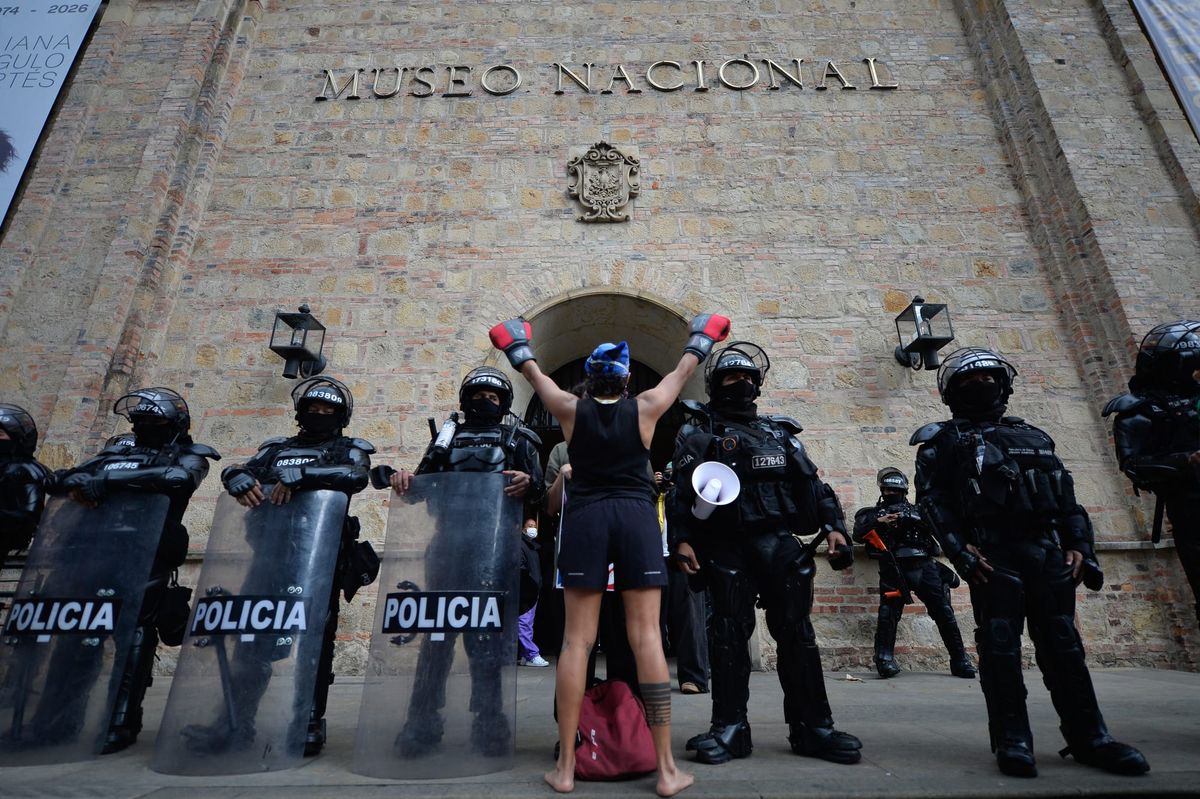
Hundreds of demonstrators gathered outside the Museo Nacional de Colombia in Bogotá over the weekend after the country's far-right government ordered the removal of roughly 30 artworks and objects dealing with political violence, women's rights and LGBTQ+ history — including a rainbow Pride flag. Images taken inside showed gallery walls stripped bare, with the ghostly outlines of dismantled pamphlets and photographs still visible.
The removals were carried out under the orders of President Abelardo De La Espriella, who instructed his culture minister, Paola Holguín, to take down what he called celebrations of terrorism. Among the withdrawn pieces were a Humberto Rincón Perfetti photograph from an LGBTQ+ rights march, a Pride flag that had belonged to activist Elizabeth Castillo, a pamphlet on women's reproductive rights, and ephemera tied to the 1990 assassinations of presidential candidates Carlos Pizarro Leongómez and Bernardo Jaramillo Ossa. Also removed was a pen fashioned from a bullet, used to sign the 2016 peace accord with the FARC and inscribed with the line that bullets wrote the past while education would write the future.
Most of the targeted objects hung in the "Making Society" gallery, inaugurated in 2019 to examine coexistence and resistance in Colombian history, along with a section devoted to socially engaged printmaking; works by the late Antonio Caro and Luis Caballero were affected. The museum directed inquiries to the culture ministry, which pointed to Holguín's posts on X arguing the museum should not serve as a vehicle for political indoctrination.
The directors of six modern art museums across Colombia signed a joint declaration voicing deep concern and urging the minister to reverse the decision. Bogotá curator Jaime Cerón connected the move to a broader assault on the arts, noting that the ministry had in September suspended a long-running federal stimulus program for artists. De La Espriella, a former criminal defense lawyer sworn in this August after defeating leftist senator Iván Cepeda by the narrowest margin in the country's history, campaigned on an "antiwoke" platform echoing right-wing movements elsewhere in Latin America.