Museum report·Vila do Conde
Derelict Farm Estate Reborn as DNA Lab Wins Portugal's €50,000 Gulbenkian Heritage Prize
The restoration of Quinta de Crasto, a 19th-century farming estate in Vila do Conde, has won the 2026 Gulbenkian Heritage Prize (€50,000). The project, by Nuno Valentim architects, converted the derelict estate into the BIOPOLIS biodiversity research centre, home to Portugal's first ancient DNA laboratory, developed with the University of Oxford.
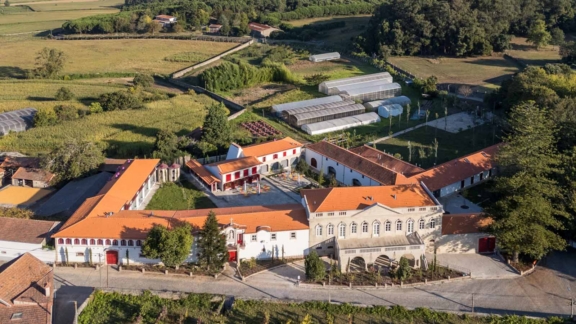
A 19th-century farming estate in northern Portugal that spent years in ruins has won the country's leading heritage award, after its restoration turned it into a biodiversity research centre housing Portugal's first laboratory for ancient DNA.
The Calouste Gulbenkian Foundation has named the restoration of Quinta de Crasto in Vairão, Vila do Conde, the winner of the 2026 Gulbenkian Heritage Prize – Maria Tereza and Vasco Vilalva, worth €50,000. The jury, chaired by António Lamas, praised the quality of the work on the manor house and its farm buildings and the way the project ties heritage conservation to scientific research. The prize has been awarded since 2013 to projects that preserve and reactivate Portugal's cultural heritage.
The estate was built by Bento Amorim, a former mayor of Vila do Conde, and later sold to the state. After the 1974 Carnation Revolution it became a farmers' training centre, and it housed an agricultural museum from 1989 to 2007 before falling into disrepair. The conversion, designed by Nuno Valentim architects, now hosts the BIOPOLIS Association, a research centre created under the European Union's Teaming for Excellence programme. Its granary has been restored, the old threshing floor has become an outdoor seating area, and the laboratory inside analyses ancient and environmental DNA, offering a new tool for studying biodiversity and climate change.
Three other restorations received honourable mentions: the Casa Cedo in Porto, the Casa d'Abreu Neto in Matosinhos — one of the Four Houses Álvaro Siza Vieira built in 1954–56, now opening to the public — and the Valentim de Barros Studio in Lisbon, a former shelter at the Miguel Bombarda Psychiatric Hospital converted into a space for artistic creation.


