Profile·New York
$235M Chrysler Building Overhaul Finalized as Cooper Union Seals 150-Year Ground Lease
Cooper Union has finalized a 150-year ground lease for the Chrysler Building with Tishman Speyer and PSP Investments, unlocking a $235 million restoration of the 77-story tower. The lease payments will help fund the college's plan to restore full-tuition scholarships for all undergraduates.
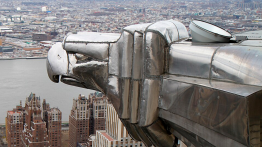
Cooper Union and developer Tishman Speyer have finalized a 150-year ground lease for the Chrysler Building, the Art Deco tower Cooper Union has owned the land beneath since 1902. Announced on October 7, 2026, the agreement commits Tishman Speyer, joined by Canada's PSP Investments as lead partner alongside other institutional investors, to a $235 million investment package that includes the lease payments flowing to the college. Under the plan, Tishman Speyer will restore the landmark 77-story tower at 405 Lexington Avenue and reposition its 1.3 million square feet as a boutique office destination. The program covers facade and crown restoration, modernized mechanical, elevator, electrical and air-handling systems, and prebuilt ready-to-occupy suites across 75 percent of current and upcoming vacancy. The 61st floor, famous for its eagle gargoyles, is earmarked for an indoor-outdoor amenity level with a lounge, food and beverage, and gathering space, while the underground arcade will house fitness, wellness and meeting areas. The significance for Cooper Union is financial as much as architectural. The Chrysler Building parcel, granted to the school by founder Peter Cooper's children in 1902, has long underwritten the college's mission, and the lease forms part of an integrated financial framework behind its drive to restore full-tuition scholarships for all undergraduates. Advised by Gibson Dunn and Savills, the college ran a competitive process before selecting Tishman Speyer as steward. Completed in 1930 and designed by William Van Alen, the 1,046-foot tower was briefly the world's tallest and remains one of New York's most recognizable silhouettes. Tishman Speyer framed the move as a bet on a strong Manhattan office market, noting the Grand Central submarket's low availability and scarcity of new supply.