Market dispatch·London
A Dealer's Lifetime With Japanese Blades Goes on Sale at Bonhams
Bonhams will offer the Japanese sword collection of dealer Peter Yorke online from 30 October to 11 November, led by a Masamune-lineage wakizashi estimated at up to 25,000 pounds. The sale spans blades from the 16th century to the end of the Edo period.
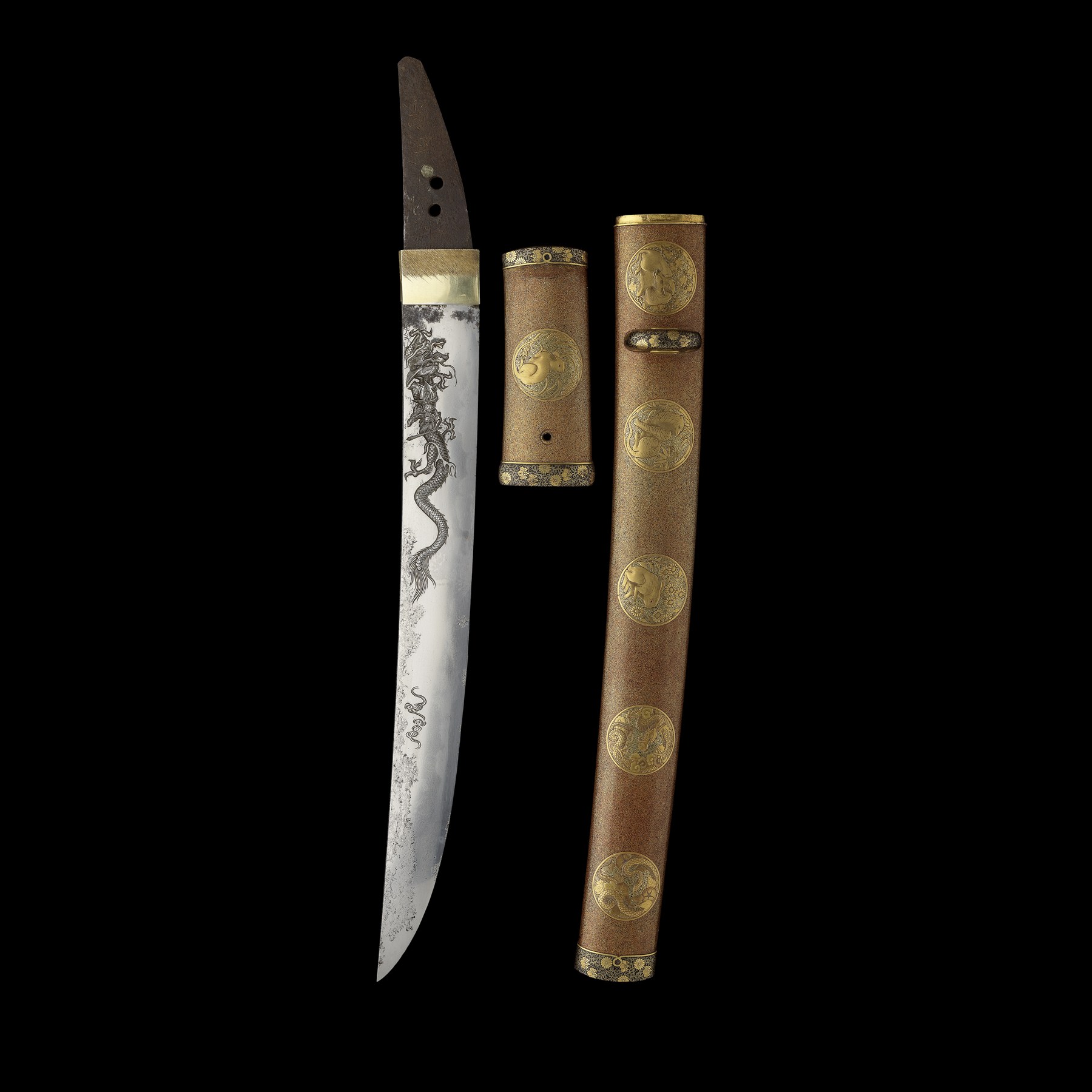
Bonhams will offer the Japanese sword collection of dealer Peter Yorke in an online sale running from 30 October to 11 November 2026, with viewing by appointment at its New Bond Street rooms in London. Yorke, who died in 2023, spent more than five decades studying, buying and selling antique arms, and helped shape the British market for Japanese swords. He began dealing in the late 1960s, and Bonhams says collectors, dealers and institutions across Europe, Asia and the United States sought his knowledge.
The lead lot is a large Soshu wakizashi catalogued under the Masamune lineage, estimated at 15,000 to 25,000 pounds. Its 57.7-centimetre blade is carved on one side with a guardian deity riding a dragon and on the other with a flowering plum tree, while its nineteenth-century mounts use gold lacquer roundels showing the twelve zodiac animals and the plants of the months. Paulownia and chrysanthemum crests appear alongside scrolling vines on the metal fittings.
Bonhams is careful about the blade's age: although the tang carries the name Masamune and a date corresponding to 1346, the house describes that date as spurious and dates the blade to the fifteenth or sixteenth century. The sword was shown in the Ashmolean Museum's 1968 exhibition of Japanese swords and martial arts objects in Oxford, giving it a documented exhibition history beyond its time in private hands.
Two further highlights carry estimates of 10,000 to 15,000 pounds each: a Bizen tanto dated 1558 with Ichijo-school fittings, and a Musashi tanto dated 1862 by Kurihara Kenji Nobuhide. Shown together, the three blades span centuries of Japanese craftsmanship, from Muromachi-period work to the end of the Edo period, and reflect a collection built on close observation over a lifetime of dealing, with mounts treated as works of art in their own right.