Exhibition preview·Mexico City
Álvaro Urbano's Metal Garden Brings a Destroyed Mexican Modernist Icon Back to Life at Museo Jumex
Álvaro Urbano's solo show "Helen" at Museo Jumex honors Casa Cueva, the mosaic cave house Juan and Helen Fowler O'Gorman built in 1954 and lost in 1969. Suspended painted-metal plants drawn from Helen's 1961 book "Mexican Flowering Trees and Plants" float against a gauzy curtain, with a site-specific stone installation echoing the house's mosaics. On view through February 7.
In Mexico City, Spanish artist Álvaro Urbano has given a destroyed icon of Mexican modernism a second life. His solo exhibition "Helen" at Museo Jumex pays tribute to Casa Cueva, the mosaic-covered cave house that architect Juan O'Gorman and his wife, the artist Helen Fowler O'Gorman, designed in 1954 amid the lava fields of Pedregal de San Ángel. The house was largely demolished after the couple sold it in 1969, surviving mainly in photographs, drawings and memory.
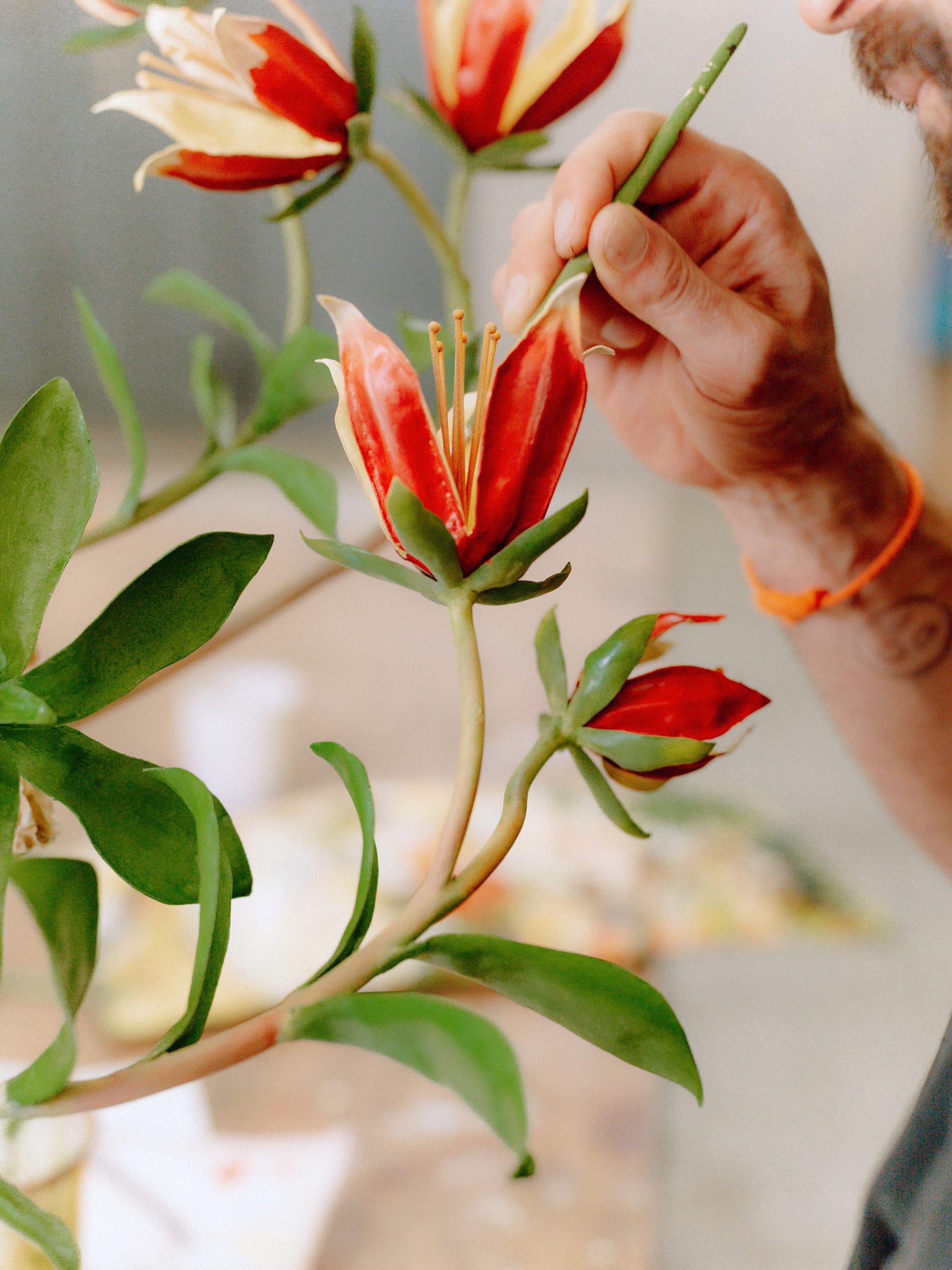
Urbano's point of departure is a book Helen made while living there. Her 1961 volume "Mexican Flowering Trees and Plants," written and illustrated at Casa Cueva, recorded the native species of the surrounding volcanic landscape. Those botanical renderings became the basis for a new series of painted metal sculptures — Urbano's signature lifelike plants — which hang suspended against a diaphanous curtain, appearing almost as apparitions drifting through the gallery.
A site-specific installation extends the homage: variegated stone laid across a floor of square pavers, echoing the mosaic surfaces and organic construction of the lost house. Rather than reconstructing Casa Cueva, the exhibition unfolds in a loose, open sequence, staging a quiet dialogue between plants, architecture and the visitor moving among them. Each sculpture traces back to a specimen recorded in Helen Fowler O'Gorman's book, restoring the botanical attention the house once embodied.
"Helen" runs through February 7. In pairing a contemporary sculptor with the overlooked legacy of an artist-architect couple, the show recovers a chapter of Mexican modernism in which domestic space, craft and landscape were inseparable — and asks what survives when the building itself is gone.