Museum report·Global
Amsterdam Museum Hands Back 2,300-Year-Old Sicilian Vase After Film Roll Exposes Looted Past
Amsterdam's Allard Pierson museum has returned a third-century BC Centuripe vase to Sicily, nine years after Italy requested it. Research showed the vase was looted from a tomb in the 1970s, and a rediscovered film roll disproved its Swiss provenance.
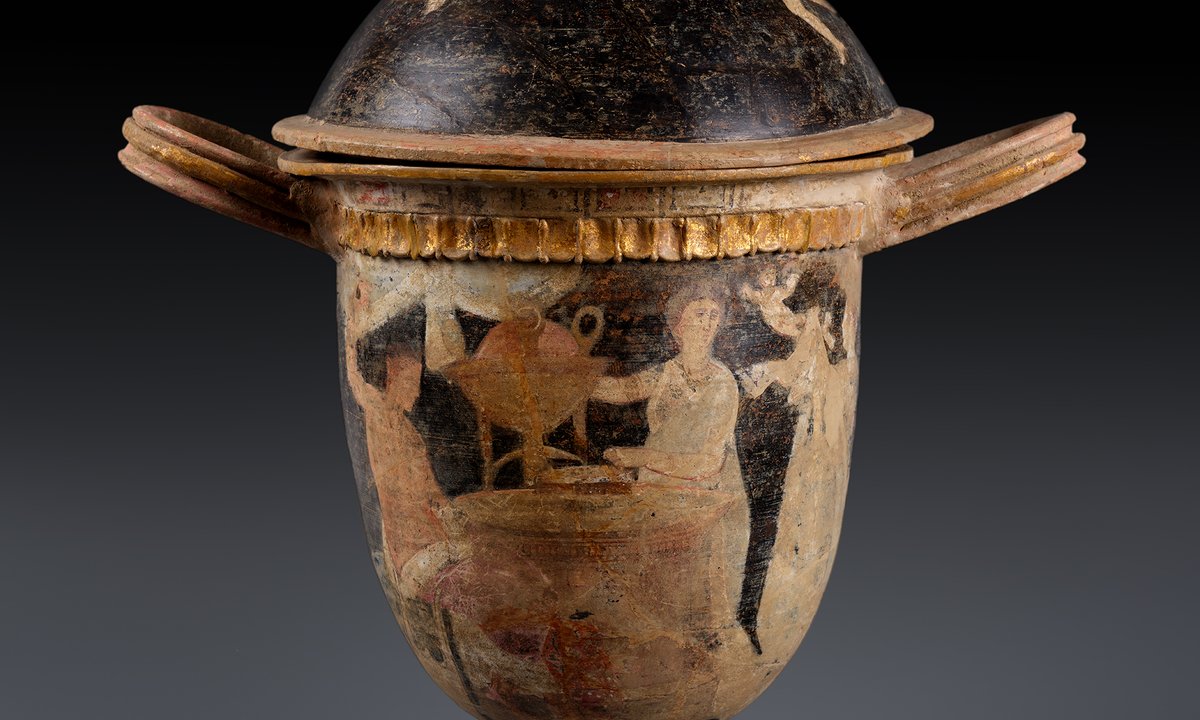
The Allard Pierson, the museum of the University of Amsterdam, has returned an ancient Sicilian vase to Italy, closing a restitution case that began with an Italian police request in 2017. The object, a richly decorated lidded ceramic vessel known as a Centuripe pyxis dating from the third century BC, was handed to Sicilian authorities after the museum concluded that its provenance was deeply problematic. The vase is painted with a scene of ancient gods, including Apollo, observing a wedding. Researchers believe it was buried in a rock-cut tomb near Centuripe, a trading centre once allied with Rome, and removed when such tombs were systematically raided by grave robbers in the 1970s. It surfaced on the market when the Allard Pierson acquired it in 1997 at the TEFAF fair in Maastricht from a Swiss dealer, who claimed it had been in private ownership since before 1970, the year of the UNESCO convention against illicit trade in cultural property. That claim unravelled through detective work. Investigators located a roll of film belonging to a local photographer who had apparently been commissioned to photograph freshly excavated objects for the looters. One frame on the reel showed the vase; another, a group photograph from a wedding in Centuripe in 1976, demolished the story of a long Swiss ownership. The film evidence prompted the Italian authorities to file their restitution claim. The Netherlands only ratified the 1970 UNESCO convention in 2009, so the museum was under no legal obligation to give the vase back. Rogier Kalkers, the Allard Pierson's head of provenance research, said the institution acted from moral duty, describing a new policy of approaching source countries proactively when research turns up tainted objects rather than waiting to be asked. He hopes the return becomes a stepping stone to further collaboration with Sicily, where the vase will be displayed in the Centuripe Regional Archaeological Museum.