Exhibition preview·New York
Fifteen Quilters Stitch Black History Into Art: Marsha P. Johnson, Maya Angelou and Frederick Douglass in Thread
Claire Oliver Gallery in Harlem is showing We're Still Here, a group exhibition of quilted works by 15 contemporary Black artists curated by Carolyn Mazloomi, marking 40 years of the Women of Color Quilters Network.
Fifteen contemporary Black quilt artists are showing together at Claire Oliver Gallery in Harlem in We're Still Here: Quilted Works Curated by Carolyn Mazloomi, which opened on 13 November and runs through 7 January 2027. The exhibition gathers members of the Women of Color Quilters Network, the organisation Mazloomi founded in 1985, and marks four decades of its work bringing Black quilters out of isolation and into galleries.
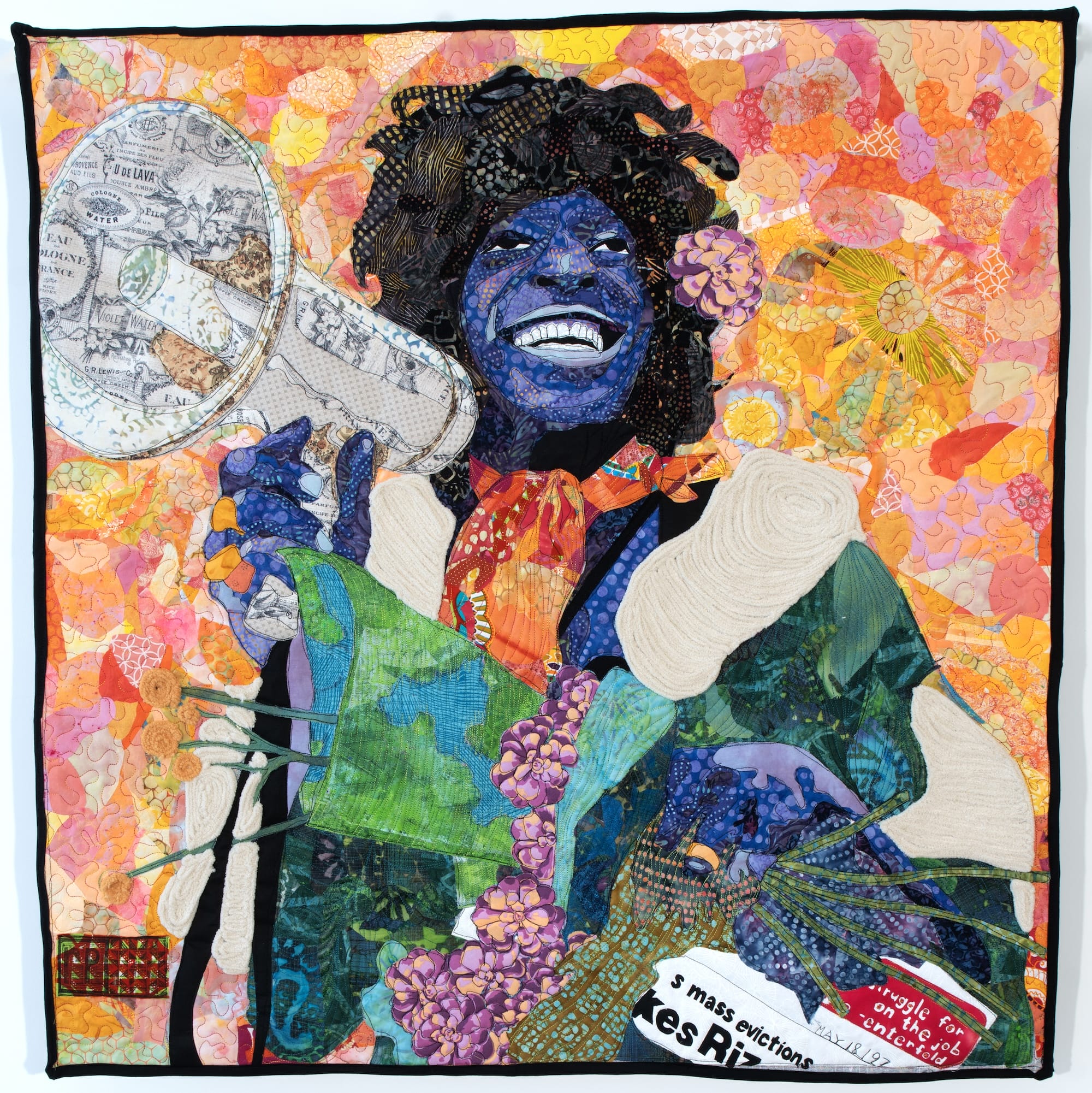
The show treats quilting as portraiture, history and protest rather than bed covering. Rosy Petri's large textile portrait honours Marsha P. Johnson, the Black transgender activist who was on the front lines of the 1969 Stonewall uprising and became known as the Saint of Christopher Street. Viola Burley Leak's Maya Angelou II surrounds the writer with symbols of her life, including a bird escaping an enclosure, a reference to her memoir I Know Why the Caged Bird Sings. April Anue Shipp pictures abolitionist Frederick Douglass holding the red and blue pills from the film The Matrix, while Alita Aldridge's Underground Takes a Village recalls the cooperation that made the Underground Railroad possible.
Other works turn to the present. L'Merchie Frazier renders climate change in layered nylon, Myrah Brown Green hand-dyes silk and lace for The Baptism, and Josie Love Roebuck builds a cowboy scene from screenprint, upcycled fabric, rope, rivets and a horseshoe. Materials across the show range from cotton, silk and metallic textiles to vinyl, freshwater pearls and gold leaf.
Mazloomi, a historian and quilter as well as the curator, frames the exhibition as a statement that Black history cannot be erased by political pressure or revision, insisting that the work always carries her people's triumphs, suffering, creativity and courage. The show coincides with the recent publication of Stories in the Seams: A People's History of Black Quilts and Their Makers, published by Chronicle Books.