Exhibition preview·The Hague
1,000 Objects: The Hague Stages Its Biggest-Ever Delftware Show
Blue Loves You: The Magic of Delftware opens at the Kunstmuseum in The Hague on 28 November, billed as the biggest and most comprehensive Delftware exhibition ever, with around 1,000 objects. The long-running show traces the blue-and-white pottery from 17th-century Chinese import to affordable household brand, and confronts its colonial history.
The Kunstmuseum in The Hague will open Blue Loves You: The Magic of Delftware on 28 November, a show its curator describes as the biggest and most comprehensive Delftware exhibition ever staged. Around 1,000 objects, including vases, teapots, plates, wall plaques and tiles, will fill the museum, which holds one of the largest collections of the blue-and-white pottery that became the Netherlands' best-known cultural export. The exhibition runs until 31 December 2029.
Curator Suzanne Lambooy, the museum's curator of decorative arts, set out to make ceramics feel warm and human rather than cold and distant behind glass. On a tour of ceramics displays across Europe while preparing the show, she found the galleries empty of visitors, and resolved to do something different. The result, she says, will be captivating and enjoyable, giving a platform to the craftspeople behind the pieces and to contemporary makers the tradition continues to inspire. Her co-curator is television presenter Janny van der Heijden.
The show traces Delftware from its origins as a high-end Chinese import, displayed in the wealthiest homes, to the moment local factories in Delft began making their own version and transformed it into an affordable, on-trend brand for every household. As Lambooy puts it, it was the Ikea of its day. Alongside white and multicoloured ware, the exhibition includes Delftware-inspired pieces such as the blue dress worn by Queen Maxima of the Netherlands for her husband's investiture in 2013, its bodice embroidered with Delft-derived flowers.
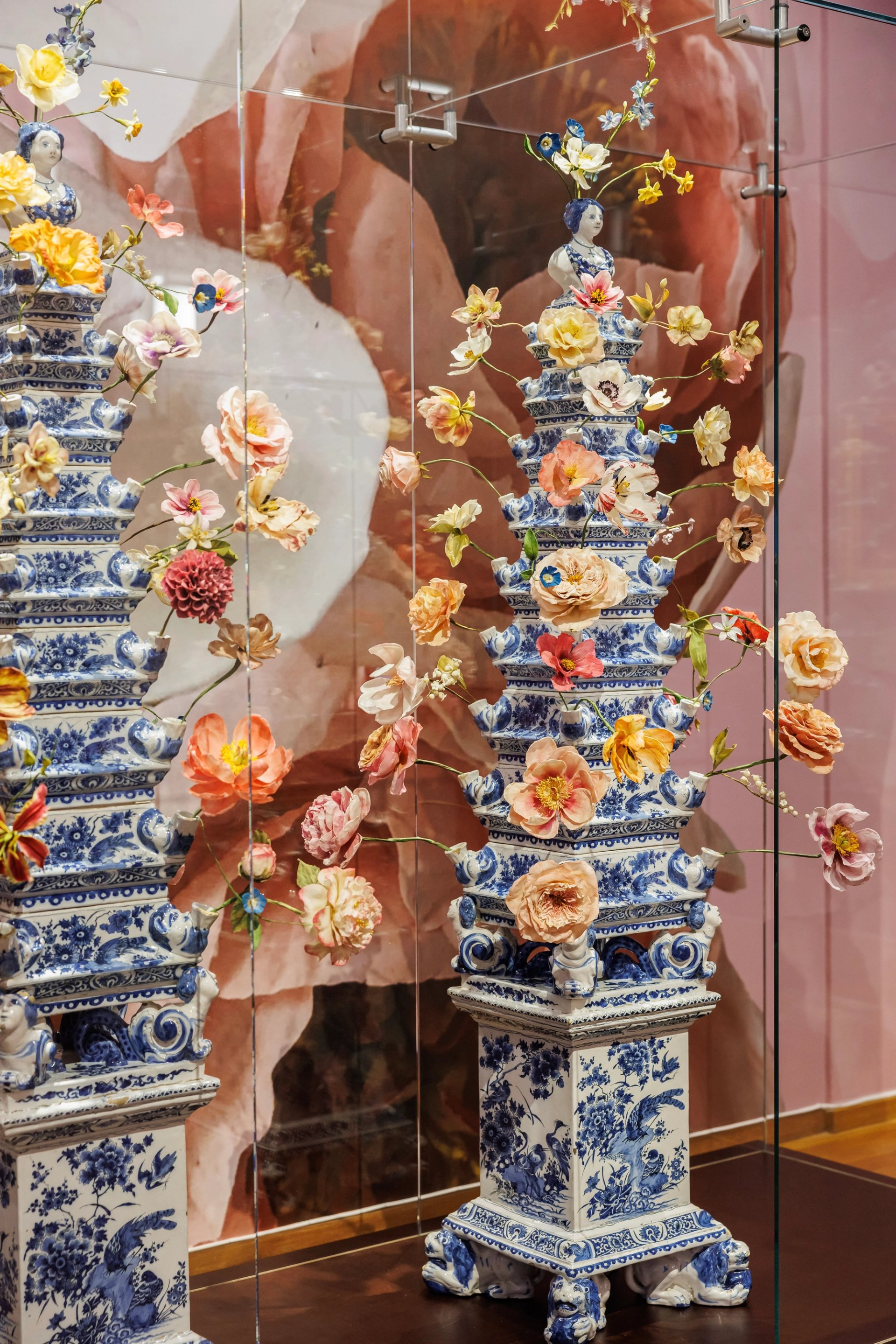
The porcelain's colonial connections are confronted directly. A centrepiece is an installation of sugar flowers by floral artist Natasja Sadi, whose family comes from Suriname, the former Dutch colony, and whose ancestors were enslaved. The show also celebrates the tulip pyramid, among the most distinctive Delftware forms, with some of the finest examples made for King William III, born in The Hague, and his wife Queen Mary II, joint monarchs of England, Scotland and Ireland in the late 17th century. Lambooy credits Mary as the most important woman in Delftware's history, for exporting it to Britain.