Exhibition preview·Iceland
Storm Surf and a Ghost in the Wave: An Icelandic Photographer Reads His Coast in Black and White
Photographer Vilhelm Gunnarsson has turned his lens on the storm surf of Iceland's Reykjanes Peninsula, working in black and white to draw out the contrasts of dark volcanic rock and foaming water — including a wave crest that reads as a ghostly face.
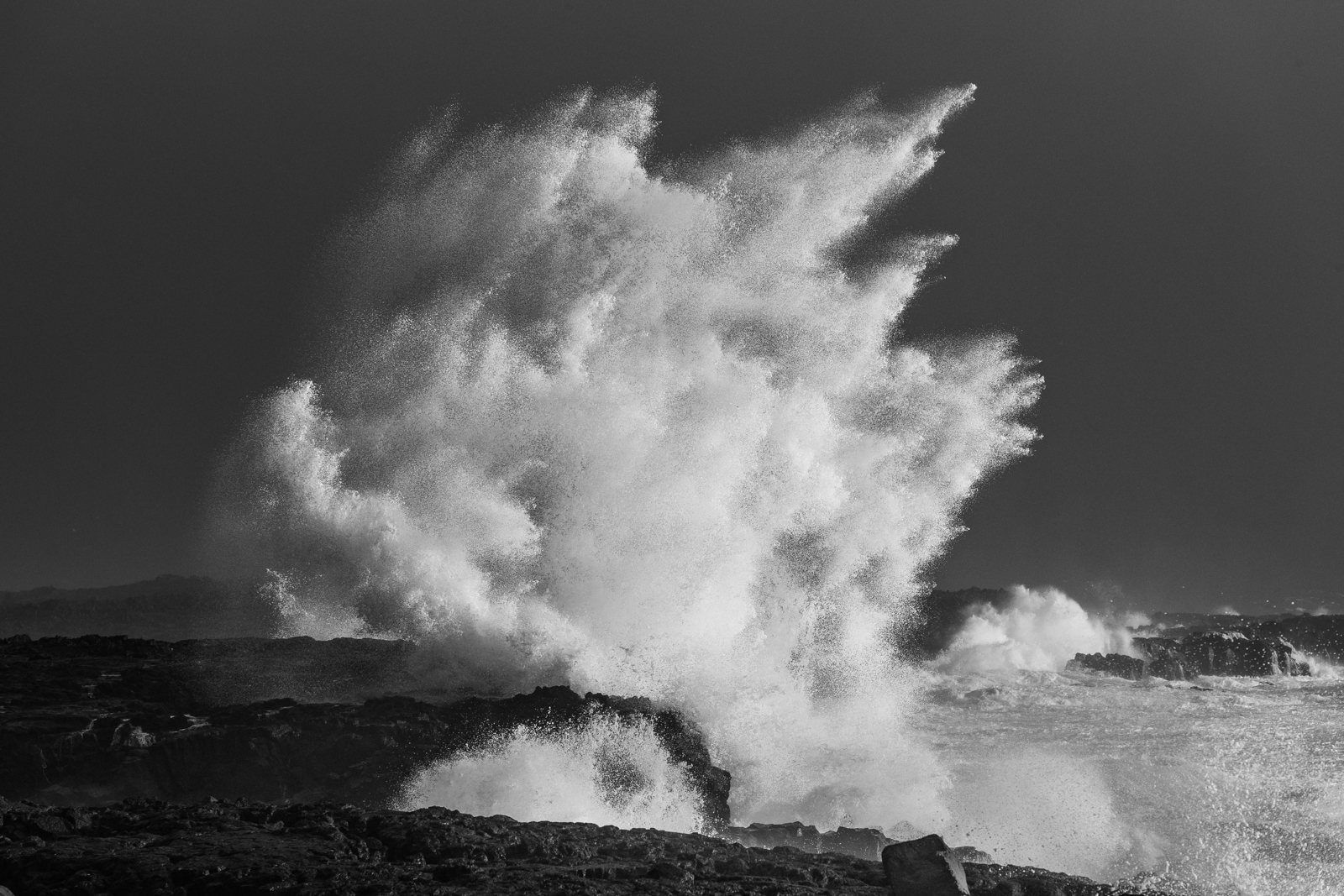
Along the volcanic coast of Iceland's Reykjanes Peninsula, storm surf breaks against dark rock and black sand, and photographer Vilhelm Gunnarsson has spent his time watching it. In a new series featured by Colossal on 20 November 2026, he photographs the waves in black and white, stripping away colour so that the contrast between the foaming water and the dark shoreline carries the whole image.
The peninsula is a young landscape in geological terms, a stretch of lava fields and cliffs on the southwestern tip of Iceland where the Mid-Atlantic Ridge rises above the sea. Gunnarsson photographs it in rough weather, when the surf is at its most violent and the shapes of the waves are at their most sculptural. The black-and-white treatment owes something to the work of fellow Icelandic photographer Ragnar Axelsson, whose stark images of the country's landscape and working life have shaped how a generation of photographers sees the island.
The most arresting image in the series is also the most accidental. In one crest, the foam and shadow resolve into the shape of a face — an otherworldly presence the photographer himself describes as a ghost. Once seen, it is hard to unsee, and it gives the series its strange undertow: a landscape that is already dramatic becomes briefly, uncannily alive.
The photographs are, at one level, simply a record of weather and geology — the forces that are still shaping the peninsula, grain by grain and wave by wave. But they also carry a quieter argument about attention. Gunnarsson's Iceland is not the postcard version of waterfalls and glaciers but a working coast, dark and cold and constantly in motion, photographed by someone who lives with it rather than visiting it. The series is a reminder that the most familiar landscapes still hold images no one has quite seen before.