Market dispatch·New York
$207M Van Gogh's Secret First Buyer: A 1909 Diary Entry Names Pioneering Collector Gustave Fayet
A January 1909 diary entry reveals that pioneering collector Gustave Fayet bought Van Gogh's Blossoming Chestnut Trees for 3,800 francs, about $750, months before it heads to Sotheby's New York with a $180 million estimate that could make it the most expensive Van Gogh ever sold.
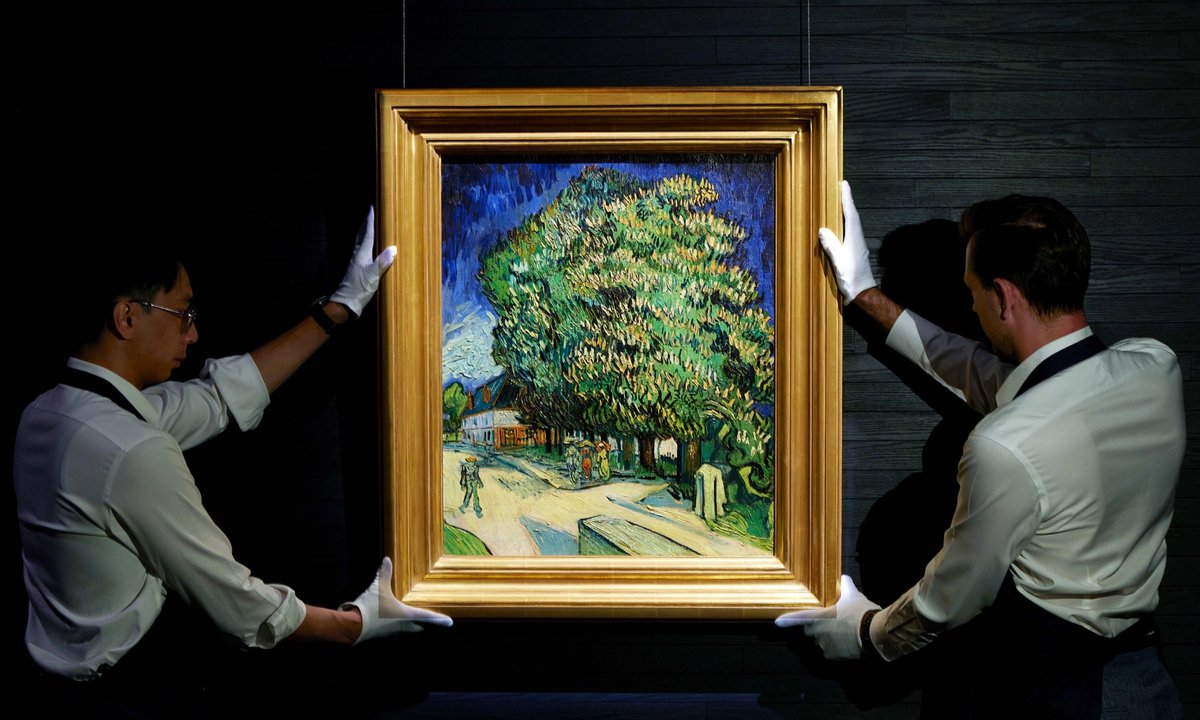
A diary entry written in January 1909 has rewritten the early history of the Van Gogh canvas expected to set an auction record next month. The entry shows that Gustave Fayet, a leading pre-war collector of modern art, bought Blossoming Chestnut Trees for 3,800 francs, then worth about $750. The Paris dealer Eugène Druet handled the purchase, having acquired the painting from the Prince de Wagram. Until now, Fayet's ownership had never been recorded in the Van Gogh literature.
The picture, painted in May 1890 at Auvers-sur-Oise, had originally been promised as a loan to the Fondation Louis Vuitton's exhibition on Fayet in Paris. That loan was withdrawn so it could headline Sotheby's New York sale of the Blaquier-Arrieta collection on 18 November. Estimated at around $180 million, it would reach at least $207 million with fees, making it the most expensive Van Gogh ever sold at auction.
The identification rests on a catalogue detail: Fayet described a house on a road used by passers-by. That matches the Sotheby's canvas and rules out Van Gogh's other Auvers chestnut-tree landscape, now at the Kröller-Müller Museum, which has no people. On the same day in January 1909, Fayet also bought a second Van Gogh from Druet, White Huts at Saintes-Maries, painted in June 1888. He kept it until his death in 1934; it later passed to Kunsthaus Zürich and does appear in the Paris show.
Fayet did not hold Blossoming Chestnut Trees for long. A year earlier he had bought the Abbaye de Fontfroide at great expense, and by November 1909 he had sold the painting to the Paris dealer Bernheim-Jeune. His brief ownership captures his foresight when museums still shunned Van Gogh. In April 1909 he wrote to the dealer Paul Rosenberg that an artistic revolution would be needed before the Louvre would buy a Van Gogh. His revolution arrived sooner than he expected: in 1911 the Louvre accepted the bequest of Imperial Fritillaries in a Copper Vase from Isaac de Camondo.