Policy brief·Washington
Judge Freezes Trump's 250-Foot Triumphal Arch Hours After 50 Protesters Rally at Lincoln Memorial
More than 50 protesters gathered near the Lincoln Memorial on 5 November to oppose Donald Trump's proposed 250-foot triumphal arch, hours before a federal judge halted construction for 14 days after the planning commission approved the project 8-4.
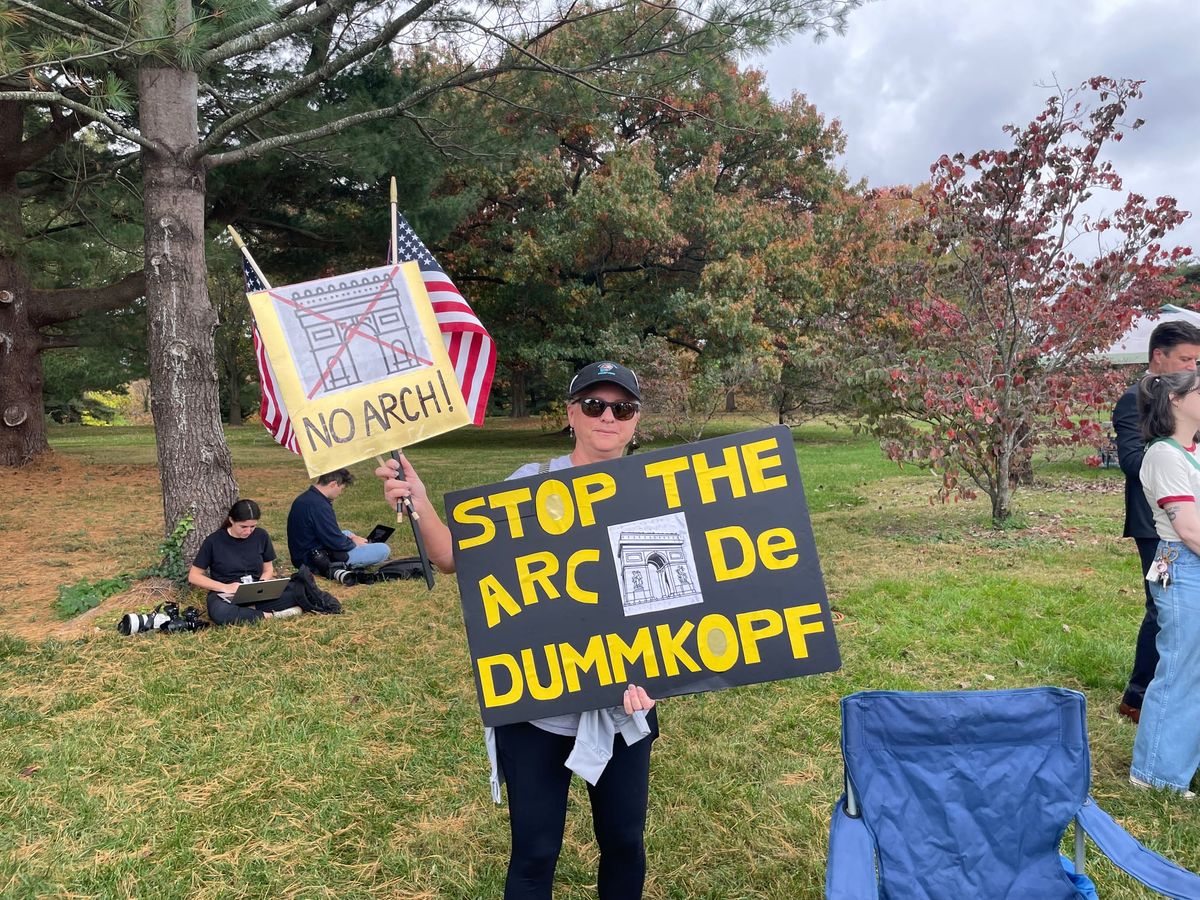
More than 50 protesters gathered near the Lincoln Memorial in Washington on 5 November to oppose President Donald Trump's plan for a 250-foot triumphal arch, carrying puppets, a mock arch and placards denouncing the project. The demonstration, organised by the environmental and pro-democracy group Third Act DC, took place within sight of the memorial and the eternal flame marking John F. Kennedy's grave, ahead of a final vote by the National Capital Planning Commission.
Hours later the commission approved the arch by eight votes to four, but a federal judge then granted the District of Columbia and Virginia a 14-day restraining order halting construction. The order gives the courts time to hear a case brought by a Vietnam War veteran and the attorneys general of the district and Virginia, who argue the arch would damage the character and purpose of the site.
Speakers at the protest included two Virginia congressional representatives, an Arlington County Board member and a lawyer, Greg Werkheiser, who warned that the monument would intrude on the architectural and spiritual meaning of the space. He was among those behind lawsuits filed against the National Park Service and the Department of the Interior, alongside veterans and an architectural historian.
The arch is one of Trump's most personal building projects, and he has pushed to fast-track it so that it is largely complete before he leaves office in 2028. The planning commission that approved it is dominated by administration appointees, and the judge's decision described how the official justifications for the scheme have shifted, from marking the 250th anniversary of the Declaration of Independence to commemorating the end of the Civil War and even national security. Construction remains frozen while the legal challenge proceeds.