Policy brief·Washington
Judge Halts Trump's 250-Foot Arch Within an Hour of Its Final Approval
A federal judge blocked construction of President Donald Trump's proposed 250-foot triumphal arch in Washington, DC, issuing a 14-day restraining order less than an hour after a planning commission approved the project 8-4.
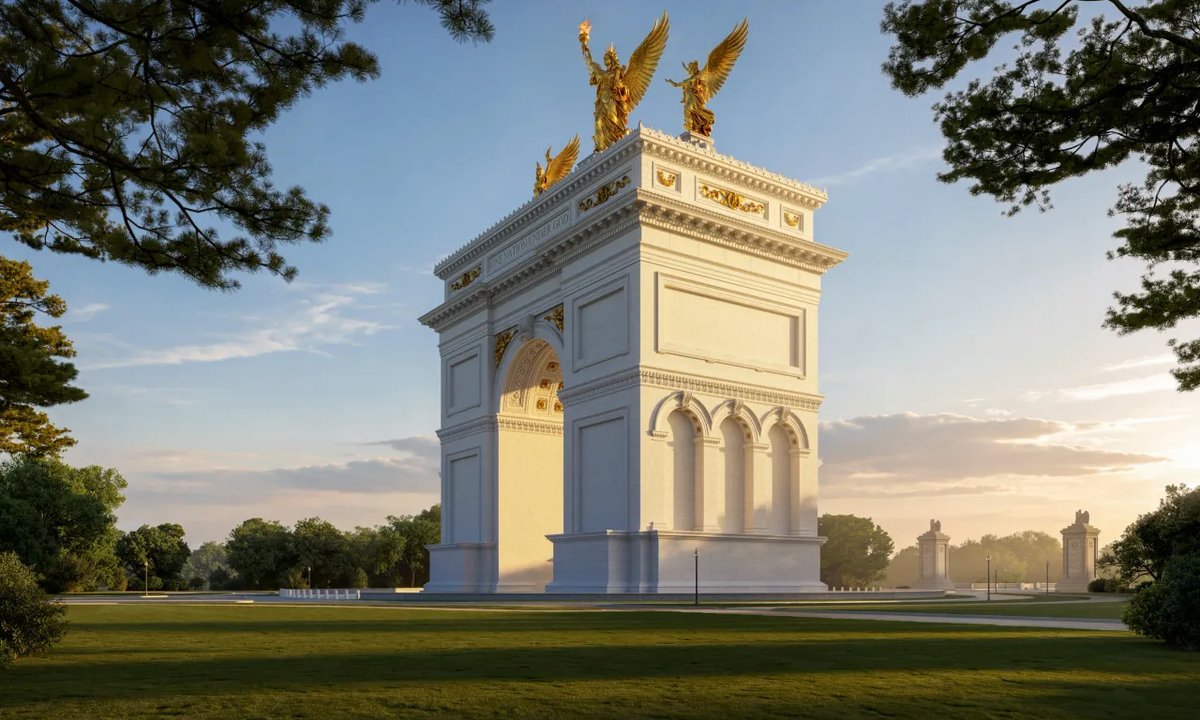
A federal judge halted work on President Donald Trump's proposed triumphal arch in Washington less than an hour after a planning commission gave the project its final approval on Thursday night. Judge Tanya Chutkan of the US District Court for the District of Columbia issued a 14-day temporary restraining order barring any construction-related activity at the site, after the National Capital Planning Commission voted 8-4 to approve the plans following a hearing that ran for more than nine hours.
The arch, planned for Memorial Circle at the western end of the Arlington Memorial Bridge, would rise about 250 feet including three gilded figures on top, more than twice the height of the Lincoln Memorial across the Potomac. The administration wants it built to mark the 250th anniversary of the Declaration of Independence, with an observation deck, five elevators and six stairways, and expects construction to take about three years. Officials had said work could begin immediately after approval.
The court order came in lawsuits brought by the District of Columbia and Virginia, along with Vietnam War veterans and an architectural historian, who argue the project lacks the congressional authorisation required for a commemorative work on federal land. In a 33-page decision, Chutkan found the challengers were likely to succeed and that harm from immediate construction was certain, noting that the government's shifting justifications, including a late claim that the arch served national security, did not change her analysis. She ordered the government to file a compliance report on Monday.
The commission's vote split along lines of appointment, with eight administration-appointed members in favour and four against, after more than 120 members of the public, many of them veterans, spoke against the plan. The administration contends a century-old statute authorising a bridge across the Potomac also covers the arch, an argument the judge treated with scepticism. The pause preserves the status quo while the court weighs whether to block the project for the duration of the litigation.