Exhibition preview·London
Team Rolfes Take Their Glitching Game-Engine Spectacle 'Mustang Speedrun' To Somerset House
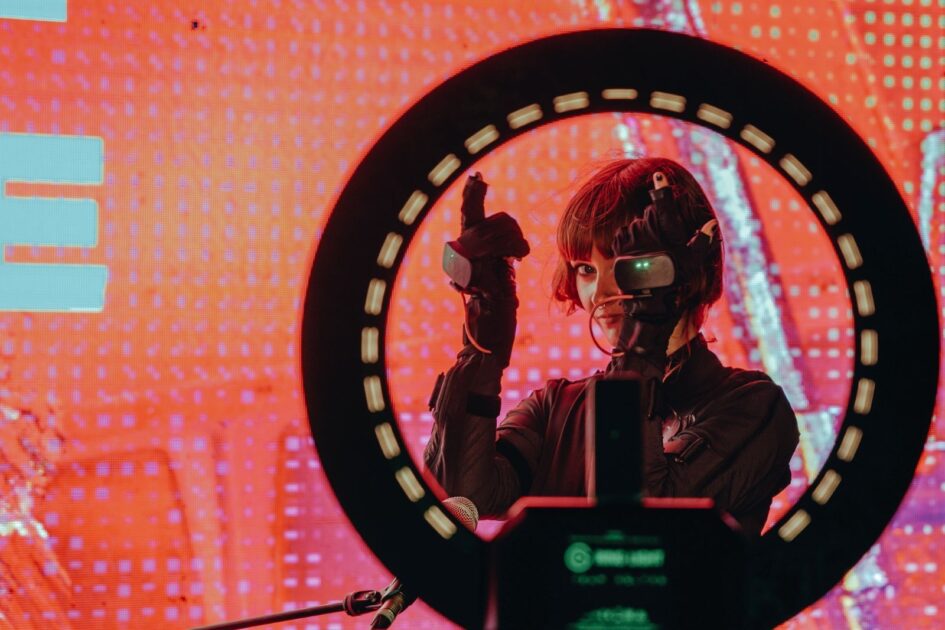
Artist duo Team Rolfes — brothers Sam and Andy Rolfes — perform their new semi-virtual show 'Mustang Speedrun' at Somerset House in London on October 17 and at Unsound Festival New York on October 21, mixing live performers with game-engine and VR puppetry in a satire of military tech spectacle.
The artist duo Team Rolfes are bringing their new performance, Mustang Speedrun, to Somerset House in London on October 17 and to the Unsound Festival New York at Lincoln Center on October 21. Brothers Sam and Andy Rolfes describe their practice as performance art, though their shows are built around a cosmos of technologies — game engines, motion capture and virtual-reality puppetry — that they bend, break and warp in both physical and virtual form at once.
The brothers come from traditional mixed-media painting, but their mother ran a 3D effects studio when they were children, and manuals for Blender and 3ds Max sat around the house. After graduating, they returned to 3D through digital sculpting software that felt as improvisational as painting, and eventually landed on game engines because they could press record and perform live inside the virtual world they built. That led to motion-capture and VR puppetry, and to performing with real actors on stage, collaged with their virtual counterparts. Their touring show 321Rule (2023) drew on internet-culture imagery, while Diskokina, commissioned by Australia's Soft Centre Festival and premiered in New York at ZeroSpace to some 1,500 people, established their approach of placing VJ-like artists onstage with musicians rather than behind them.
In Mustang Speedrun, the duo play the fictional staff of a simulation studio creating spectacles for the military, and the audience becomes a room of prospective investors being pitched to. The piece is framed through the alienation of a US drone operator — a faked road-trip story somewhere between Jackass and the video game Armored Core, inspired by the stunts people perform online to pump their crypto coins. The London performance features GFOTY; the New York show features FITNESSS.
The Rolfes are vocal sceptics of the tech industry they are entangled with. Having grown up inside the production pipelines of 3D software, they argue that artists today are often conscripted into marketing tech products and surveillance networks, and they try to surface that political-industrial context through the chaos and fragility of their tools. Their hope, they say, is to wrest the idea of the frontier away from the technocrats and imagine what an emancipatory one might look like.


