Exhibition preview·Tokyo
Tokyo's MOMAT Devotes Major Survey to Takehisa Yumeji, the Painter Who Defined Taisho-Era Romance
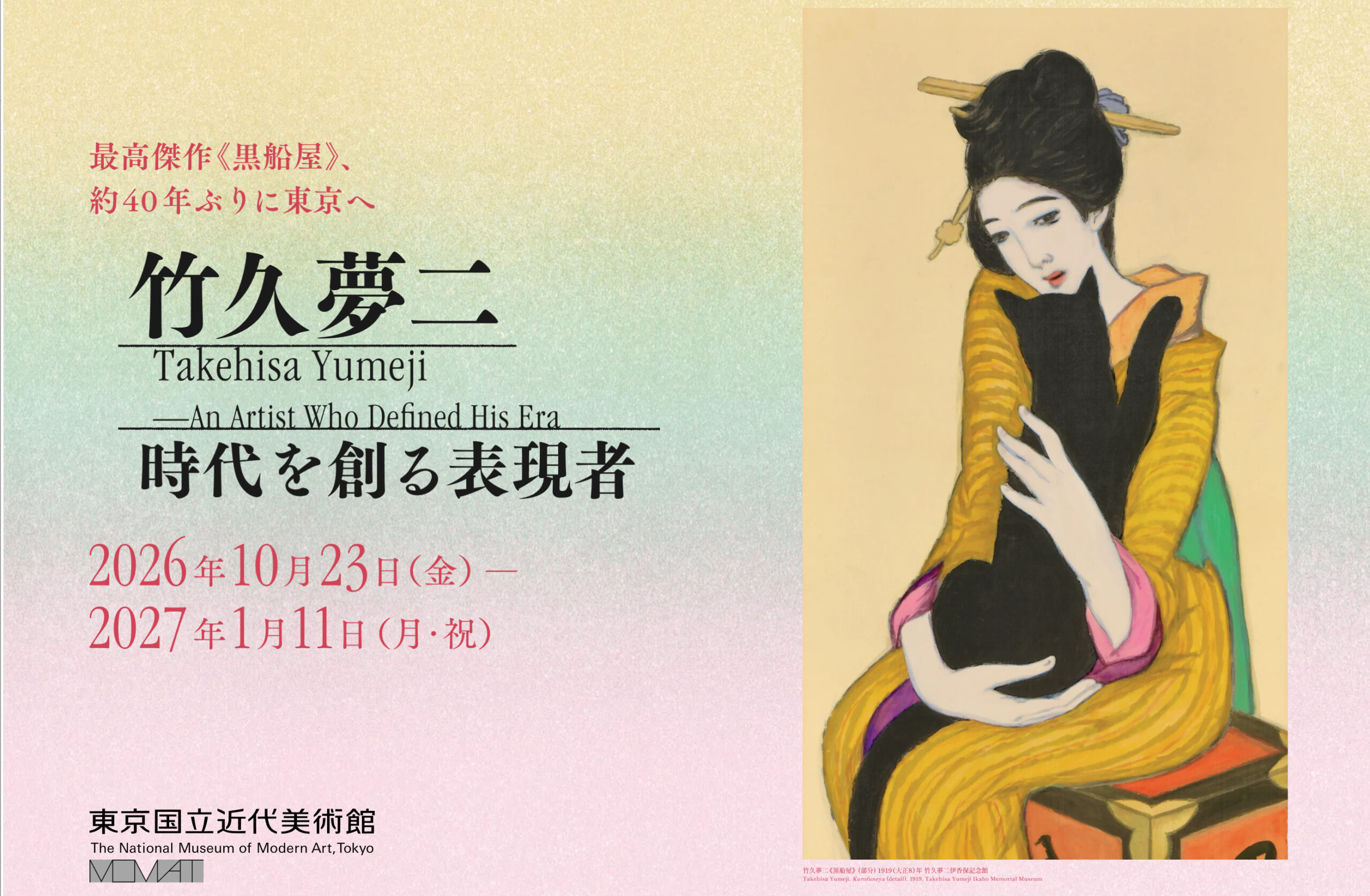
The National Museum of Modern Art, Tokyo opens "Takehisa Yumeji: An Artist Who Defined His Era" on October 23, gathering about 500 works by the Taisho-period painter-poet-designer, including his famous "Kurofuneya" shown publicly for the first time in some 40 years. Through January 11, 2027.
The National Museum of Modern Art, Tokyo will open "Takehisa Yumeji: An Artist Who Defined His Era" on October 23, 2026, the largest survey in years of one of Japan's most beloved early modern artists. Roughly 500 paintings and documents, borrowed from collections across the country, trace the career of Takehisa Yumeji (1884–1934), the painter, poet, illustrator and designer whose wistful portraits of women became the visual signature of Taisho-era romance. The show runs through January 11, 2027. The anchor work is "Kurofuneya," Yumeji's best-known painting, which shows a woman in a kimono cradling a black cat and is thought to have been made for the artist's lover Hikono while she was ill with tuberculosis. It returns to public view for the first time in roughly four decades, a genuinely rare event given how seldom the painting leaves its owner's hands. Beyond the paintings, the exhibition follows Yumeji's restless output into every corner of early twentieth-century visual culture. His book and magazine covers, chiyogami patterned-paper designs and textile work are shown alongside sketches made in the aftermath of the 1923 Great Kanto Earthquake, revealing an artist who documented catastrophe with the same delicate hand he used for romance. Admission to the exhibition also covers same-day entry to the museum's collection galleries, and advance tickets are on sale through October 22 via the exhibition's official website. The survey positions Yumeji not as a nostalgic curiosity but as a defining figure of an era: a commercial and fine artist who helped shape how modern Japan pictured femininity, longing and urban life. For MOMAT, the show continues a run of retrospectives that recover the artists who bridged Japan's traditional aesthetics and its modernist century.