Profile·Taipei
NT$550,000 Taipei Art Prize Goes to Artist Tracing Toppled Dictators' Statues with AI
Ruan Boyuan has won the 2026 Taipei Art Awards grand prize for a project using generative AI to follow authoritarian monuments after their removal, from Prague's Stalin statue to the Chiang Kai-shek figures gathered at Cihu.
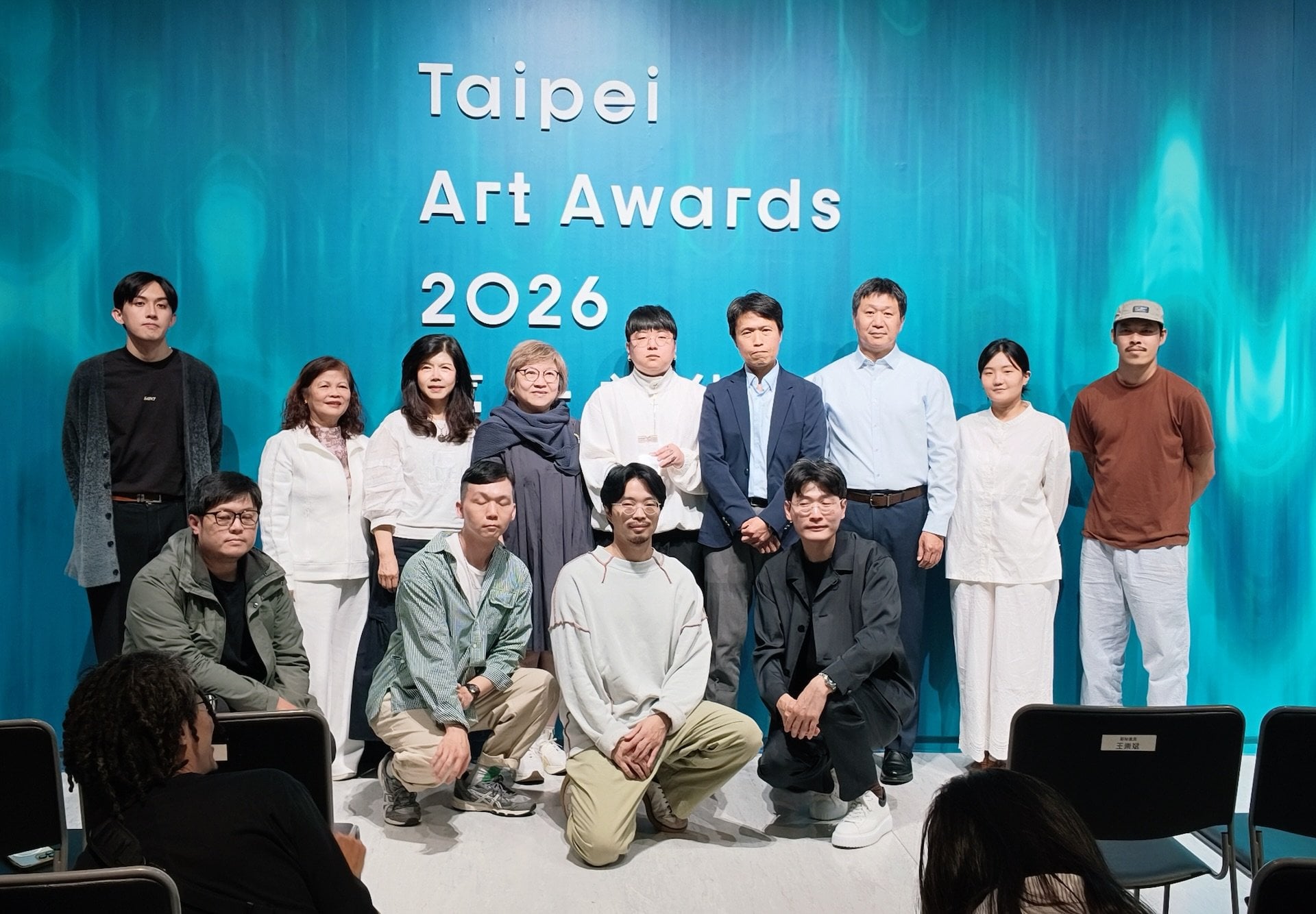
Artist Ruan Boyuan has won the 2026 Taipei Art Awards grand prize, taking NT$550,000 for a project that uses generative artificial intelligence to trace what happens to monuments and authoritarian statues once they are pulled down. The prize was announced on 6 November at the Taipei Fine Arts Museum, where the ten finalists' exhibition runs until 14 February 2027.
Ruan's winning project, titled "Under Fronta na maso, Looking for the Nose", combines video, generative AI, 3D printing, paper output, graffiti and industrial shipping crates. It follows deposed statues from Lithuania to Prague and on to Taiwan, asking where these objects go once they are removed from public space, and what their afterlives reveal about the regimes that raised them.
The work pairs two sites that warehouse fallen monuments: Cihu in Taiwan, where Chiang Kai-shek statues removed from across the island have been gathered, and Grutas Park in Lithuania, which holds Soviet-era monuments. The title piece turns to the Stalin monument that once towered over Prague's Letna Park, unveiled in 1955 and, at the time, the largest Stalin statue in the world, and uses algorithmically stitched imagery to reconstruct a space that no longer exists.
Ruan, shortlisted for the prize for a second time, said the removal of a statue is itself a technical problem, noting that his earlier work used sculptural ideas to think through digital technology and the body in 3D models. The jury selected his project from 276 submissions. Five merit prizes of NT$120,000 went to Kuo Po-yen, Yang Chien-sheng, Liao Chao-hao, Tsai Yu-ting and Su Chang-ching, with four further artists receiving selection prizes. The finalists' show opened on 24 October in the museum's 3A and 3B galleries.