Market dispatch·New York
Sotheby's to Offer First Nanotyrannus Skeleton at Auction, Estimated up to $9M
Sotheby's New York will auction 'Jodi', a 67-million-year-old Nanotyrannus skeleton, on 27 October with an estimate of $6-9 million. One of only three known specimens of the genus, it is the first to reach the market since research confirmed Nanotyrannus as distinct from Tyrannosaurus rex. The same skeleton was shown in 2023 as the juvenile T. rex 'Chomper' with a $20 million asking price.
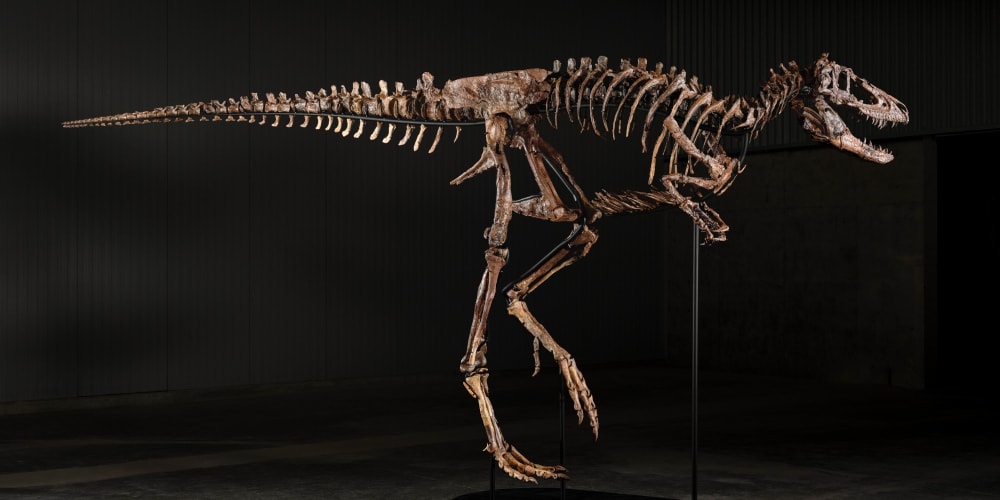
Sotheby's New York will offer the first Nanotyrannus skeleton ever to come to auction on 27 October, with a pre-sale estimate of $6 million to $9 million. The 67-million-year-old specimen, nicknamed Jodi, will be on public view at the house's Breuer galleries from 13 October in the two weeks before the sale. Jodi is one of only three scientifically confirmed Nanotyrannus skeletons known to exist, and ranks second in completeness behind the specimen known as Bloody Mary, one half of the famous Dueling Dinosaurs. The mounted skeleton stands about 6.5 feet tall and spans roughly 19.6 feet, and is estimated at 55 percent complete, with a near-complete skull holding 35 teeth, all four claws, a complete pelvis, a thighbone and a collarbone. The fossil was discovered in 2019 by rancher Jodi Pierson on private land in Montana's Hell Creek Formation and excavated with commercial paleontologist Clayton Phipps in a dig featured on the Discovery Channel series Dino Hunters. It will be familiar to some collectors: the same skeleton was exhibited at Frieze London in 2023 under the name Chomper, marketed as a juvenile Tyrannosaurus rex with a $20 million price tag. Since then the science has moved on. A 2025 study by paleontologists Lindsay Zanno and James Napoli, analysing more than 200 fossils, settled an 80-year debate by confirming Nanotyrannus as a valid genus distinct from Tyrannosaurus rex, distinguished by tooth count, size, tail vertebrae and claw structure among other traits. The reclassification cut the skeleton's valuation by more than half but made it the first of its genus ever offered at a major auction. The sale follows Sotheby's July result for Gus, a Tyrannosaurus rex skeleton that sold for $50.1 million, and continues the house's run of headline natural history offerings. It also arrives as prehistoric fossils have become trophy assets for ultra-wealthy collectors, with bidding interest from figures well beyond the traditional natural history market.