Policy brief·Washington
800 Protesters Pack the Capitol Lawn as Senate Vote Nears on Bill That Would Strip Tribal Say Over Sacred Sites
Around 800 demonstrators gathered outside the US Capitol on 9 November to oppose the Bipartisan American Affordability and Jobs Act, which would weaken Section 106 of the National Historic Preservation Act and make consultation with tribal nations optional.
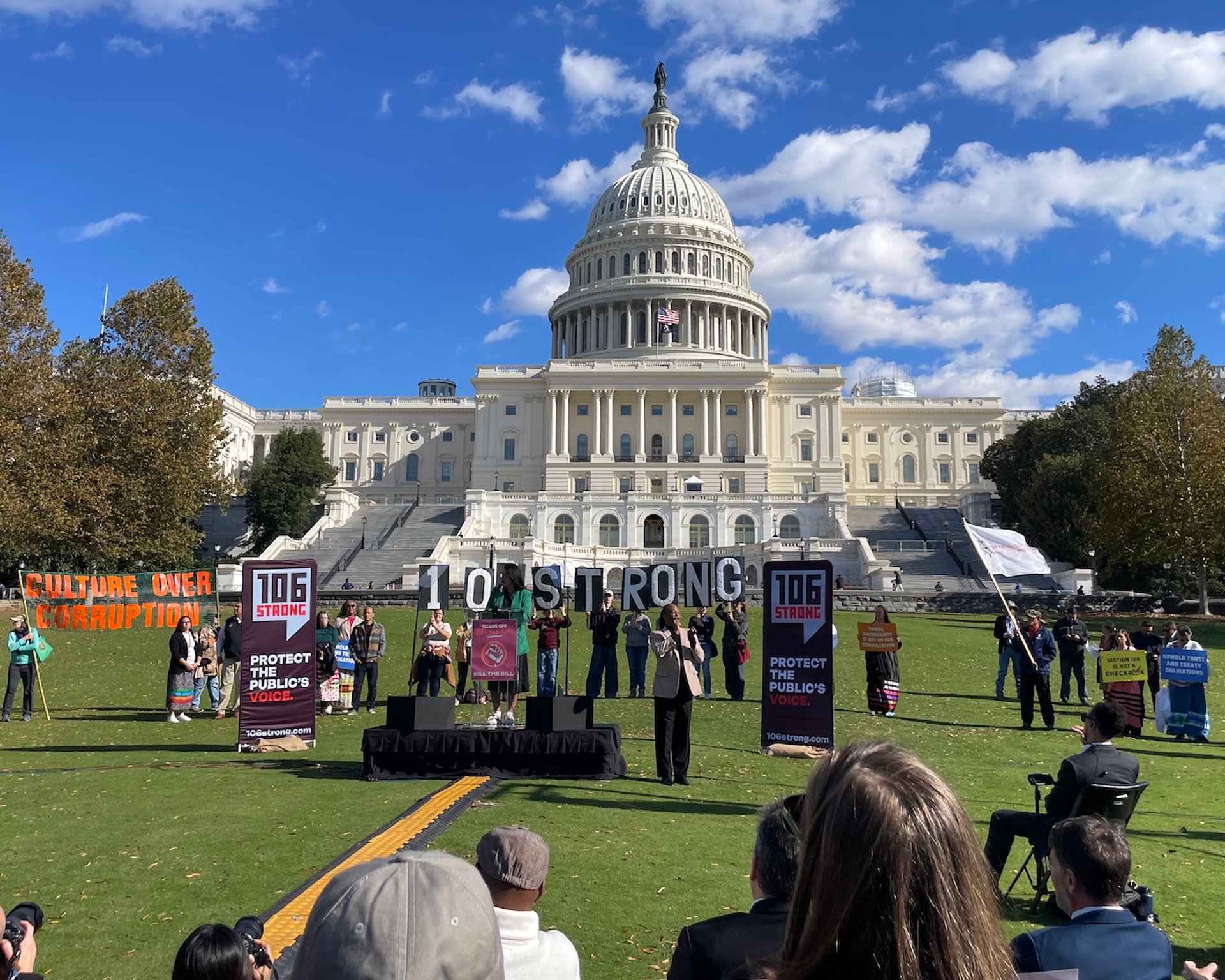
Around 800 people gathered on the West Lawn of the US Capitol in Washington on Monday to protest a Senate bill that campaigners say would strip the public and tribal nations of their voice over historic and sacred places. The rally targeted the Bipartisan American Affordability and Jobs Act, Senate bill S.5653, which was due for a vote on Monday evening. Representatives from more than 100 tribal nations joined members of Congress and leaders from the Association of African American Museums, the DC Preservation League, the American Institute of Architects and the Archaeological Institute of America.
The bill would hollow out Section 106 of the National Historic Preservation Act, the provision that requires federal agencies to weigh the effects of federally funded projects on historic sites and to consult tribal nations. Under the new text, that consultation would become optional, the range of projects triggering a review would narrow, the definition of a historic site would shrink, and indirect and cumulative harms would no longer count. Federal agencies could even take over tribal and state preservation offices that miss the bill's deadlines, and the scope for legal challenges would shrink.
Speakers framed the fight as a question of sovereignty rather than paperwork. Arizona congresswoman Adelita Grijalva told the crowd the issue was self-determination and the right to protect ancestral homelands, while Harry Antonio Jr, governor of the Pueblo of Laguna in New Mexico, said sacred places were living places of prayer whose protection did not stop at reservation boundaries. Michigan congresswoman Rashida Tlaib warned the bill would fast-track data centres and gas pipelines.
The vote coincided with President Donald Trump's push to build a 250-foot triumphal arch between the Lincoln Memorial and Arlington National Cemetery. The National Capital Planning Commission approved the arch on 5 November, only for a Washington judge to block construction for 14 days. Representative Jared Huffman told protesters that court orders of that kind would be far harder to obtain if the bill became law. Speakers urged the crowd to call their senators and press for the vote to be defeated or delayed until newly elected members take their seats in January.