Profile·Global
Hopper's celebrated first oil paintings were copies all along, new biography reveals
Louis Shadwick's new biography Edward Hopper: A Life demonstrates that all six of Hopper's early oils, made before he entered art school, were copied from illustrations in the periodical Art Interchange — including Old Ice Pond at Nyack, a copy of Bruce Crane's A Winter Sunset.
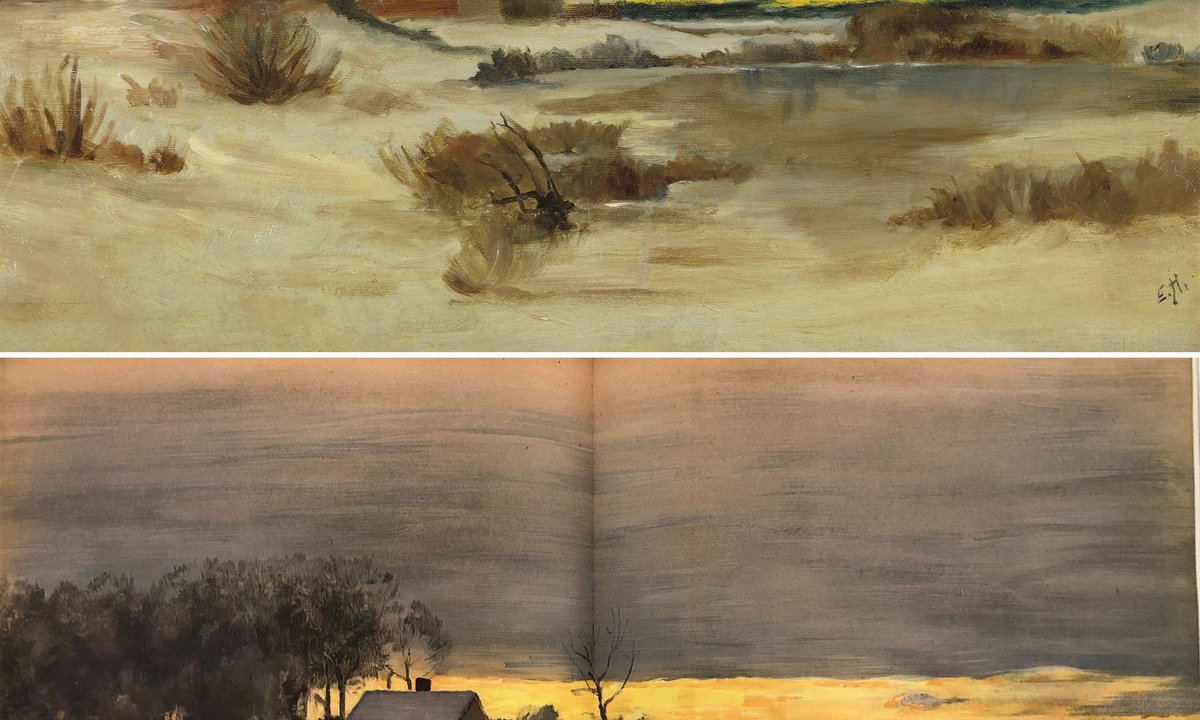
The accepted story of Edward Hopper's artistic development has been quietly revised. Research in a new biography shows that all six of Hopper's early oil paintings — made before he enrolled in art school and long heralded as his first original compositions in the medium — are in fact copies after other artists' work.
The findings appear in Edward Hopper: A Life by Louis Shadwick, published by Yale University Press in the United States on 13 October. Hopper converted the attic of his family's Nyack home into a studio around age thirteen and produced his first oil, Rowboat in Rocky Cove, signed and dated 1895, before making at least five more finished oils, later celebrated as his first original oils.
The most telling case is Old Ice Pond at Nyack, made between 1898 and 1900 and long treated as one of Hopper's only confirmed oil depictions of Nyack. It is a copy of A Winter Sunset by the tonalist painter Bruce Crane, depicting a landscape in Long Island or Connecticut. The Nyack title was not Hopper's at all: it was bestowed by the Reverend Arthayer R. Sanborn, who discovered the paintings in the attic of Hopper's childhood home in the late 1960s
Shadwick traces each to a published source: Rowboat in Rocky Cove copies a watercolour titled Lake View by an unknown painter; Country Road copies John Francis Murphy's A Landscape Study in Color; Ships copies Edward Moran's Marine View — all printed as collectable colour plates with full copying instructions in Art Interchange, a periodical for amateur artists. Hopper signed the works with the initials E. H. or E. Hopper. The upshot: Hopper may not have painted an original oil until he enrolled at the New York School of Art in autumn 1900, and no boyhood oils of Nyack by him exist — a finding that also illuminates his early engagement with the then-dominant American tonalism.