Exhibition preview·London
Royal Academy Gives Richard Dadd the Full-Career Treatment in Major Survey
The Royal Academy of Arts has mounted a comprehensive survey of Richard Dadd, the Victorian painter best known for his densely detailed fairy pictures. 'Richard Dadd: Beyond Bedlam' brings together works spanning his career — including 'The Fairy Feller's Master-Stroke', painted over nine years while he was incarcerated at Bethlem Royal Hospital — while deliberately avoiding both outsider-art framing and psychological interpretation of the artist.
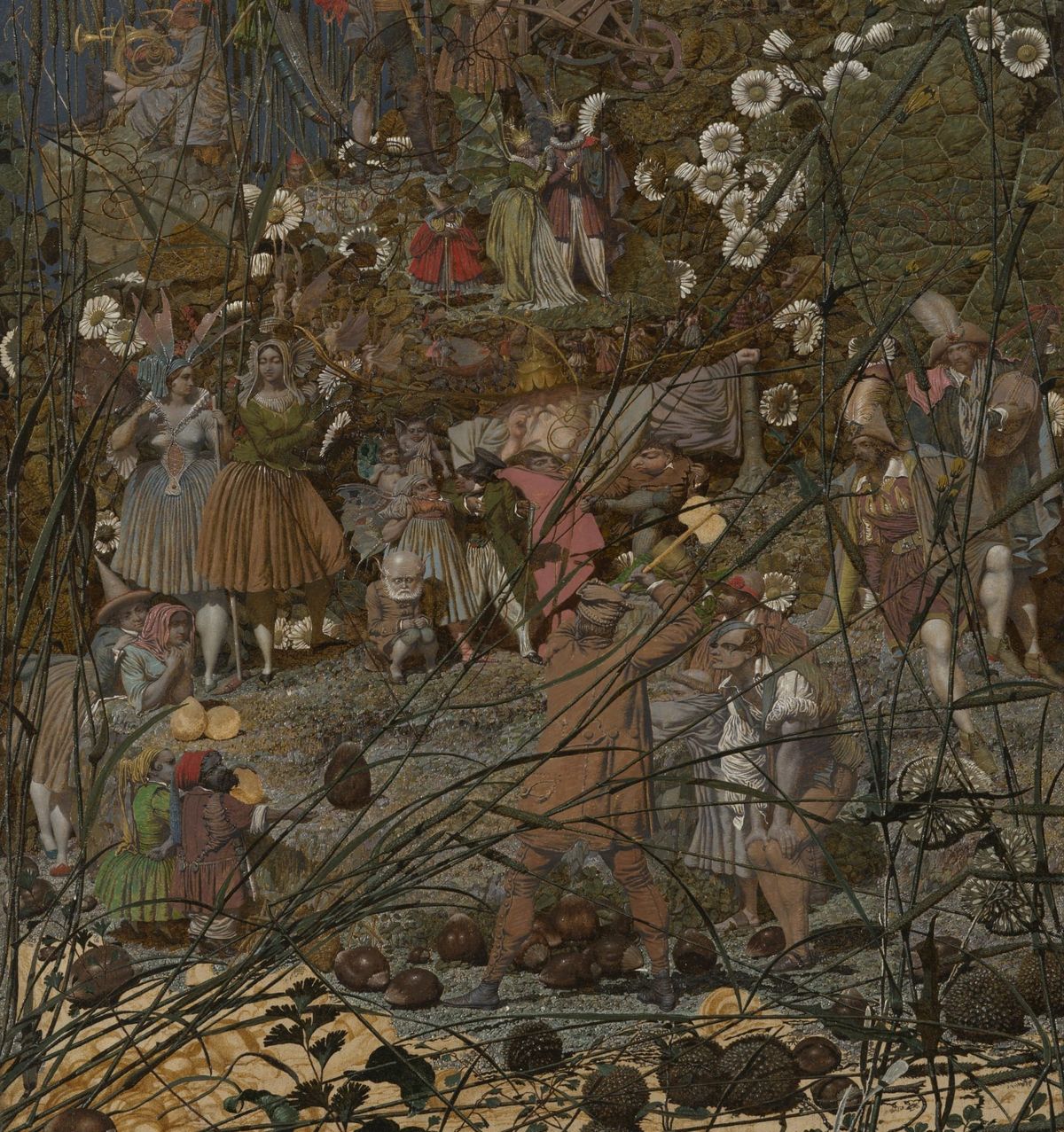
Most British viewers know Richard Dadd from 'The Fairy Feller's Master-Stroke', the diminutively scaled oil painting crowded with minutely detailed fantastical figures, fairies and a web of flowers and grass blades. Painted between 1855 and 1864 and reworked repeatedly for nearly a decade while Dadd was incarcerated at Bethlem Royal Hospital, the work — now in Tate Britain's permanent collection — is currently on view at the Royal Academy of Arts' new retrospective, Richard Dadd: Beyond Bedlam.
Dadd was born in 1817 in Chatham, England, studied at the Royal Academy art schools and was recognised as a leading talent among a group of young artists known as The Clique, alongside figures such as Augustus Egg and William Powell Frith. His biography was overtaken by mental illness, which became acutely apparent during a drafting expedition through Europe and the Middle East and culminated in a delusional episode in 1843 in which he killed his own father and fled to France. After his arrest and return to England, he was committed to the criminal department of Bethlem Hospital.
What distinguishes the Academy's approach is its curatorial restraint. Although Dadd's meticulously realised and highly individual output sits largely outside the historical canon, the retrospective deliberately avoids treating the work as outsider art. It also steers clear of psychological interpretation of the artist, instead directing visitors to the Bethlem Museum of the Mind — from which many of the works have been loaned — for medical and historical context about his years there.
The result is a survey that asks viewers to look first at the pictures themselves: the controlled chaos of the fairy paintings, the early works such as 'Titania Sleeping' (1841), and the sheer technical tenacity of a painter who kept working through decades of confinement. By refusing to let biography do the viewing, the Academy makes a case for Dadd as a major Victorian visionary rather than a case study.


