Exhibition preview·Los Angeles
Rafael Silveira's surreal paintings find hidden links between unlike things
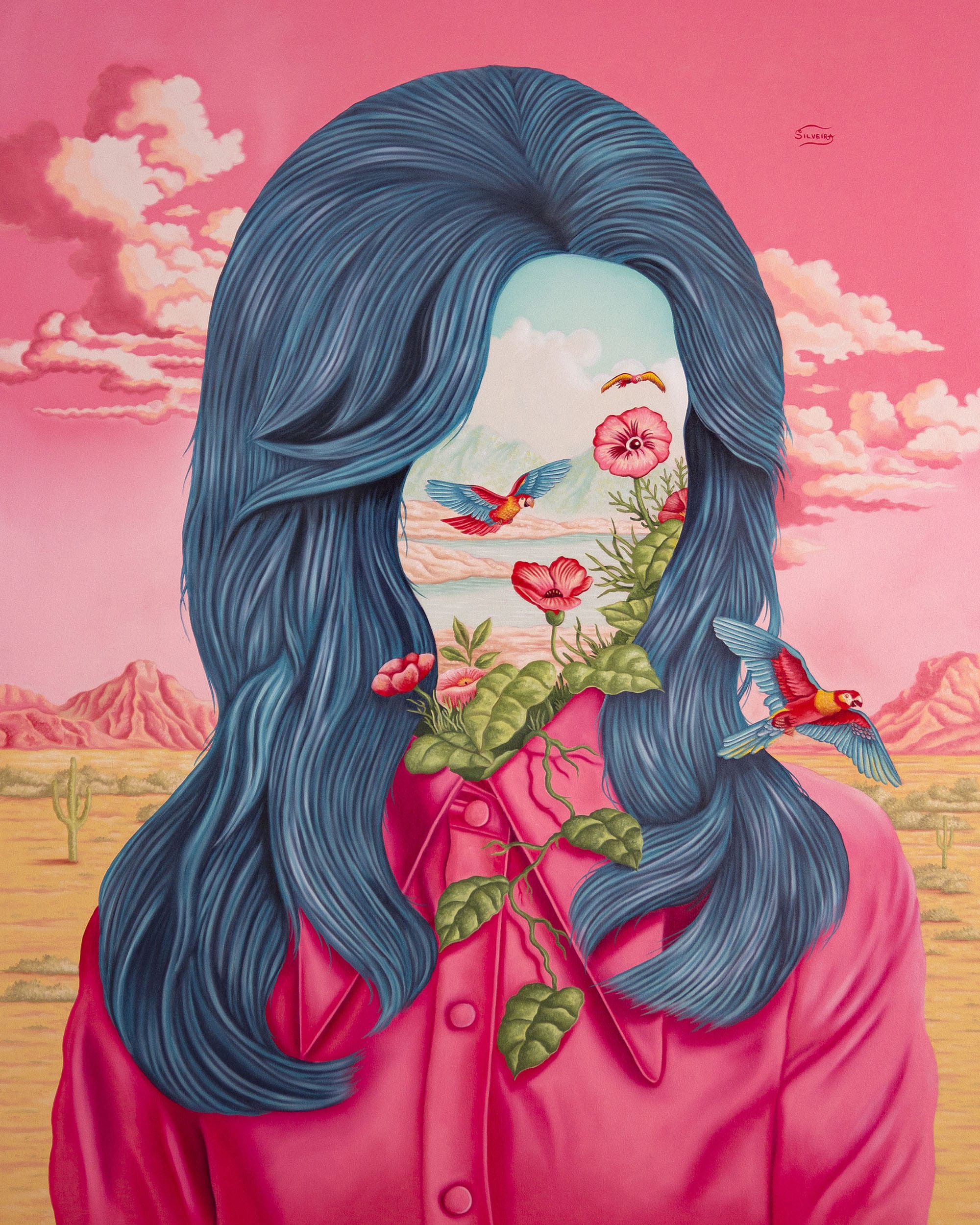
Brazilian artist Rafael Silveira's new paintings explore "visual synonymies" — surprising correspondences between unrelated images — with faces replaced by landscapes and altarpiece-shaped panels resembling popsicles, shown in his Los Angeles solo "Popsicledelic Trip."
Brazilian painter Rafael Silveira has built his practice on what he calls "visual synonymies": the unexpected moments when one image recognizes itself in another. His surreal canvases replace human facial features with landscapes, flowers and fauna, or hybridize animals, figures and everyday objects into unlikely scenarios. A woman's face becomes a horizon; a man grows a tree for a head; ice cream cones drift like planets through a starry sky. The point, Silveira insists, is that everything in the universe is connected, however absurd the pairing first appears. The works recently appeared in his solo exhibition "Popsicledelic Trip" at KP Projects Gallery in Los Angeles, staged alongside a show by his wife, fellow artist Flávia Itiberê. A signature device runs through the new paintings: vertical compositions set in ornate, hand-carved wooden frames shaped exactly like popsicles, with figures holding giant versions of the frozen treats in poses borrowed from devotional painting. Silveira links the joke to art history through the tavola centinata, the squared-base, rounded-top panel shape of Gothic and early Renaissance altarpieces, which shares its silhouette with the classic popsicle. In a statement, the artist describes the collision as both surprising and inevitable: one form belongs to the sacred history of painting, the other to the ephemeral, popular and sweet. Bringing them together builds a bridge between devotional permanence and something destined to melt, between the spiritual weight of the altarpiece and fragile delight. The paintings on view included "Exit" and "Wonders of Human Nature" alongside smaller panel works such as "We Are On the Same Page" and "Multiverse Is My Backyard." Across the exhibition, Silveira keeps challenging how viewers perceive the world around them, arguing that a single shape can carry completely different associations depending on context. The popsicle-as-altarpiece is his most literal demonstration: sacred and disposable, eternal and melting, held in one frame.