Museum report·Chiayi
165 Himalayan Treasures Land in Chiayi: Palace Museum South Traces Buddhist Art from the Ganges to the Snows
The National Palace Museum's Southern Branch has opened 'Traversing the Himalayas,' a 165-work survey of Himalayan Buddhist art running 8 October 2026 to 6 April 2027, with loans from the Rubin Museum, the Met, the Walters and Taiwanese private collectors.
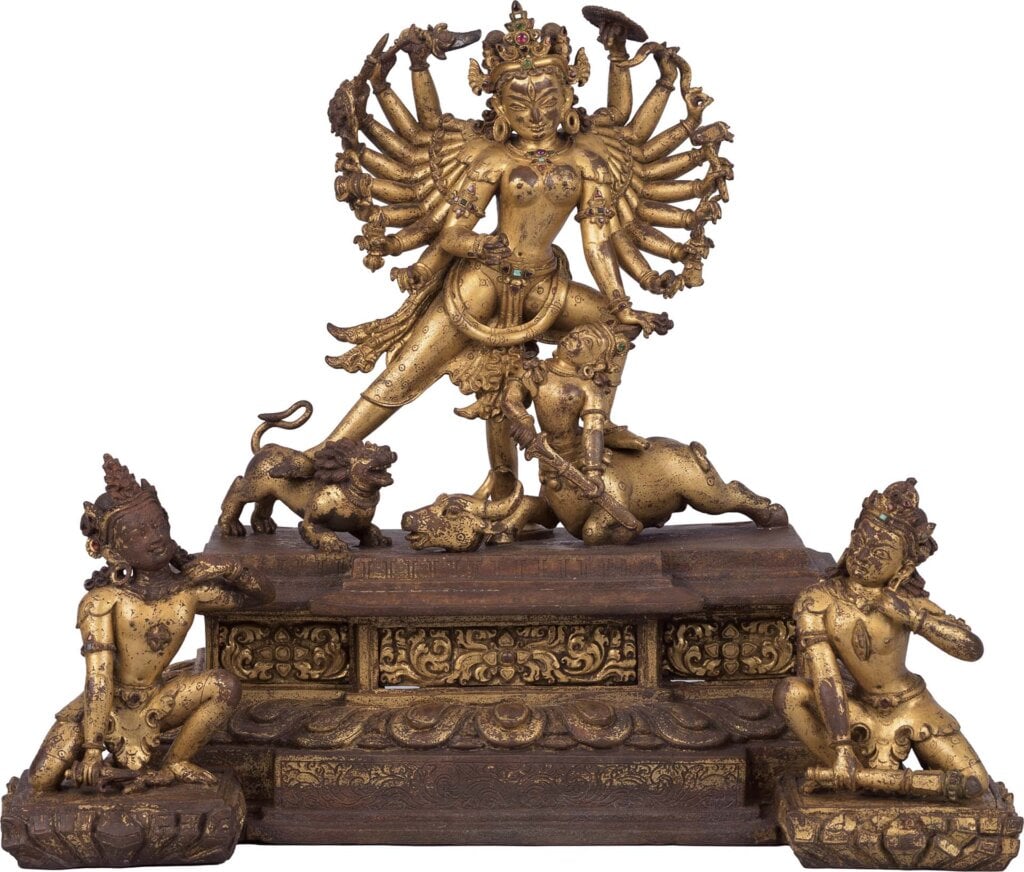
The National Palace Museum's Southern Branch in Chiayi has opened "Traversing the Himalayas: An Artistic Journey from the Ganges to the Snowy Lands," a 165-work survey of Himalayan Buddhist art running 8 October 2026 to 6 April 2027. Lenders include the Rubin Museum of Himalayan Art, the Met, the Walters Art Museum's Ford Collection, Taiwanese private collectors, and the Palace Museum's own holdings, tracing how a visual culture traveled and mutated across the roof of Asia. Curator Chung Tzu-yin inverts the usual approach. Past surveys have tended to organize around iconography and to look outward from the Qing imperial court; this one takes style as its organizing principle and puts the Himalayan region at the center. The method is announced in the opening case: four standing Buddhas, from eighth-century Kashmir to eleventh-century western Tibet, each with a distinct face, posture, and material signature. Anchors include a seventh-century Gilgit Buddha bearing a rare explicit inscription, an eleventh-century Tibetan Vajravarahi from the Met barely ten centimeters tall, a dramatic thirteenth-century Durga slaying the buffalo demon from the Rubin, and a monumental gilt-bronze guardian king from the Densatil monastery workshops — one of only about six survivors of the thirty-two figures that once ringed the stupas. The paintings move from a precisely dated 1322 Newar Acala, borrowed from the Met, to a twelfth-century Green Tara sometimes called the Mona Lisa of thangkas, and on to sixteenth-century works where Chinese landscape conventions — blue skies, winding water, loose robes — have fully entered Tibetan composition. The traffic ran in both directions. The Chinese folk hero Guan Yu was adopted into Tibetan Buddhism as a protector deity and later returned to the Qing court in hybrid thangkas; the Palace Museum's own Guan Yu thangka may come from a Beijing workshop linked to the Yonghegong. What emerges is a portrait of the Himalayas not as a remote periphery but as a switching station of Asian civilization — where faith and style kept remaking each other.