Exhibition preview·Global
Nude Faun Sculpture Torn Down in Iran's 1979 Revolution Resurfaces at Frieze Masters After 46 Years
An edition of Bahman Mohassess's Faun Musician, a nude sculpture commissioned in 1971 by Iranian queen Farah Pahlavi and dismantled after the 1979 Islamic Revolution, is on view at Frieze Masters — not seen in London since 1980. It is showing on Ab-Anbar gallery's stand as part of the fair's Queering Modernism strand.
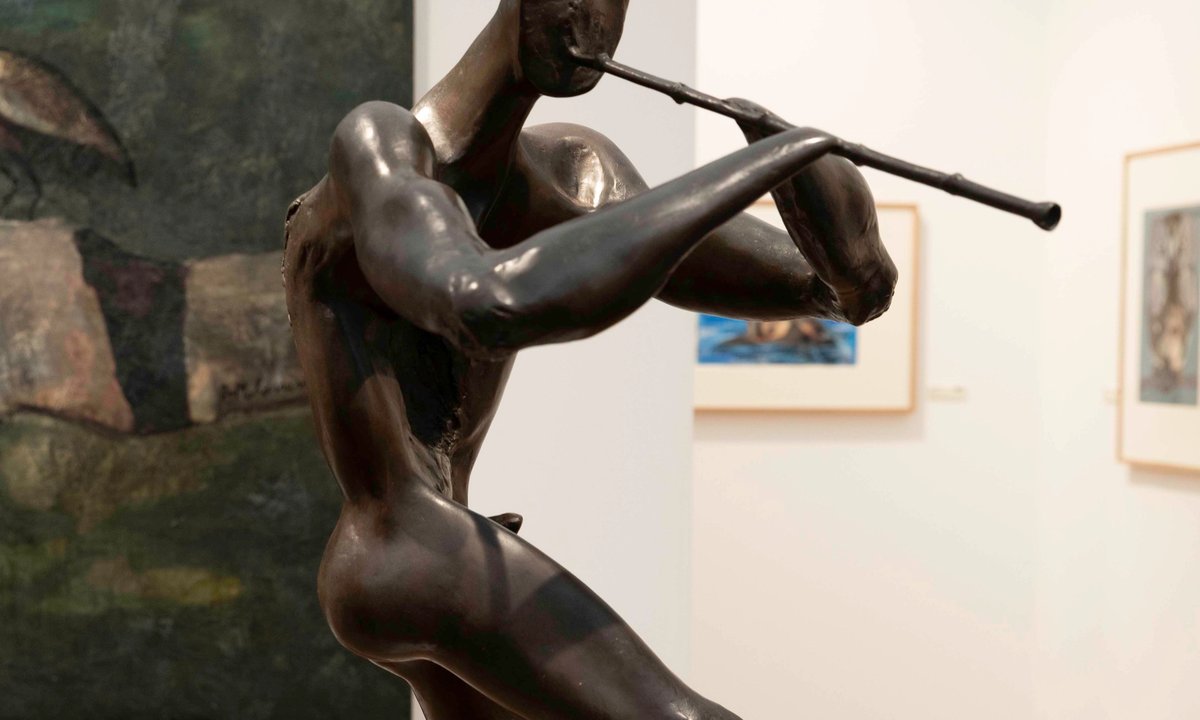
An edition of Bahman Mohassess's Faun Musician, a sculpture that has not been seen in public since the 1980s, is on show at Frieze Masters on the stand of Ab-Anbar gallery. The work was commissioned in 1971 by Queen Farah Pahlavi as one of two public sculptures for the plaza of Tehran's newly built City Theatre. The version on view is a third casting made in 1973, 1.2 metres high, from a private Italian collection; it has not been seen in London since 1980 and is not for sale.
Mohassess, an Iranian artist who had studied in Italy and was steeped in Greek mythology, conceived a nude faun playing the flute. Even in the relatively liberal Tehran of the early 1970s the nudity caused a stir: a muslin cloth was draped over the figure but blew away within a few months. The sculpture became a meeting point for couples. The religious government brought in by the 1979 Islamic Revolution took a different view and the work was taken down. Its whereabouts were unknown for two decades until a photograph surfaced in the late 2000s showing it in pieces in the basement of the Tehran Contemporary Art Museum.
Mohassess is better known for large-scale canvases of reclining male figures and for collages that are often more explicit than his paintings. He is included in Queering Modernism, a curated strand at this year's Frieze Masters assembled by Anke Kempkes that traces the often-forgotten contribution of LGBTQ+ artists to modern art. Ab-Anbar, which shows the sculpture, relocated from Tehran to London in 2020.
A public artwork dismantled by a regime is now being looked at afresh in a London fair tent, at a moment when museums and markets are reassessing modernists from beyond the Western canon. Frieze Masters runs at Regent's Park, London, until 18 October.


