Profile·Livorno
Fished from a canal, hailed as Modigliani — then exposed as a drill-carved prank
In 1984, curators dredging Livorno's canals for lost Modigliani sculptures announced three granite heads, only for students to confess one was carved with an electric drill and an artist to claim the other two as a deliberate test of expert gullibility.
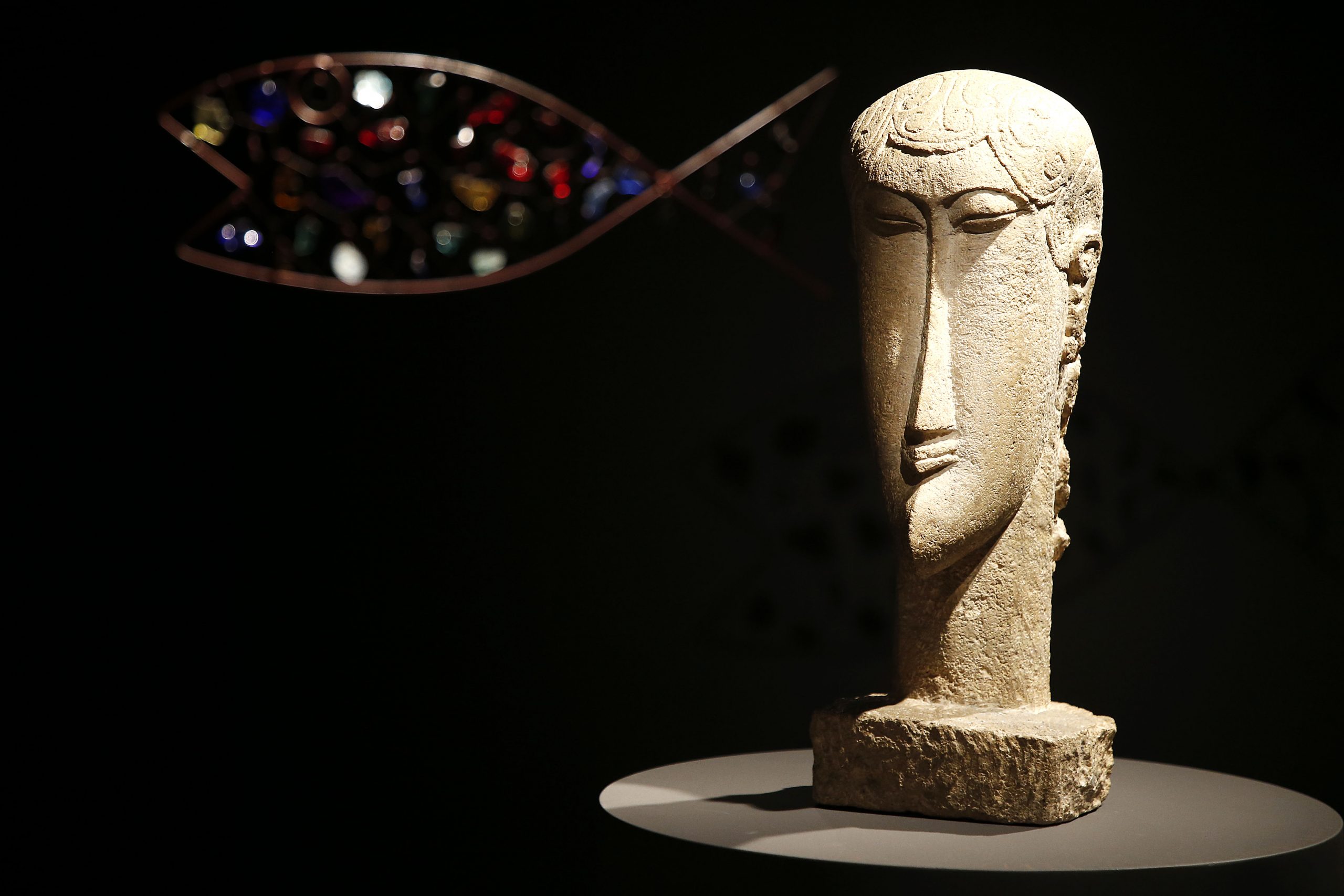
Livorno spent 1984 preparing to mark a century since the birth of Amedeo Modigliani, its most famous artistic son, and the local Museum of Progressive Art wanted a show that would reveal a lesser-known side of him. Although he is now remembered above all as a painter, Modigliani once thought of himself primarily as a sculptor, abandoning the medium only because materials grew costly and stone dust damaged his health.
The museum faced an awkward shortage. Only around four of the roughly twenty-five surviving sculptures attributed to Modigliani were available to it, far too few for the ambitious display its directors had imagined. Rather than borrowing more widely, husband-and-wife curators Vera and Dario Durbe turned to local legend, which held that Modigliani, mocked by fellow artists, had thrown unfinished carvings into the city's canals.
With municipal permission, the pair sent a dredger through the Renaissance-era waterways before an audience of onlookers. After days of hauling up refuse, the operation produced three granite heads whose elongated forms and stylised features echoed the faces in Modigliani's paintings. Tourists flooded into Livorno, and the discovery looked like a cultural sensation.
The sensation collapsed quickly. Three local students, Pietro Luridiana, Michele Guarducci and Pierfrancesco Ferrucci, told journalists they had carved one head as a joke using a Black and Decker electric drill, and proved the point by making another on live television. Artist Angelo Froglia then claimed the remaining two, saying he had made them not as a prank but to show how easily specialists could be deceived. Of everyone who examined the heads, only collector Carlo Pepi had judged them all fake and recognised they came from different hands. The exhibition closed early, the museum no longer exists, and Pepi later repeated his feat in Genoa in 2017, identifying twenty-one of seventy paintings in another show as forgeries.