Policy brief·Trujillo
Peru Senator Wants 3-Metre Erotic Moche Statues Moved Out of Public Park
Peruvian senator Milagros Jauregui has asked the culture ministry to remove giant fibreglass replicas of erotic Moche ceramics from a public park near Trujillo, arguing the images harm children; archaeologists and critics say the row is about censorship of pre-Hispanic heritage.
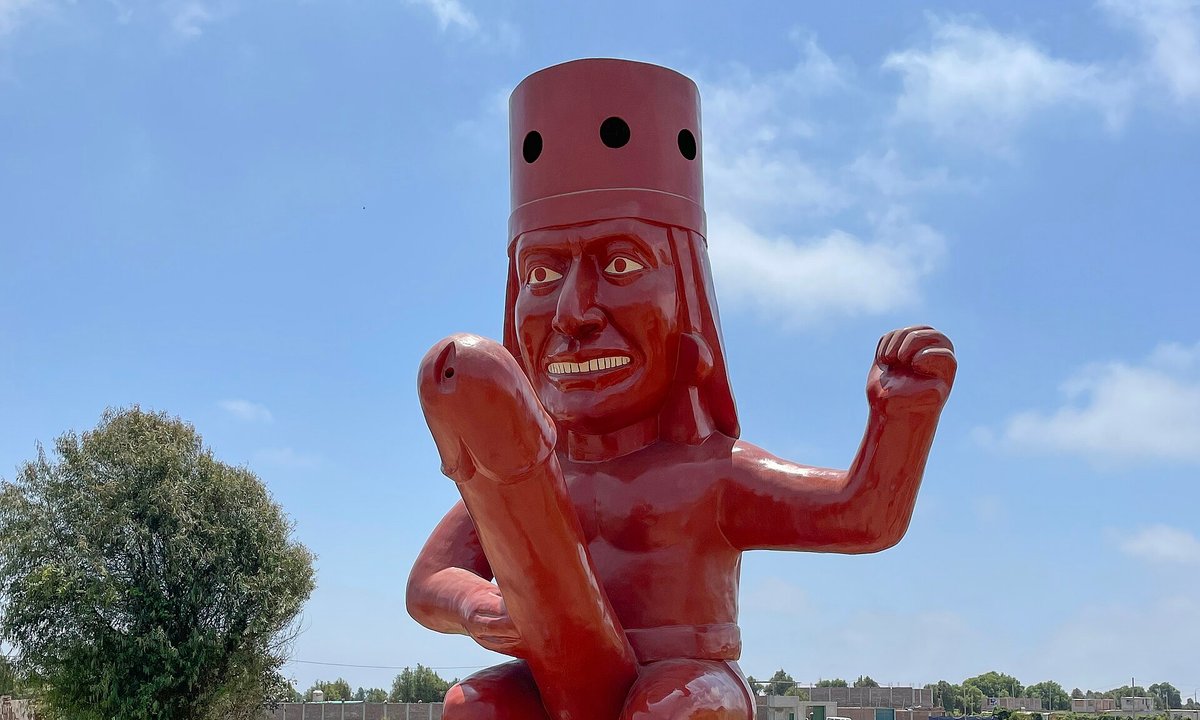
A controversy over giant erotic sculptures in northern Peru has flared again after a senator asked the culture ministry to remove them from a public park. Milagros Jauregui, a conservative senator from the Renovacion Popular party, told Congress that the sculptures should be taken out of the Parque de la Fertilidad, or Fertility Park, outside the city of Trujillo. In a speech on 26 October she argued that children who see the images suffer neurological and psychological harm because they encounter body dimensions unlike their own. She wants the works moved into museums, where she says high-school students could view them with teachers or tutors.
The sculptures are oversized fibreglass reproductions of ceramic depictions of sexual acts made by the Moche civilisation, which flourished on Peru's north coast centuries before the Inca. Then mayor Arturo Fernandez began installing them in 2021 to promote tourism; the largest stands about three metres tall. The original ceramics, known as huacos eroticos, date from the 3rd to 8th century AD, measure no more than 30 centimetres, and were placed in tombs as offerings.
Peruvian archaeologist Walter Alva, who discovered the tomb of the Lord of Sipan in 1987, told The Art Newspaper the issue is complicated. There is freedom to express or re-create themes from the past, he said, but the ceramics were offerings to the dead, tied to fertility and a belief system, and the park sculptures sit outside that historical context. The Moche covered some 700 kilometres of coast between Piura and Ancash, and produced the largest body of erotic imagery of any pre-Hispanic civilisation.
The most complete collection of Moche ceramics is held by the Larco Museum in Lima, which celebrated its centenary in July. Before the 1960s children were barred from the room housing the erotic pieces; today minors must be accompanied by an adult. The culture ministry has not responded to Jauregui's request, and critics in Congress have warned that removing the sculptures would amount to censorship. Jauregui, also an evangelical pastor, maintains that public display of the images harms children.