Policy brief·Moab
'Craig W' Carved Into 700-Year-Old Rock Art: Hunt On for Moab Petroglyph Vandals
Federal land managers in Utah are hunting vandals who carved names into prehistoric petroglyph panels at two sites near Moab, including a large 'Craig W' inscription over part of an animal figure, in damage the Bureau of Land Management calls irreversible.
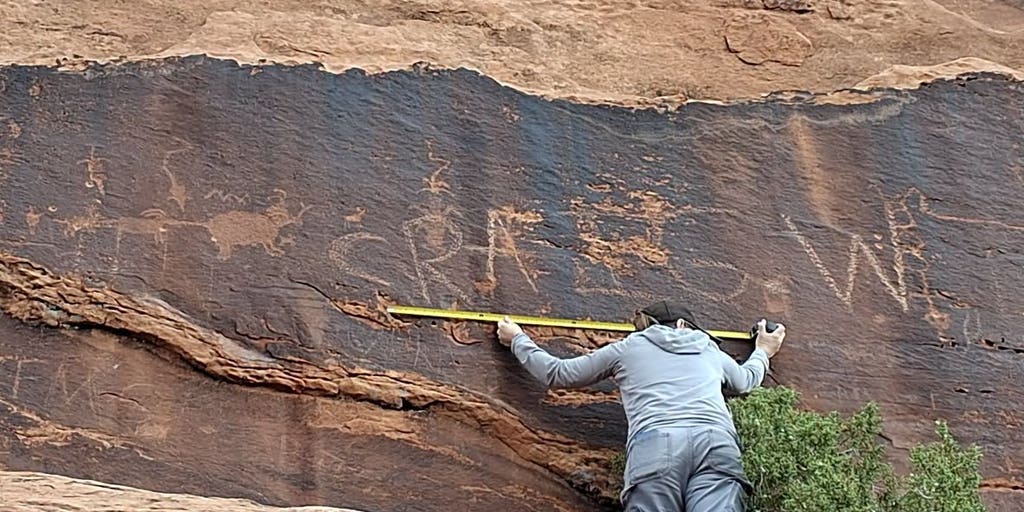
Federal authorities in Utah are searching for vandals who carved their names into prehistoric rock art at two sites near Moab, damaging panels that are hundreds of years old. The Bureau of Land Management announced on 6 November that it was investigating two separate incidents, one along Highway 279, a scenic road running beside the Colorado River, and another near Hell's Revenge, a well-known off-road trail through slickrock terrain.
In both cases, the culprits carved names into or close to the protected panels. Photographs released by the agency show large letters spelling out 'Craig W' and a second, less distinct marking laid over part of an animal petroglyph. The affected panels are thought to date from roughly 400 to 1300 AD, making them at least 700 years old. The agency describes the carvings as irreplaceable cultural resources and warns that the damage cannot be restored to its original condition.
The rock art is protected under the Archaeological Resources Protection Act, and damaging it is a federal offence that can bring significant fines, imprisonment and exclusion from public lands. The bureau has asked anyone with information to contact its Moab law enforcement office, and the case has drawn wide attention online as the agency appeals for help identifying those responsible.
The vandalism is the latest in a series of attacks on ancient rock art around Moab, a tourist centre near Arches National Park. In 2021, vandals defaced the well-known Birthing Rock, a boulder carrying designs believed to be between 700 and 2,500 years old, scrawling a white supremacist slogan across it. The agency later said the stone would never be the same, and this week's incidents have renewed concern about how vulnerable the region's open-air heritage is to casual destruction.