Profile·Global
Mike Mandel's 1971 Self-Portrait Photobook Returns in a New Handcrafted Edition
Eighteen Publications has issued a new revised edition of Mike Mandel's Myself: Timed Exposures, the photographer's first photobook, in which he used a tripod and a timer to photograph himself among strangers on the street.
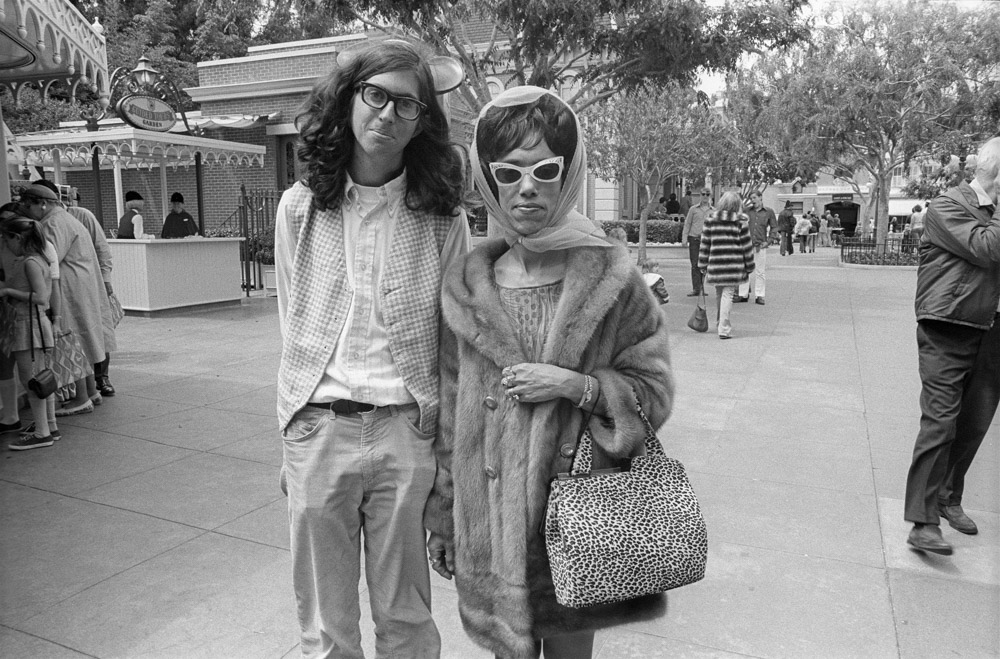
A landmark of conceptual photography has returned in a new edition. Eighteen Publications has reissued Mike Mandel's Myself: Timed Exposures, the artist's first photobook, originally made in 1971, with a gatefold, sewn sections, an open spine book block and a Swiss-bound cover. The 80-page volume, with 70 duotone reproductions, was featured by Artbook | D.A.P. on 1 November 2026.
The book grew out of a year in which Mandel made self-portraiture his constant pursuit. He would fasten his camera to a tripod, carry it out into the street, set the timer and step into the frame, becoming both photographer and subject at once. Because he could not see the result until the film was developed, each picture was a gamble, and the people around him became unwitting collaborators, reacting to the buzzing machine, to his instructions and to the oddness of a man photographing himself in public.
What makes the series endure is that tension between control and chance. Mandel chose the location, the framing and the moment to press the shutter, yet the decisive instant belonged to the camera and to the strangers who wandered into view. The resulting images are at once staged and accidental, comic and quietly revealing, capturing a slice of early 1970s street life through the device of the artist inserting himself into it.
Mandel went on to become a central figure in American photography, known for projects that used the medium to examine social behaviour rather than simply to record appearances. Myself: Timed Exposures, modest in scale but radical in method, helped establish that approach. The new edition presents the work in a physical form that suits its handmade, self-published origins, with the binding left exposed so the construction of the book itself remains visible.