Art world report·Hong Kong
Hong Kong Painter Michael Andrew Law Sets 'Semiotic Traps' So Viewers Become the Real Subject
In a Singulart interview, Hong Kong artist Michael Andrew Law explains how he builds paintings as psychological traps: familiar images such as Queen Elizabeth II trigger the viewer's own projections, while abstraction offers a space free of judgment, and he is now raising funds for a documentary and testing a software-as-art project.
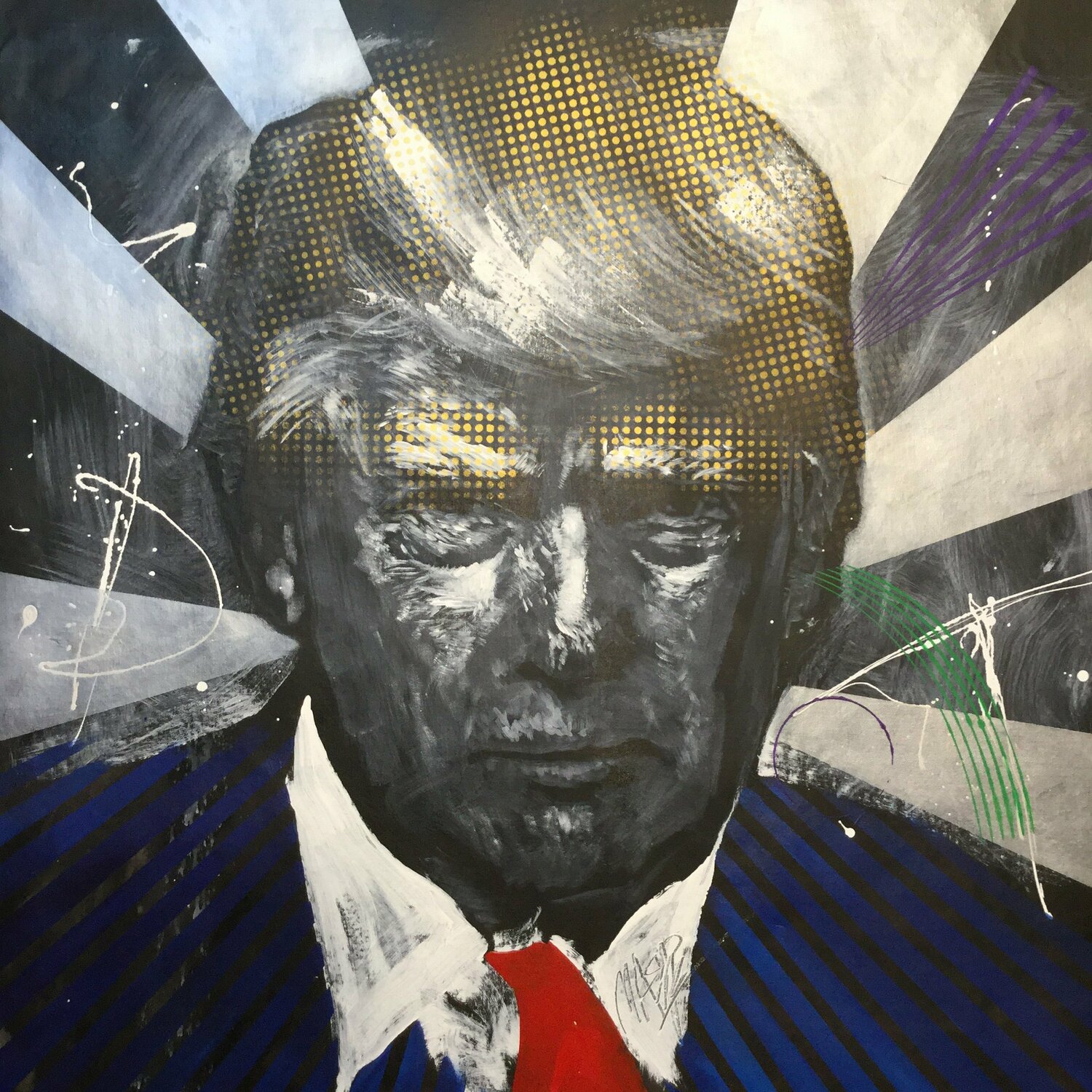
For Hong Kong artist Michael Andrew Law, a painting is not finished on the canvas. It is finished in the mind of whoever looks at it. In an interview published by Singulart on October 25, 2026, Law describes his work as a series of deliberate provocations designed to expose how viewers project their own feelings, politics and assumptions onto an image.
The mechanism, as he puts it, works like an inkblot test. A highly recognizable subject, such as Queen Elizabeth II, carries so much cultural weight that people cannot help reacting to it, and that reaction says more about them than about the painting. His portrait A Visual Biography of Elizabeth II from Princess to Sovereign Above an Illuminated Buckingham Palace: Queen Forever, Forever Queen pairs painstaking pre-19th-century painting technique with exactly that kind of loaded imagery, so the audience must decide whether it is drawn to the craft, unsettled by the royal associations, or able to see the picture as a mirror.
Law's path to this approach was unconventional. Growing up in a middle-class family in 1980s Hong Kong, he decided at the age of nine, while watching the anime Doraemon, that inventing stories and worlds offered a freedom the real world did not. He once dreamed of becoming a scientist, and still runs his studio like a laboratory, testing techniques through trial and error and refusing to accept rules he has not verified himself. That skepticism shapes his mix of academic realism with pop art methods such as silkscreen, stenciling and digital collage, along with glitter, metallic and fluorescent paints that he treats as visual lures.
One early experiment proved the point in public. Years ago he hung a painting outside his studio in Central, Hong Kong, with a real $100 banknote glued to it, and building management ordered it taken down because passers-by kept trying to grab the money. He is currently raising funds for a documentary film about his practice and developing a software-as-art world-building project in closed-studio previews, guided by Sol LeWitt's idea that the concept itself is the machine that makes the art.