Exhibition preview·Berlin
Abramović Returns to Balkan Rituals in a Four-Hour Stage Epic — Without Appearing Herself
Marina Abramović's Balkan Erotic Epic has opened as a four-hour, ten-act stage production at Berlin's Haus der Berliner Festspiele, alongside an exhibition at Gropius Bau. The 80-year-old artist, who calls it her most ambitious work, does not appear on stage herself in this third iteration of a project begun in 2005.
Marina Abramović has returned to the myths, rituals and bodily beliefs of the Balkans with a four-hour stage production that opened this year's performing arts season at the Haus der Berliner Festspiele in Berlin, running alongside an exhibition of the same project at Gropius Bau. Balkan Erotic Epic began in 2005 as a series of videos and has since grown into a large-scale work unfolding across exhibition spaces and theatres. The Berlin staging is its third iteration, following an immersive version in Manchester and a stage premiere in Barcelona.
The production draws on Balkan folk traditions in which genitals and bodily fluids were believed to influence nature, fertility and everyday life, treating the body as an instrument for intervening in the world. On stage, phallic towers rise from the earth, a knife dance flashes wooden swords, and six performers turn towards the sky in a ritual to stop the rain. A Flemish scientist in oversized glasses introduces the stranger corners of ancient belief, while couples writhe among gravestones and fake skeletons in a cemetery scene. Abramović, now 80, is absent from the stage throughout.
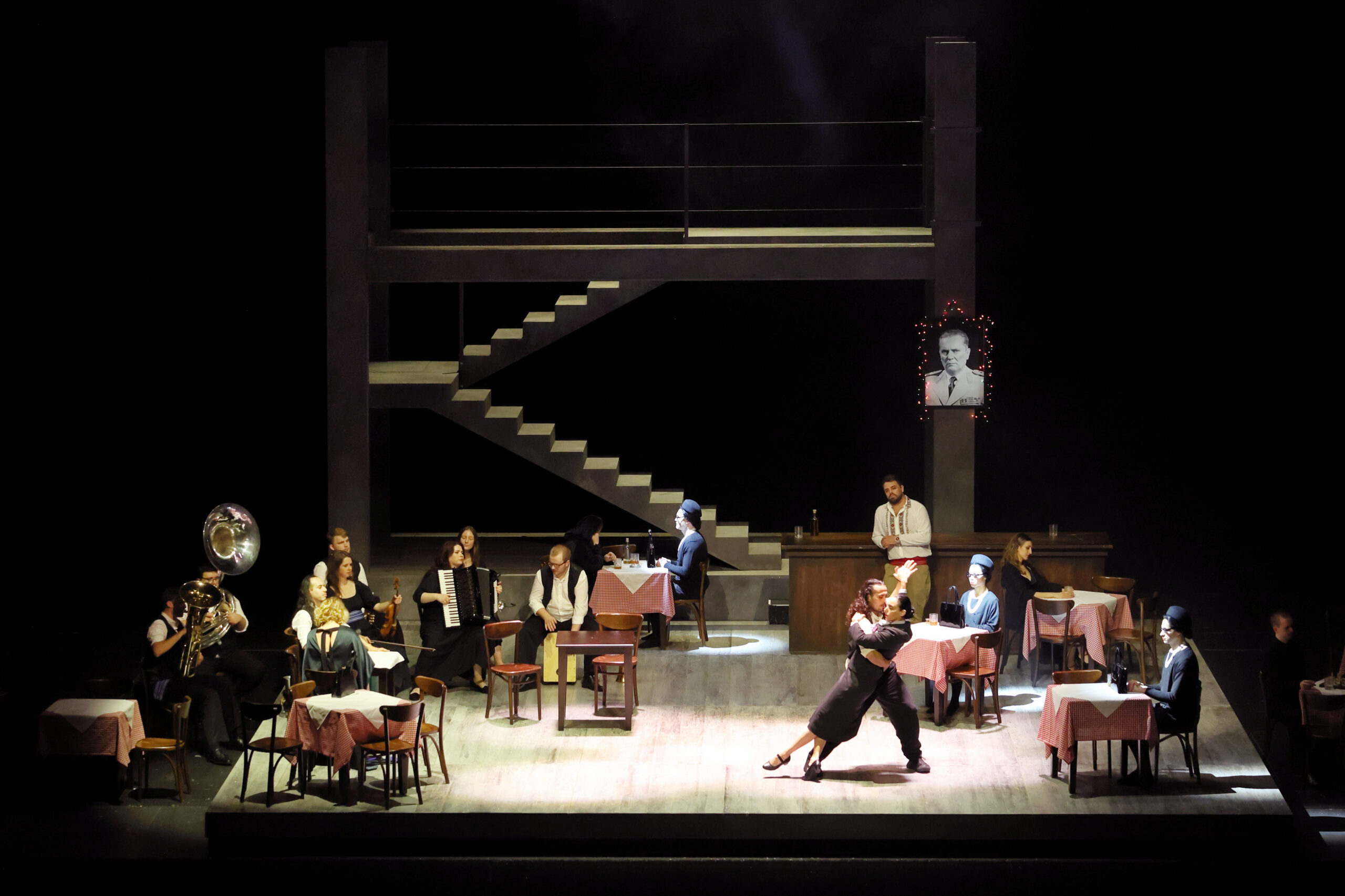
Among the most affecting passages is one centred on the artist's mother, Danica, who first appears at Tito's Funeral, a projected sequence of women in black beating their chests in mourning for the former Yugoslav leader, and returns through the evening as a strict, buttoned-up observer. In the Kafana scene she finally lets go, surrendering to music, desire and striptease. Abramović has described watching herself liberate her mother as the most autobiographical thing she has ever made, and has called the work as a whole the most ambitious of her career.
The evening closes with Ancestor's Dance, in which three masked figures with bells move in measured steps against a snowy landscape, accompanied by dancers in white traditional dress. After hours of visual excess, the restrained finale allows a single image to hold, raising a familiar question for an artist who once tested the limits of institutions and has since become one of their most recognisable figures: whether scale and spectacle can still carry the rituals and family history at the work's core.