Exhibition preview·New York
At 98, the Woman Who Commissioned Lichtenstein's Billboard Tells Her Pop-Art Story
Ahead of her memoir's December release, Joan Kron, the 98-year-old organiser who mounted the East Coast's first Pop Art exhibition in 1962, reflects on commissioning Roy Lichtenstein's Super Sunset Billboard.
Long before Pop Art had museums and retrospectives, two women in Philadelphia put it on the map. In 1962, Joan Kron and Audrey Sabol mounted Art '63: A New Vocabulary at the YM/YWHA in Philadelphia, the first-ever Pop Art exhibition on the East Coast. Now 98 and working on her second documentary, Kron has given an interview ahead of the December publication of her memoir, The Renegade Housewives of Pop Art, recalling how she and Sabol beat the Manhattan establishment to the punch.
The show featured many of the same up-and-coming artists, including Jim Dine, Roy Lichtenstein and Claes Oldenburg, days before the Sidney Janis Gallery made its historic break with Abstract Expressionism in The New Realists. The organisers claimed further firsts: they produced the first artist multiples, by figures including Robert Indiana and Marisol, and they hosted the Velvet Underground's first concert in Philadelphia, a scandalous event that nearly got Kron thrown out of the Y and has since become a badge of honour.
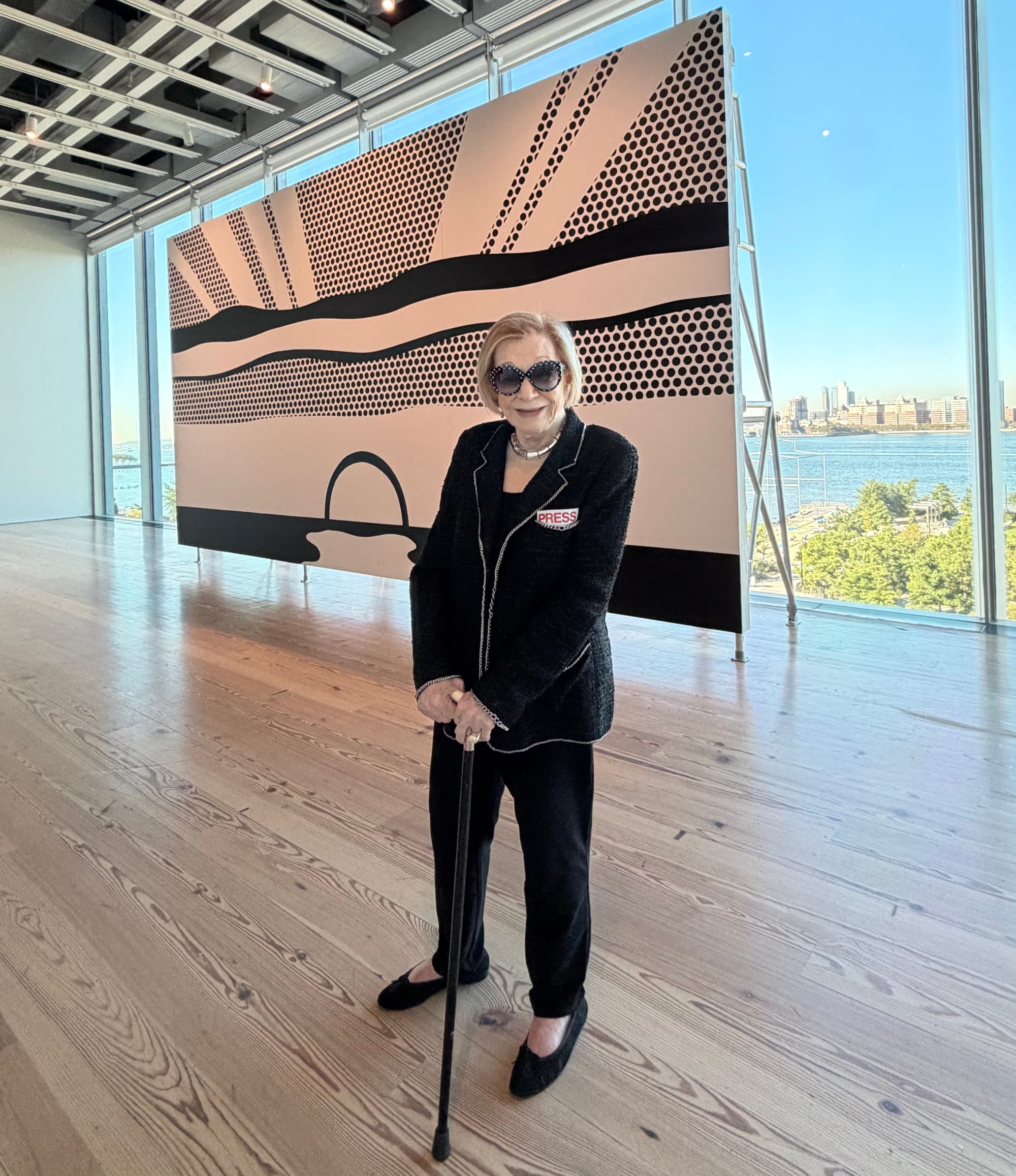
It was Kron's idea to exhibit art on billboards that led her to commission Lichtenstein's Super Sunset Billboard (1967). After a committee for the 1967 Arts Festival of Philadelphia rejected her proposal for art on billboards along the city's arteries, she and Sabol went ahead on their own. They noticed a handball backboard in Sabol's backyard that matched the shape of a sunset image Lichtenstein had already offered, had it painted up, and held a big party to promote the concept. A remake of the billboard is now on display at the Whitney Museum of American Art in its major retrospective Roy Lichtenstein: Like New, which runs from 11 October 2026 to 10 May 2027.
Kron went on to a trailblazing career as a journalist, writing for New York Magazine, the New York Times and the Wall Street Journal and serving as a contributing editor at large at Allure. Her interview traces a throughline from the renegade housewives who staged Pop's East Coast debut to an artist who, decades later, received vindication of a sort when Britain's Art Everywhere campaign took over tens of thousands of billboards with works of art.


